




Impressionist Venice Art
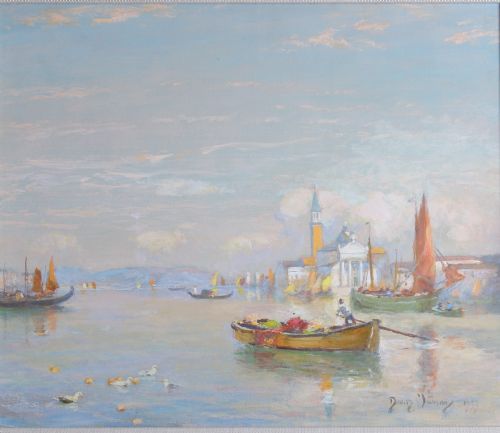
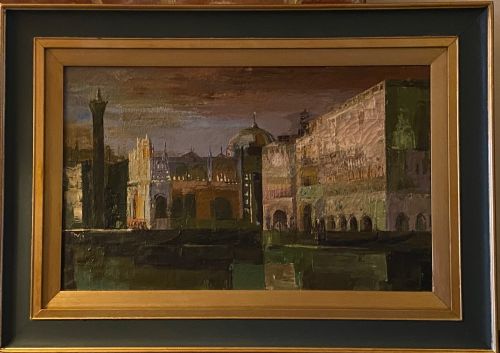
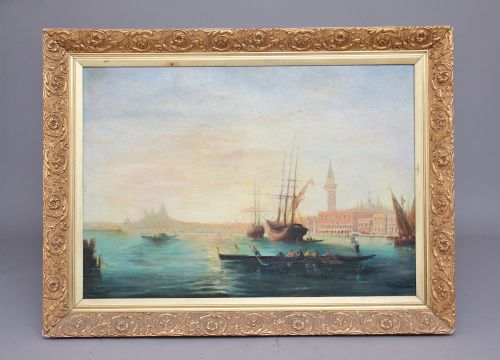
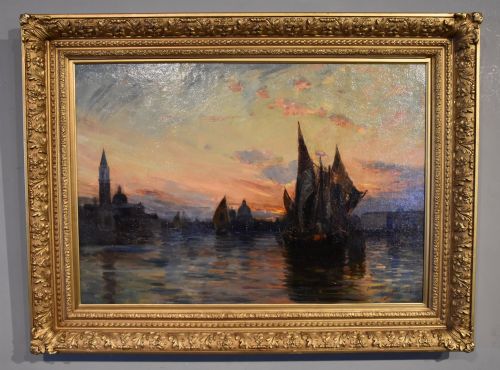
Impressionist Venice art captures the luminous light and shifting waters of the lagoon through expressive brushwork.
Impressionist Venice Art
Impressionist Venice art brings the atmospheric light and historic canals of the floating city into domestic spaces through evocative painted views. These works capture specific locations such as the Grand Canal, the Guidecca Canal, and the Bridge of Sighs.
Buyers will encounter both oil paintings and watercolours spanning from the late Victorian and Edwardian eras into the mid-century. Many examples emerge from British, French, and Italian hands active across these decades.
The selection ranges from intimate watercolours on paper to substantial oil paintings on canvas depicting Venetian lagoons and historic mansions. Each piece records an artist's personal encounter with the city's unique architectural and maritime character.
Materials and technique
Artists record the Venetian scene primarily using oil paint on canvas or watercolour applied to paper. These mediums allow for rapid application to capture fleeting effects of light on water.
Brushwork varies from fluid, translucent watercolours to thick, textured oils and gesso surfaces that build physical depth. Wood supports and framed presentations complete many of the surviving works from this period.
Impressionist Venice Art Retail Price Guide 2026
Typical asking prices for impressionist venice art among the pieces listed under this phrase on Sellingantiques today, from the lower quarter to the upper quarter. They describe what is for sale here now, not the wider market.
Expect frequent encounters with persistent gondolieri navigating beneath historic stone bridges.
Judging quality
Quality rests in the handling of light and the fidelity of atmospheric perspective rather than mere scale or subject matter. A successful composition balances the weighty masonry of palazzos with the fluid movement of the lagoon.
The confidence of the brushstroke distinguishes more accomplished works from routine topographical views. Skilled hands manage colour harmony to evoke the distinct morning or evening haze over the water.
Sir David Murray RA·Sushila Singh·Thomas Hodgson Liddell·Claude Jousset·Marc Aldine·Antoine Bouvard Senior·Clara Montalba·Vittore Zanetti Zilla·Hercules Brabazon Brabazon·Frank Wasley·Emanuele Cappello·Henry Wimbush·Charles Clement Calderon·Helen Donald-Smith
The Impressionist Venice Art Glossary
- Impressionism
- A style of painting emphasising loose brushwork, open composition, and the accurate depiction of light in its changing qualities. This approach suits the shimmering reflections of the Venetian canals.
- Lagoon
- The stretch of saltwater enclosed by the Venetian barrier islands where much of the city's maritime traffic takes place. Painters frequently position their viewpoints across these open waters.
- Gesso
- A plaster-like primer used to prepare canvas or wood panels before painting. It provides a bright, stable ground that influences the luminosity of oil layers.
- Watercolour
- A paint consisting of pigment suspended in a water-based solution, typically applied to paper. It relies on the white of the paper to show through translucent washes.
Impressionist Venice Art: Frequently Asked Questions
What subjects appear most often?
Canals, gondolas, and historic palazzos dominate the views across these paintings.
Artists frequently return to landmarks like the Grand Canal and the Bridge of Sighs.
How do oils and watercolours differ?
Oils offer rich textures and heavy pigment application on canvas.
Watercolours provide a lighter, more transparent finish on paper.
Which periods are represented?
Works span from the late nineteenth century through the Edwardian era.
Later examples extend into the mid-twentieth century.
How should these paintings be housed?
Oils on canvas benefit from traditional wooden frames suited to their era.
Watercolours on paper require glass protection and acid-free mounts.