




Impressionist Pastoral Landscape
An impressionist pastoral landscape brings the quiet warmth of the countryside directly to your wall through loose brushwork and natural light.
Impressionist Pastoral Landscape
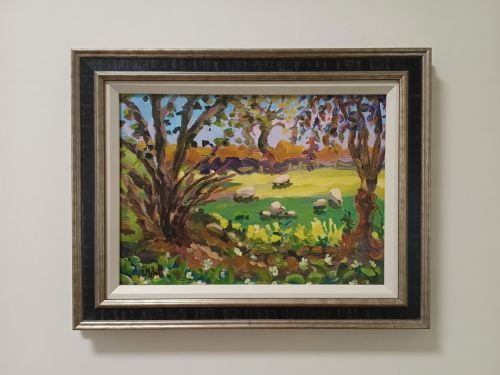
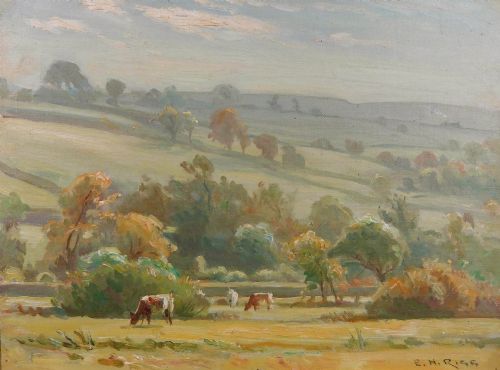
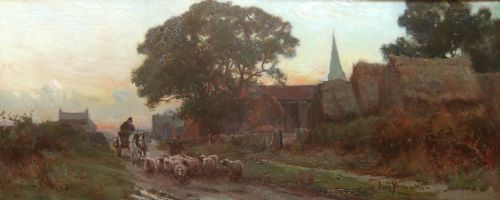
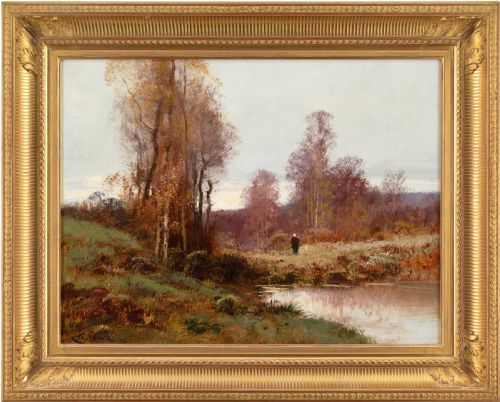
When you search for an impressionist pastoral landscape, you encounter rural scenes populated by farm workers, grazing sheep, riverbanks and harvested fields. The pieces recorded here span from the nineteenth century through the Edwardian era into the nineteen-twenties and thirties, capturing agricultural life and tranquil river views across British and continental settings.
You are most likely to meet oil paintings on canvas or panel alongside watercolours on paper. The compositions focus on the rhythm of seasonal labour, from haymaking and corn harvests to children fishing and cattle resting under apple blossom or willow trees.
The regional schools represented include British Impressionism, Scottish Impressionism, Dutch Impressionism and the French School. These works reflect a shared dedication to capturing the transient effects of light on rural scenery without rigid academic formality.
Qualities of execution
The strength of a composition rests on the artist's handling of light and atmospheric depth across the fields or rivers. A confident, fluent application of oil paint or watercolour distinguishes works with genuine vitality from stiff, formulaic representations.
The integration of figures into the landscape determines the harmony of the whole piece, separating observant studies of rural labour from decorative stock scenery.
The site listings feature oil paintings on canvas and panel alongside watercolours on paper, spanning the nineteenth century through the nineteen-sixties.
George Graham·Lucy Pratt·Ernest Higgins Rigg·John Horace Hooper·Owen Bowen·Charles Clair·J C Grey·Ernest Pile Bucknall·Willem Anton Alexander Knip·Frederick W Jackson·John Atkinson·George Soper·Florence Hess·Lorenzo Headley·Maud Raphael Jones·James William Booth·Helmut Reuter·Herbert Royle·William Greaves·Arthur Winter Shaw·Harry Pennell·Kershaw Schofield·Peter Jackson·James L Brooke·William Miller Frazer
The Impressionist Pastoral Landscape Glossary
- Canvas
- A heavy woven fabric stretched across a wooden frame to serve as a support for oil paint. It provides a flexible and durable ground favoured by painters.
- Gilt
- A thin layer of gold leaf or gold paint applied to wooden frames. This finish enhances the visual warmth of the artwork it surrounds.
- Panel
- A flat piece of wood used as a rigid support for painting in oils. Artists often preferred panel for smaller outdoor studies due to its stability.
- Watercolour
- A paint consisting of pigment suspended in a water-soluble binder applied to paper. It allows for transparent washes and rapid execution.
Impressionist Pastoral Landscape: Frequently Asked Questions
What defines an impressionist pastoral landscape?
These works focus on rural scenes executed with loose brushwork that captures natural light and atmosphere. They typically depict agricultural life, livestock and river views from the nineteenth and early twentieth centuries.
The approach values the fleeting impression of a moment over rigid academic detail, bringing a sense of open air and seasonal change to the canvas or paper.
Where were these pastoral scenes painted?
Artists painted across British rural locations including Yorkshire, Sussex and the Thames, as well as continental European settings. Many pieces record specific farming communities and riverbanks.
Working outdoors allowed painters to observe the changing light on hayricks, cornfields and pastures directly from nature.
How do I live with a watercolour pastoral painting?
Watercolours on paper require placement away from direct sunlight to preserve the integrity of the pigments. Proper framing behind glass protects the paper from atmospheric moisture.
These lighter works suit smaller spaces and benefit from neutral wall colours that allow the delicate washes to stand out.
How do I distinguish between oil and watercolour works?
Oil paintings feature thicker paint layers applied to canvas or wood panel, often showing visible brush texture and a heavier weight. Watercolours present a flatter, more transparent surface on paper.
Oils generally sit within gilt wooden frames, whereas watercolours require framing under glass to protect the paper medium.