



Impressionist Nature Artwork
Impressionist nature artwork brings the shifting light and loose brushwork of open-air studies directly onto your wall.
Impressionist Nature Artwork
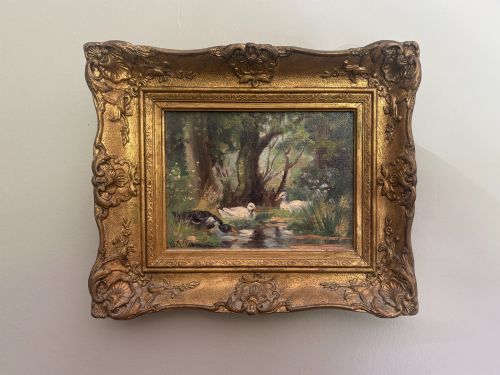
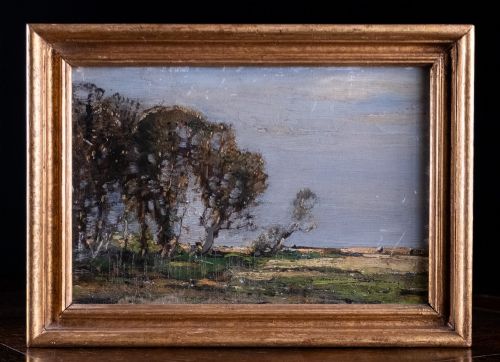
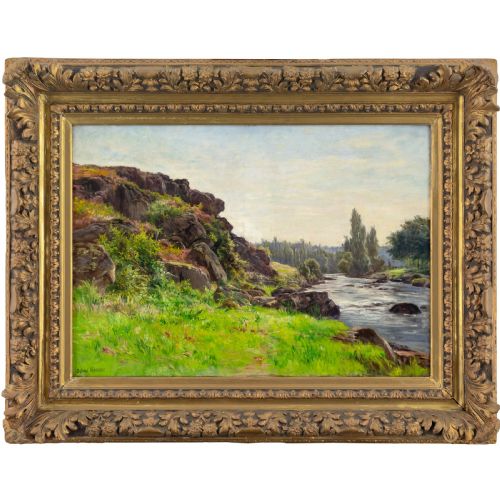
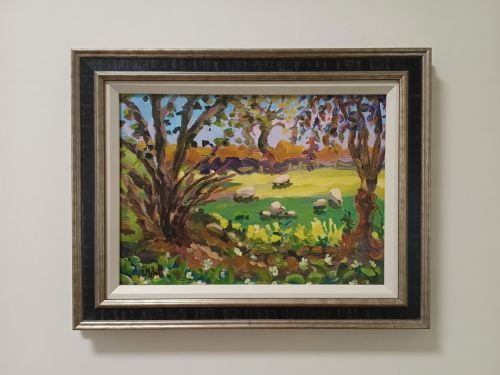
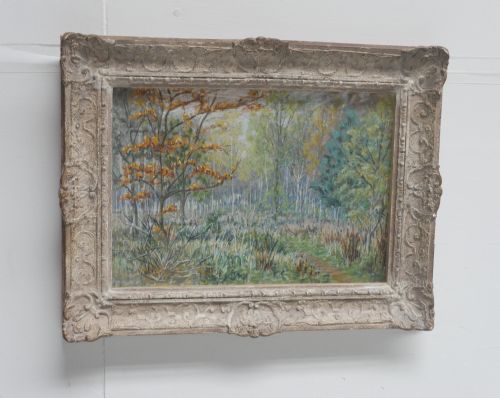
Impressionist nature artwork captures trees, rivers, woodlands, and pastoral scenes through rapid brushstrokes and atmospheric colour rather than rigid detail. You will encounter oils on canvas and board, watercolours, and pastels spanning the nineteenth century through the mid-twentieth century.
The selection ranges from British and French regional paintings to California scenes, focusing heavily on landscapes, riversides, and rural views. Oil paintings dominate the selection, often presented in wood and gesso frames.
Makers and painters represented here include figures such as Kershaw Schofield, Gabriel Mathieu, Lucy Pratt, Rowland Henry Hill, George F. Wetherbee, T.B. Garvie, Owen Bowen, Ernest Moore, Adolphe Gumery, Fred Merriman, and Kenneth Washburn.
Materials and methods
Artists painted primarily with oil paint on canvas or wooden boards, applying pigment with visible, energetic strokes to capture momentary effects of light. Watercolours and pastels on paper also appear, offering a more immediate, translucent record of woodlands and lakes.
Surviving works are frequently housed in wooden frames finished with moulded gesso and occasionally accented with gold leaf. These frames complement the painterly surface and protect the edges of the canvas or board.
Impressionist Nature Artwork Retail Price Guide 2026
Typical asking prices for impressionist nature artwork among the pieces listed under this phrase on Sellingantiques today, from the lower quarter to the upper quarter. They describe what is for sale here now, not the wider market.
Among the serene pastoral lakes and woodlands, one unexpected French oil study records a rather small rodent.
Quality and execution
Quality rests entirely in the confidence of the brushwork and the artist's command of light, tone, and composition. Stronger pieces convey a convincing sense of atmosphere and depth with economy of line.
The handling of pigment varies from flat, formulaic application to dynamic impasto that gives real texture to foliage, water, and sky.
Kershaw Schofield·Gabriel Mathieu·Lucy Pratt·Rowland Henry Hill·George F Wetherbee·T B Garvie·Owen Bowen·Ernest Moore·Adolphe Gumery·Fred Merriman·Kenneth Washburn
The Impressionist Nature Artwork Glossary
- Impressionism
- A style of painting that focuses on capturing the visual impression of a moment, especially regarding shifting light and natural colours. Artists prioritised loose brushwork over precise finish.
- Post-Impressionism
- A subsequent development that extended impressionist liberties while emphasising geometric forms, expressive use of colour, and distinct pictorial structure. It builds upon the light studies of the earlier movement.
- Impasto
- The process of laying paint thickly on a canvas so that it stands out from the surface. This technique allows brush marks and knife strokes to catch the light.
- Gesso
- A plaster-like mixture applied to wooden frames or panels as a base for paint or gilding. It provides a smooth, prepared surface for decorative moulding.
- Watercolour
- Paint made with water-soluble pigments that are thinned with water and applied to paper. It creates transparent washes of colour that rely on the white of the paper for luminosity.
Impressionist Nature Artwork: Frequently Asked Questions
How do I hang impressionist artwork?
Position the centre of the painting at eye level, ensuring it receives gentle ambient light without harsh direct glare that might wash out delicate brushwork.
Keep oil paintings away from damp walls and direct heat sources to protect both the canvas and the original frame.
Are these paintings original works?
The selection consists of original paintings, watercolours, and pastels created by individual artists rather than modern mass-produced prints.
Each piece bears the distinct hand of its maker through unique brush marks and pigment application.
How should I clean the frame?
Dust wood and gesso frames very gently with a dry, soft microfibre cloth or a clean artist's brush to clear away accumulated particles.
Avoid using water, commercial solvents, or cleaning sprays, as these can damage gilded surfaces and historic finishes.
What subjects are most common?
Woodlands, rivers, lakes, and pastoral country lanes dominate the landscapes, capturing rural scenes from Britain, France, and California.
Trees, bluebells, orchards, and agricultural views frequently serve as the central focus for these outdoor studies.