
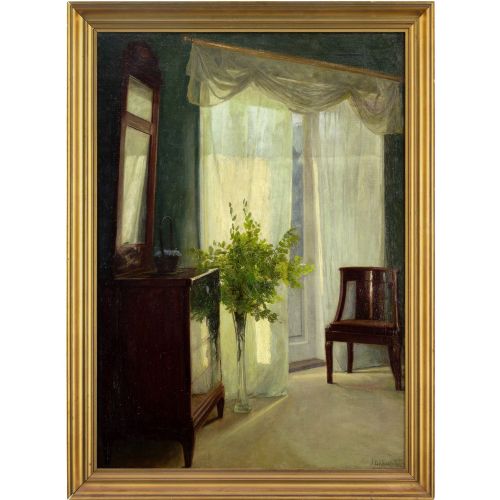
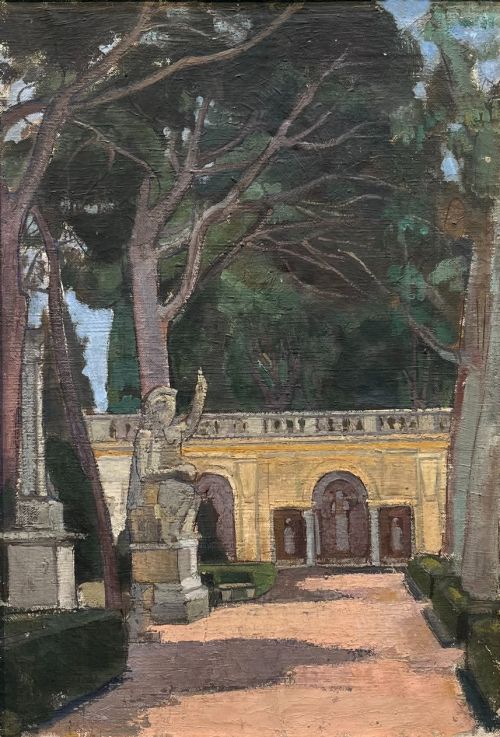
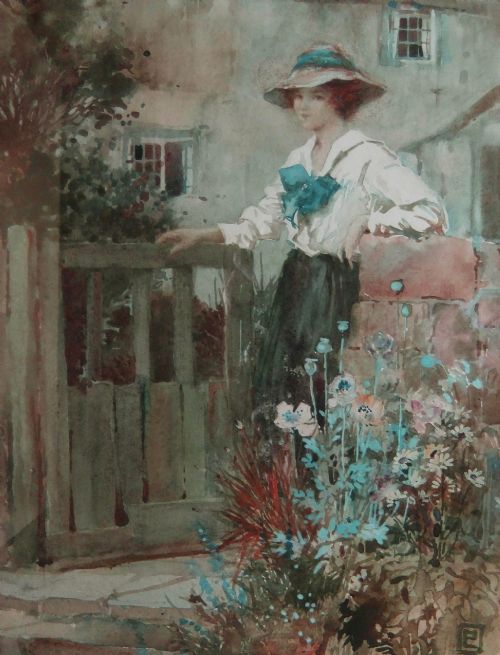
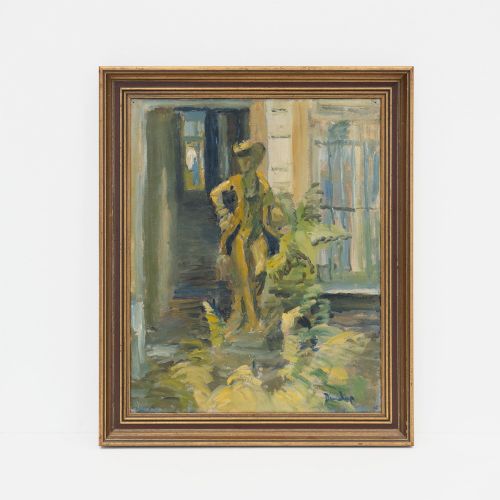


Impressionist Garden Artwork
Impressionist garden artwork captures outdoor light and flora through loose brushwork, offering buyers a window into historic pastoral scenes.
Impressionist Garden Artwork
When you search for impressionist garden artwork, you encounter paintings that focus on outdoor scenes, country houses, and floral spaces from the late nineteenth century through to the mid twentieth century. These works capture specific moments of natural light hitting foliage, domestic gardens, and park landscapes.
You are most likely to meet British and French examples on this page, executed in oils or watercolour. The subjects range from walled gardens and cottage gates to formal city parks and sunlit doorways.
The objects appear primarily as paintings on canvas, paper, wood, and mahogany panels. Artists from movements such as British Impressionism, the Staithes Group, and Post-Impressionism dominate the selection.
Materials and Technique
Makers applied oil paint or watercolour pigment to surfaces like canvas, heavy paper, wood panels, and gold leaf highlights. Oil on canvas allows for thick impasto and textured brushstrokes that build the weight of foliage and flowers.
Watercolour paintings on paper rely on transparent washes and quick strokes to record shifting light in domestic gardens. Mixed media and oil on mahogany panel also appear, demonstrating varied painterly approaches across different decades.
The site listings feature materials including canvas, paper, wood, oil paint, gold leaf, and watercolour pigment across eight distinct decades.
Quality and Execution
Quality rests in the handling of light and the surety of the brushwork rather than the scale of the canvas. Stronger pieces use colour juxtaposition to convey depth and atmosphere without relying on rigid lines.
The cohesion of the composition distinguishes a masterwork from a simple study. Works that integrate figures naturally into the garden setting demonstrate a higher level of compositional skill.
John Lübschitz·Percy Lancaster·Ronald Ossory Dunlop·Rowland Henry Hill·Owen Bowen·Ernest Higgins Rigg·Kershaw Schofield·Lilian Stannard·Charles E Cundall·John Henry Inskip·William Hatherell·David Woodlock·Herbert Royle·Lester Sutcliffe·Edgar Bundy·Hermoine Hammond·George Frederick Nicholls·Beatrice Parsons·William Greaves·Fred Merriman
The Impressionist Garden Artwork Glossary
- Impressionism
- A style of painting that focuses on capturing the visual impression of a moment, especially regarding shifting light and spontaneous brushwork. It emerged in France before influencing British artists.
- Watercolour pigment
- A paint consisting of colour suspended in a water-soluble binder, used on paper to create luminous washes. It is frequently seen in depictions of country house gardens.
- Impasto
- The process of laying paint thickly on a surface so that it stands out from the canvas. This technique adds tactile dimension to floral petals and sunlight.
- Mixed media
- An artwork combining different materials, such as various paints and inks on a single support. It offers layered textures within a floral scene.
Impressionist Garden Artwork: Frequently Asked Questions
What periods do these artworks cover?
The selection spans from the late nineteenth century through the Edwardian era and into the nineteen-fifties.
Most examples cluster around the nineteen-tens and nineteen-twenties, reflecting the height of British and French impressionist plein air painting.
How should I frame an antique watercolour?
Antique watercolours require conservation framing with acid-free mounts to protect the paper from degradation.
Keep them away from direct sunlight to prevent the watercolour pigments from fading over time.
What subjects appear most often?
Cottage gardens, walled flower spaces, and country house gates form the core of the subject matter.
Artists also recorded figures knitting outside, children near doorways, and city parks like St James's Park in London.
How do I distinguish oils from watercolours?
Oils are painted on canvas, wood panels, or mahogany, featuring heavier textures and visible brush relief.
Watercolours are executed on paper under glass, showing translucent washes where the white of the paper illuminates the pigment.