



Impressionist Countryside Artwork
Impressionist countryside artwork captures rural life and light across Britain and France through expressive brushwork.
Impressionist Countryside Artwork
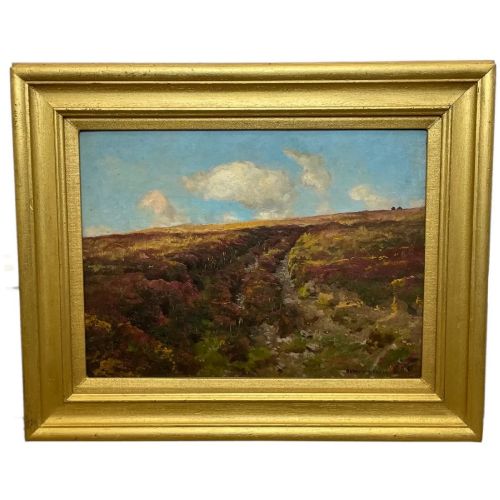
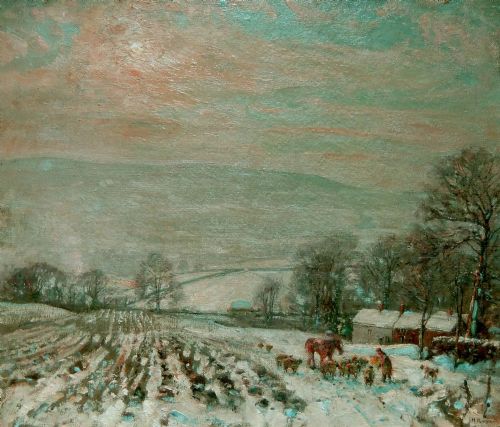
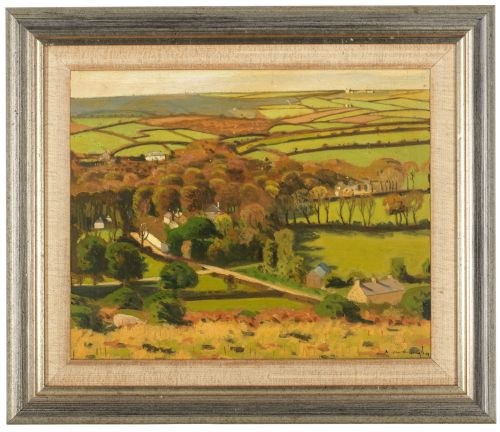
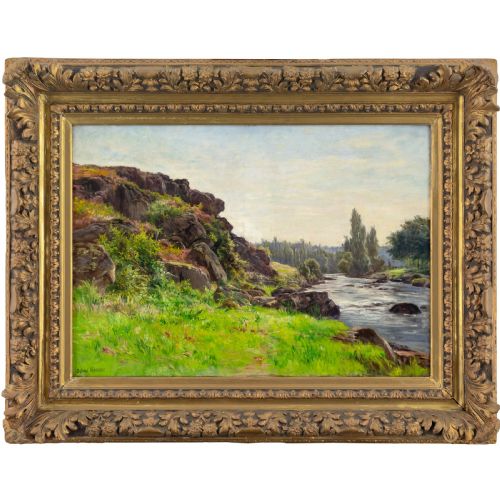
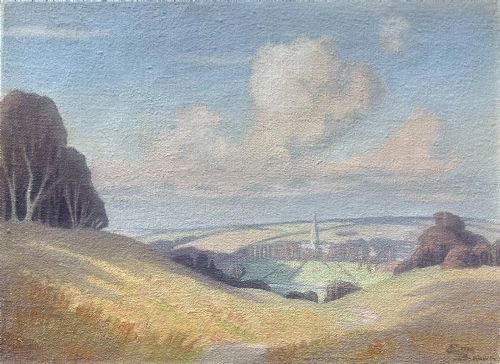
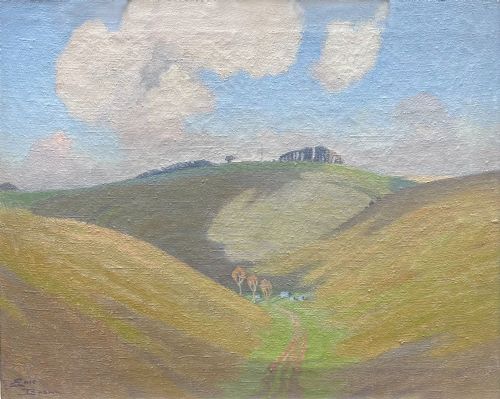
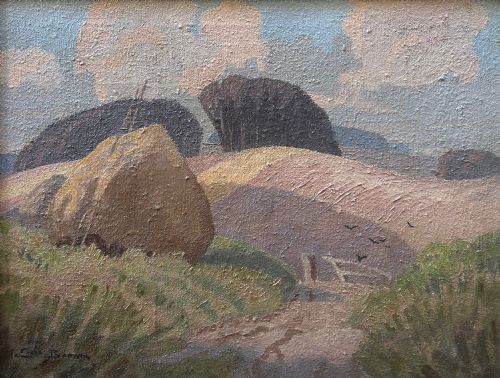
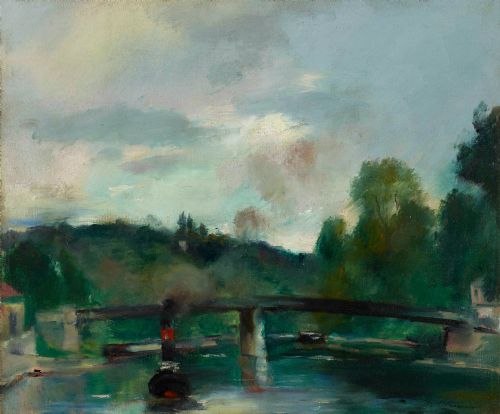
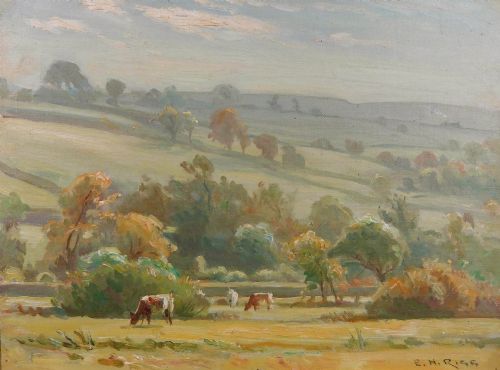
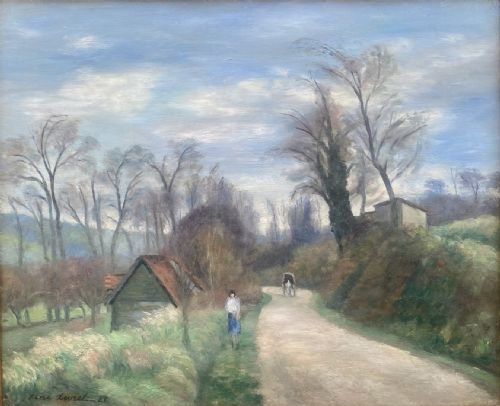
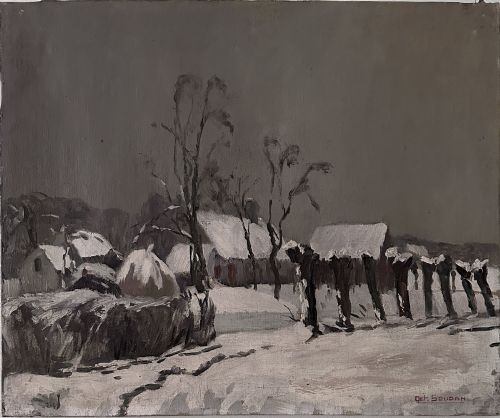
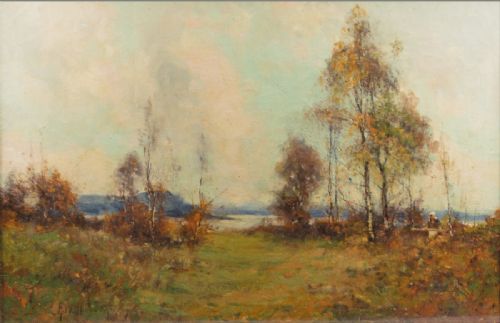
When you search for impressionist countryside artwork, you encounter pastoral scenes rendered through loose brushwork and a focus on natural light. The pieces on this page span from the Victorian era into the mid-twentieth century, capturing rivers, farmsteads, and rolling hills.
You are most likely to meet oil paintings on canvas or wood panel, alongside occasional framed watercolours. These works record regional views from Yorkshire, Cornwall, and Normandy, painted by artists working within British Impressionism, French Impressionism, and Post-Impressionism.
Materials and Technique
Artists built these compositions primarily using oil paint applied to stretched canvas or prepared wood panels. The handling relies on visible brushstrokes to convey the fleeting effects of weather and season in the open air.
A smaller selection utilises watercolour on paper, capturing lighter atmospheric conditions with translucent washes. Framing typically consists of period wood surrounds that complement the palette of the painting.
Several canvases manage to make Yorkshire sheep look remarkably philosophical about an incoming snow shower.
Distinctions in Quality
The strength of a composition rests on the confidence of the brushwork and the management of light across the landscape. Superior examples demonstrate a clear command of tone that defines the depth and atmosphere of the rural setting.
Condition plays a role in how well the paint surface has survived, particularly regarding the stability of oil on panel or canvas over the decades. The harmony between the artwork and its period frame also influences the overall integrity of the piece.
Arthur Wardle·Herbert Royle·Robert Morson Hughes·Gabriel Mathieu·Eric Brown·Henri Ottmann·Ernest Higgins Rigg·Florence Adelina Hess·Alexander Wellwood Rattray·John Horace Hooper·Hubert Wellington·Charles Clair·Edgar Woollatt·Joseph Edward Hennah·Charles Walter Simpson·André Prévot-Valéri·Fred Lawson·Mario Pinetti·Reginald Grange Brundrit·Owen Bowen·William Greaves·James William Booth·Lorenzo Headley·Maud Raphael Jones·Helmut Reuter
The Impressionist Countryside Artwork Glossary
- Canvas
- A heavy woven fabric stretched across a wooden frame to serve as a support for oil paint. It provides a textured surface that interacts with the application of pigment.
- Wood Panel
- A rigid wooden support used instead of canvas for painting. Artists frequently utilised panels for smaller outdoor sketches due to their durability.
- Post-Impressionism
- An art movement extending beyond impressionism that prioritised structural form and expressive colour over naturalistic representation. It encompasses various individual styles from the late nineteenth and early twentieth centuries.
- Watercolour
- A painting method where coloured pigments are suspended in a water-soluble vehicle on paper. It yields transparent washes that rely on the white of the paper for luminosity.
Impressionist Countryside Artwork: Frequently Asked Questions
What periods do these artworks cover?
The selection spans from the nineteenth century through the Victorian period and into the mid-twentieth century. Most pieces concentrate in the early decades of the twentieth century.
During this time, artists across Britain and France embraced plein-air painting methods to capture rural landscapes and village scenes.
How should I care for an oil painting?
Keep paintings away from direct sunlight and steady fluctuations in household temperature and humidity. Dust the canvas gently with a soft, dry brush when needed.
Avoid using liquid cleaners or damp cloths on the paint surface or the frame.
Are these works signed by the artists?
Many of the pieces feature visible signatures or inscriptions left by the painter on the front or reverse of the canvas and panel. These signatures help anchor the provenance of the regional landscape.
Unsigned works rely on stylistic evidence and period framing to indicate their origin.
What subjects appear most frequently?
Rural views dominate the selection, including river valleys, farmsteads, coastal cliffs, and harvested fields. Artists frequently recorded specific locales in Yorkshire, Cornwall, and Normandy.
Animals such as sheep and horses also feature within the pastoral settings.