





Impasto Marine Canvas
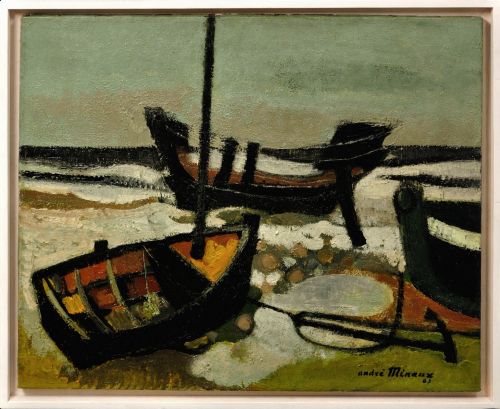
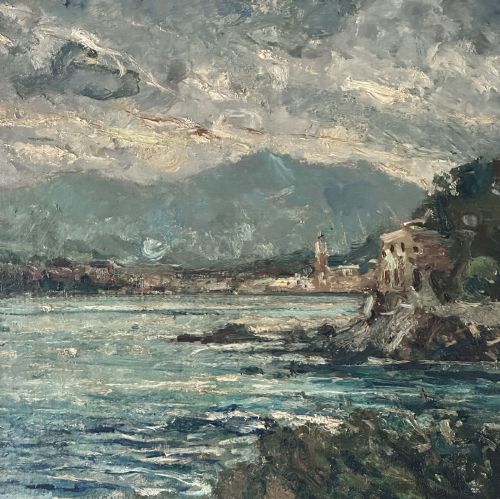
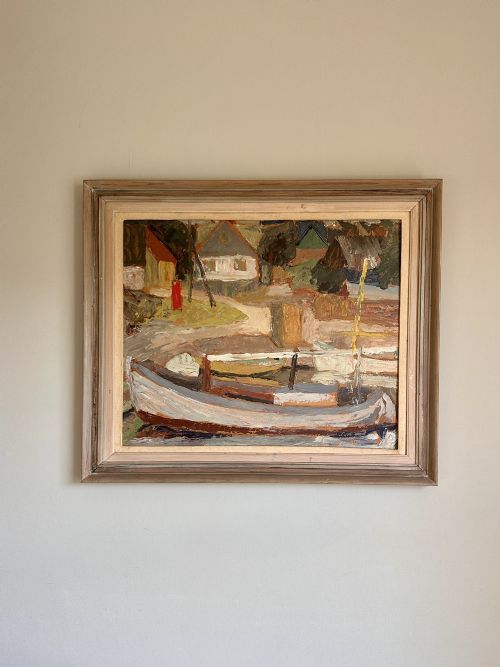
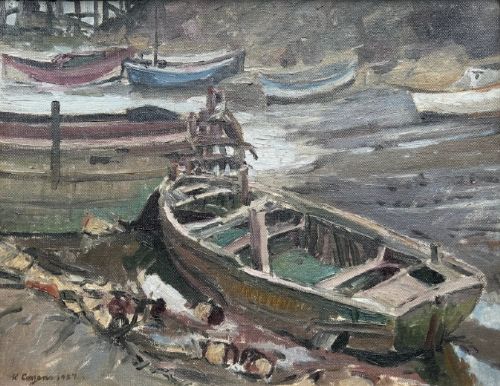
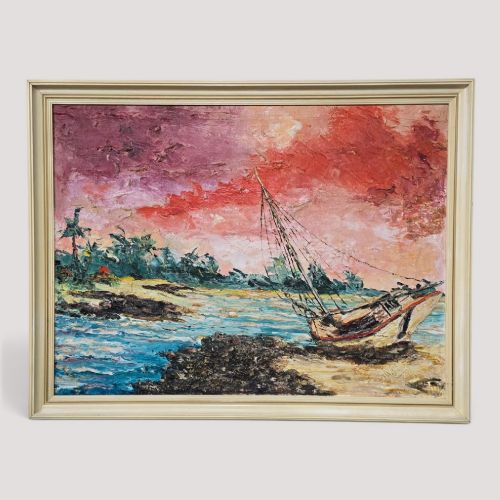
Impasto marine canvas paintings bring the rough texture of the sea into a room through thick layers of oil paint.
Impasto Marine Canvas
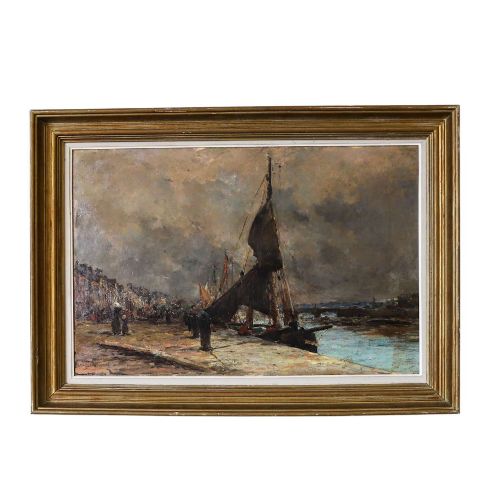
Impasto marine canvas works capture coastal scenes, harbours, and estuaries through textured painting methods on woven supports. These pieces range from nineteenth-century maritime compositions to post-war British and mid-century modern interpretations.
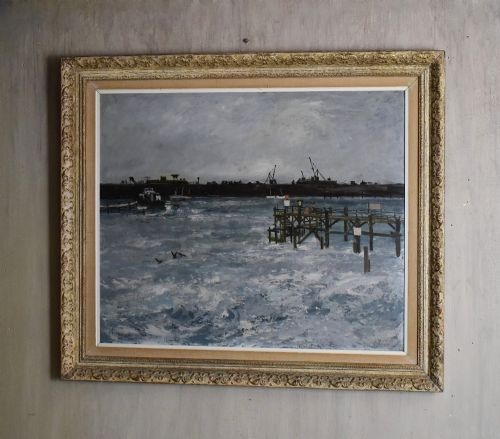
The most common examples on this page date from the twentieth century, particularly the nineteen-fifties and sixties, featuring rivers, coastal villages, and sailing vessels. Artists from this era often applied heavy paint to convey movement in water and skies.
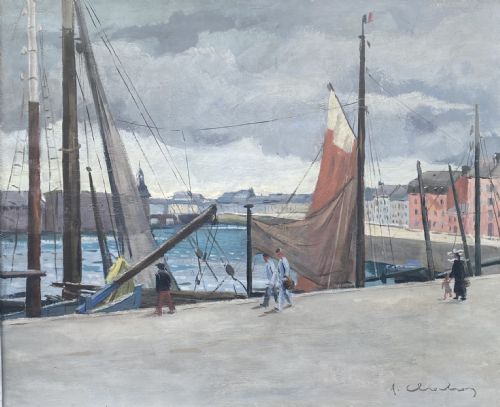
French and British locations dominate the selections, stretching from Welsh bays to Breton ports and the Mediterranean coast. Works appear either on stretched fabric or mounted on wooden board within timber or gilt frames.
Materials and Technique
Oil paint serves as the primary medium, applied thickly enough to hold physical ridges and peaks left by the brush or palette knife. This pigment sits upon traditional woven canvas supports or rigid wooden boards.
Makers housed these maritime works within timber frames, sometimes finished with gilt to complement the coastal subject matter. The physical buildup of paint creates a tactile surface that catches light across the textured strokes.
Impasto Marine Canvas Retail Price Guide 2026
Typical asking prices for impasto marine canvas among the pieces listed under this phrase on Sellingantiques today, from the lower quarter to the upper quarter. They describe what is for sale here now, not the wider market.
Several artists captured boats anchored in Brittany and Wales, proving that seagulls care little for international borders.
Variations in Quality
The handling of pigment dictates the distinction between standard decorative scenes and accomplished artistic execution. Superior works use thick application purposefully to describe light and form rather than merely building surface texture.
Compositional balance and atmospheric depth separate fine examples from simpler topographical records. The most successful pieces integrate the tactile quality of the medium with convincing tonal relationships across sea and sky.
Kenneth Cozens·Peter Brannan·Elisabeth Bardon·Raymond Picque·Edward M. Elliott·Jack R Mould
The Impasto Marine Canvas Glossary
- Impasto
- A technique where paint is laid onto a surface in very thick layers, usually thick enough that the brush or palette knife strokes are visible. When dry, impasto provides texture, making the paint stand out from the canvas.
- Canvas
- A heavy woven fabric used as a surface for oil painting. It is typically stretched tightly across a wooden frame before work begins.
- Impressionism
- A nineteenth-century movement characterised by relatively small, thin, yet visible brush strokes and an emphasis on accurate depiction of light. Painters often worked outdoors to capture fleeting visual conditions.
- Maritime
- Depicting ships, shipping, sea, and coastal scenes. This subject matter forms the core of the marine works seen here.
- Post-Impressionism
- A predominantly French art movement that developed from Impressionism, extending its limitations while retaining its use of vivid colours and thick paint. Artists rejected its limitations in favour of more expressive forms.
Impasto Marine Canvas: Frequently Asked Questions
Are these works painted on canvas or board?
Both supports appear across the selection, with traditional woven canvas stretched over wooden frames and rigid timber boards both utilised by artists. Board provides a solid backing that prevents the flexing associated with fabric supports.
Each material responds differently to environmental changes, though both require stable indoor humidity levels to prevent warping or paint cracking.
How do I date a mid-century marine painting?
Signatures, framing materials, and stylistic markers often provide clues to the creation period of mid-century coastal works. Many pieces include artist signatures or inscriptions on the reverse naming locations and dates.
Post-war British and French works frequently display modernist influences in their brushwork and simplification of coastal forms compared to nineteenth-century maritime pieces.
Where should I hang a textured marine painting?
Position these works where directional lighting can catch the raised ridges of thick paint. Natural daylight from a nearby window or an adjustable picture light enhances the three-dimensional quality of the surface.
Avoid placing paintings in areas subject to direct sunlight or rapid temperature shifts, such as above active fireplaces or in damp rooms.