





Impasto French Landscape Art
Impasto French landscape art brings thick pigment and coastal or rural views into a room, capturing light across canvases from the late nineteenth century to the mid-twentieth century.
Impasto French Landscape Art
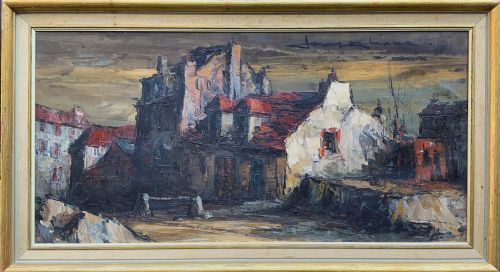
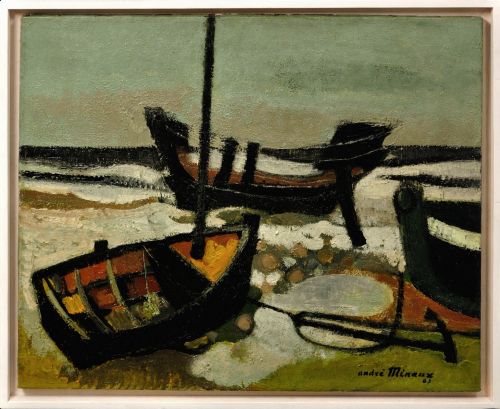
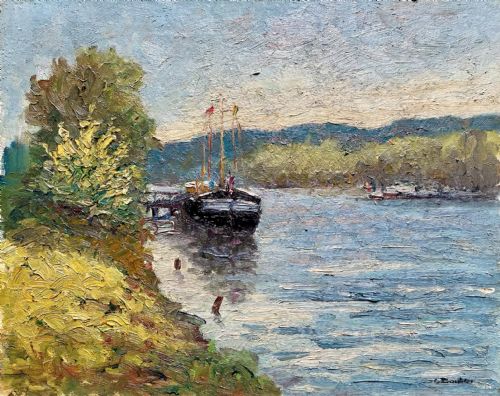
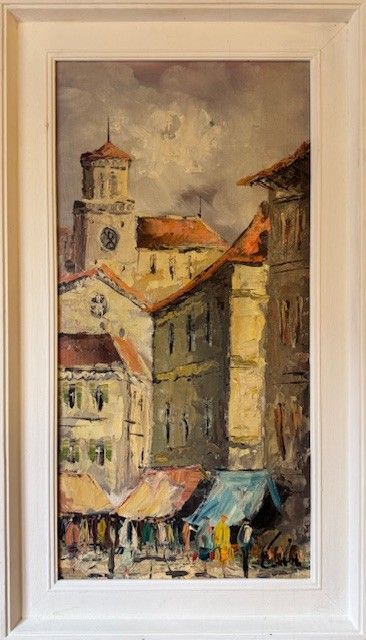
When you search for impasto french landscape art, you meet oil paintings on canvas and board depicting scenes from Normandy, Paris, the Riviera, and Provence. These works span periods from eighteen-ninety through nineteen-sixty, taking forms such as coastal views, river banks, cityscapes, and village scenes.
The most common pieces on this page originate from the mid-century decades, particularly the nineteen-forties and nineteen-fifties. They display styles ranging from post-impressionism and impressionism to mid-century modernism and expressionism, often housed in wood frames with fabric slips.
Materials and Technique
Artists built these compositions using oil paint applied thickly onto canvas or wood board, creating raised surfaces that catch the light. The physical application of pigment forms the distinctive textured quality seen across the panels and canvases.
Makers enclosed many of these works in wood frames, occasionally incorporating fabric slips to separate the painted surface from the surrounding moulding.
Impasto French Landscape Art Retail Price Guide 2026
Typical asking prices for impasto french landscape art among the pieces listed under this phrase on Sellingantiques today, from the lower quarter to the upper quarter. They describe what is for sale here now, not the wider market.
Object types include oil paintings, fine art paintings, wall art, and oil on board panels.
Evaluating Quality
The strength of the composition and the confidence of the brushwork separate the finer pieces from simpler decorative works. Bold application of oil paint and harmonious use of colour define the more compelling examples.
The handling of light and atmosphere across subjects like river banks, harbours, and cityscapes dictates the visual impact of each painting.
Lilian Colbourn·Jean-Baptiste Olive·Raymond Picque·Gabriel Dauchot·Cecil Rochfort D'Oyly-John·Caroline Burnett·Mercedes Legrand·Jeffrey Pratt
The Impasto French Landscape Art Glossary
- Impasto
- A technique where oil paint is laid thickly on a canvas or board, standing out from the surface so that brush or palette knife marks remain visible. This method adds tactile depth and texture to landscape views.
- Oil on Canvas
- A traditional medium consisting of pigmented oil applied to stretched fabric. It provides a flexible and durable support suited to varied brush techniques.
- Post-Impressionism
- An art movement extending beyond impressionism that prioritised emotional response and structural form over pure visual impression. Artists applied bold colours and distinct textures to landscape and figurative subjects.
- Fabric Slip
- A narrow fabric-covered border fitted inside a wooden frame next to the painting. It serves to cushion and visually separate the artwork from the outer moulding.
- Oil on Board
- A painting executed on a rigid wooden panel or stiff board rather than flexible fabric. This substrate offers a firm surface for direct application of heavy pigment.
Impasto French Landscape Art: Frequently Asked Questions
What periods do these paintings come from?
The listed works date from eighteen-ninety through nineteen-sixty, covering late nineteenth-century pieces up to mid-century modern examples.
Most items originate from the middle decades of the twentieth century, specifically between nineteen-forties and nineteen-sixty.
Where were these landscape scenes painted?
The subjects record locations across France, including Normandy, Paris, Marseille, Longchamp, Concarneau, Corsica, and the Riviera.
Coastal views, harbour scenes, and southern provinces like Provence appear frequently throughout the collection.
What materials are used in these works?
Artists utilised oil paint on supports of canvas or wood board, building up textured surfaces.
Frames are typically constructed from wood, with some examples incorporating fabric slips around the edge of the painting.
How do I identify impressionist styles here?
Impressionist and post-impressionist works display visible brushstrokes and an emphasis on natural light in outdoor settings.
Expressionist and modernist pieces introduce more abstracted compositions, dynamic movement, and vivid colour palettes.