





Impasto Cityscape Art
Impasto cityscape art brings heavy pigment and urban energy to your walls, offering tactile views of streets, markets and canals.
Impasto Cityscape Art
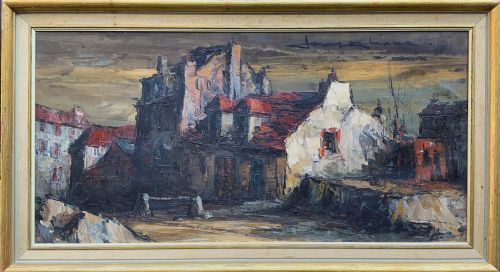
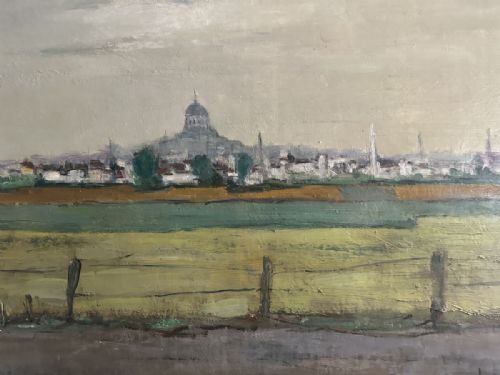
Impasto cityscape art comprises oil paintings on canvas or board that capture urban views through thick, raised layers of paint. These works range from early twentieth-century post-impressionist scenes to mid-century modern and expressive interpretations.
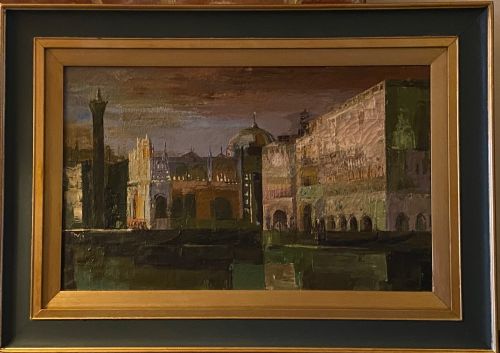
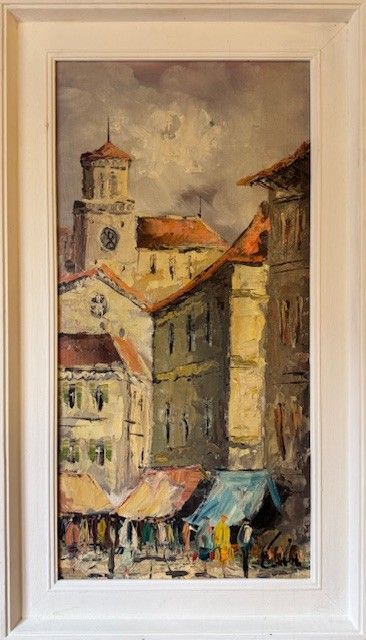
The pieces on this page lean heavily into mid-century aesthetics, alongside earlier twentieth-century examples dating back to the 1920s. Common subjects include Venetian canals, French market squares, Parisian streets and abstract urban vistas.
Buyers encounter oil paintings created by named artists alongside pieces attributed to the mid-century period or signed by figures such as Sushila Singh, Caroline Burnett, E A Minardo and Emanuele Cappello. The forms vary from intimate wall art to large-scale framed canvases.
Materials and Technique
Artists create these works primarily using oil paint applied thickly onto canvas or wooden board, often building a three-dimensional surface with brushes or palette knives. This physical buildup of pigment creates distinct ridges and textures that catch the light.
Many paintings are housed in gilt or gilt wood frames that complement the rich tones of the oil medium. The underlying support shifts between stretched canvas and rigid board depending on the period and the artist's preference.
Impasto Cityscape Art Retail Price Guide 2026
Typical asking prices for impasto cityscape art among the pieces listed under this phrase on Sellingantiques today, from the lower quarter to the upper quarter. They describe what is for sale here now, not the wider market.
Evaluating Quality
Quality rests in the handling of the medium and the confidence of the brushwork or knife application. Superior pieces demonstrate deliberate control over thick pigment, creating a convincing sense of urban atmosphere and architectural structure rather than random application.
The cohesion of the composition and the preservation of the paint surface distinguish finer examples. Stronger works maintain stability across heavy impasto areas without excessive cracking, while retaining the vibrancy of the original oil colours.
Sushila Singh·Caroline Burnett·E A Minardo·Emanuele Cappello·Hein Hoppmann
The Impasto Cityscape Art Glossary
- Impasto
- A technique where oil paint is laid onto a canvas in very thick layers that stand out from the surface. This method allows the texture of the brush or palette knife to remain visible.
- Oil on Board
- A painting executed with oil colours on a rigid wooden or composite board rather than a flexible woven canvas. This surface provides a firm foundation for heavy pigment applications.
- Post-Impressionism
- An art movement developing from the rejection of traditional impressionist constraints, focusing on expressive forms and symbolic use of colour. Works in this style often emphasise bold outlines and emotive brushwork.
- Expressionism
- A modernist style where the artist seeks to depict subjective emotions rather than objective reality through distorted forms and heavy application of paint. German expressionist works frequently feature stark contrasts and dynamic urban views.
- Gilt Wood
- Wood that has been treated with a thin layer of gold leaf or metallic gilt finish. Frames utilising this material are commonly paired with mid-century and antique oil paintings.
Impasto Cityscape Art: Frequently Asked Questions
What is impasto cityscape art?
Impasto cityscape art consists of oil paintings featuring thick, textured applications of pigment that depict urban environments. These works capture streets, bridges and architectural scenes through physical layers of paint.
Created across various twentieth-century decades, these pieces use raised surfaces to convey the movement and light of city life.
How do I care for impasto oil paintings?
Care involves keeping the textured surface free from dust using a very soft, dry brush held at a slight distance. Avoid using damp cloths or cleaning solutions on the raised pigment.
Display the artwork away from direct sunlight and significant temperature shifts to protect the oil paint and any wooden or gilt framing.
How can I tell the period of a painting?
Dating relies on stylistic clues, materials like board or canvas, and any artist signatures or inscriptions on the reverse. Mid-century works often show distinct modernist abstractions or vibrant expressionist influences.
Examining the framing materials and the type of canvas stretcher also offers helpful context for determining the age of the piece.
Where were these urban scenes painted?
The locations depicted include prominent European cities such as Paris, Venice and various French or Spanish urban centres. Artists travelled or resided in these hubs to capture local markets, cathedrals and canals.
Some compositions focus on specific regional architecture while others present generalized or abstracted city views from the mid-twentieth century.