


Imari Covered Jars
Imari covered jars combine striking ceramic forms with distinct blue, iron-red and gold enamel palettes.
Imari Covered Jars
When you search for imari covered jars, you encounter vessels designed for display and storage, typically featuring symmetrical lids and robust bodies. The pieces span centuries of production, originating from Japanese kilns in Arita and later European interpretations.
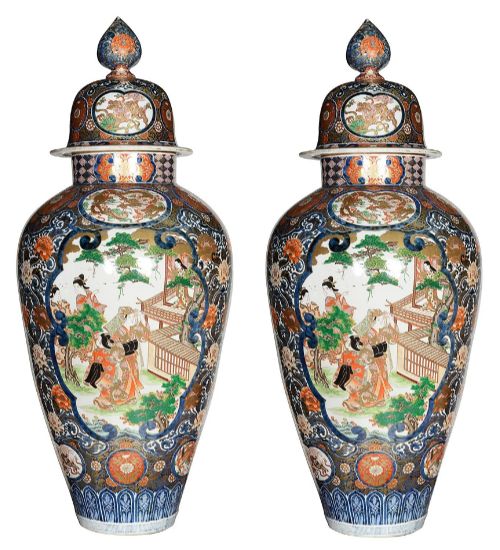
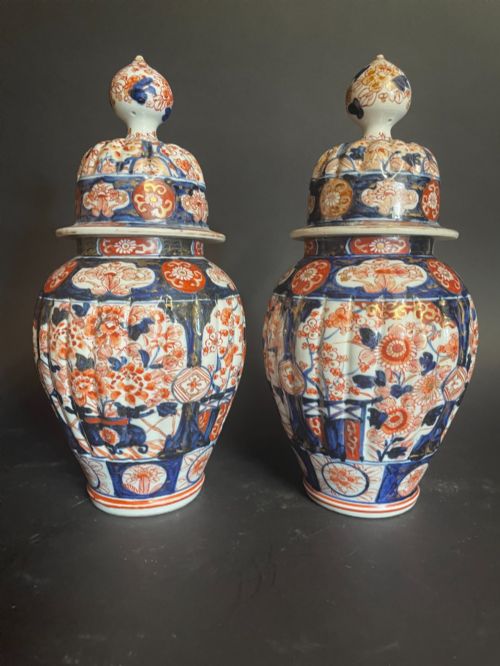
The domestic selection on this page leans heavily towards nineteenth century examples alongside eighteenth century originals and later Edwardian variations. You will find large pairs, ginger jars, and baluster shapes functioning as significant decorative focal points.
Materials and construction methods
Potters shaped these objects from porcelain, ceramic, and ironstone, building substantial bodies designed to carry thick surface decoration. Artisans applied cobalt blue underglaze before adding iron-red enamel and gold leaf or gilding over the glaze.
Kiln workers fired the pieces multiple times to set the deep blue underglaze and the subsequent enamel colours. Skilled hands then finished the surfaces with fine gold detailing and intricate painted motifs.
Japanese Arita production and British imitation wares sit side by side in the available styles.
Distinguishing quality across the range
Quality rests upon the precision of the hand-painting and the richness of the enamel and gilt layers. Pieces with crisp cobalt definition and tightly controlled iron-red and gold details stand apart from simpler iterations.
The handling of form and scale also dictates worth, particularly in large pairs where symmetry and proportion must align across both vessels. Weight, clarity of the porcelain body, and depth of the glaze contribute further distinction.
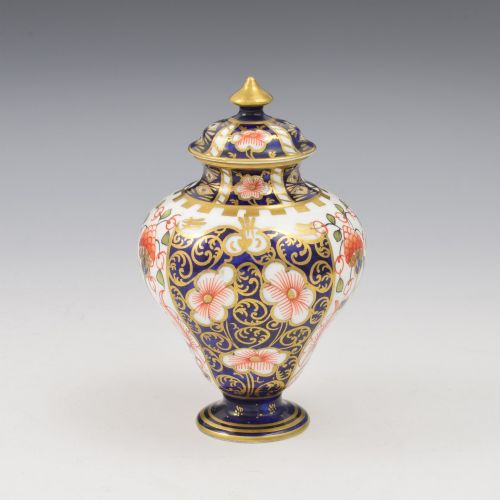
Royal Crown Derby·Mason's Ironstone·Fukagawa·Samson
The Imari Covered Jars Glossary
- Imari
- A style of ceramic decoration originating in Japan, characterised by a palette of cobalt blue, iron-red, and gold. This distinct colour combination defines the visual impact of the pieces.
- Arita
- The Japanese town and surrounding region famous for producing porcelain wares. Kilns here laid the foundation for the tradition.
- Ironstone
- A heavy, durable type of ceramic developed in Britain as a robust alternative to porcelain. Mason's notably produced vessels in this strong material.
- Baluster
- A vase shape with a rounded body that tapers toward the base and swells near the lower middle. This form provides a stable silhouette for detailed painting.
- Pot pourri
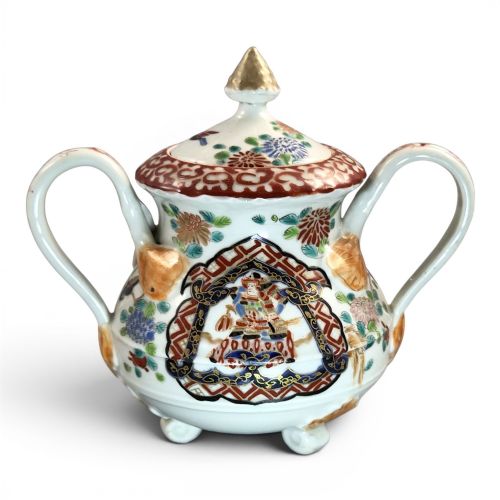
- A decorative jar or vase featuring pierced covers designed to release dried scents. These vessels often incorporate ornate handles and panels.
Imari Covered Jars: Frequently Asked Questions
What are imari covered jars?
These ceramic vessels feature fitted lids and hand-painted decorative schemes in distinct colourways.
Potters made them for both functional storage and ornamental display in interiors.
How were imari covered jars used?
Owners placed large pairs on mantelpieces, sideboards, or dedicated stands to catch the eye in principal rooms.
Smaller covered pots and bowls served to hold dry goods or fragrant mixtures like pot pourri.
How do you date an imari jar?
Dating relies on examining the porcelain body, the composition of the glaze, and the specific tones of the iron-red and cobalt pigments.
Maker marks, where present, help pinpoint the originating workshop or period of production.
Are European imari pieces authentic?
European factories such as Mason's and Samson deliberately produced wares in the Japanese manner during the eighteenth and nineteenth centuries.
These pieces represent a distinct European interpretation of Eastern aesthetics rather than direct imports.