



Hunter Horse Portrait
A hunter horse portrait captures the strength and character of these valued equine subjects, offering a direct link to the traditions of British sporting art.
Hunter Horse Portrait
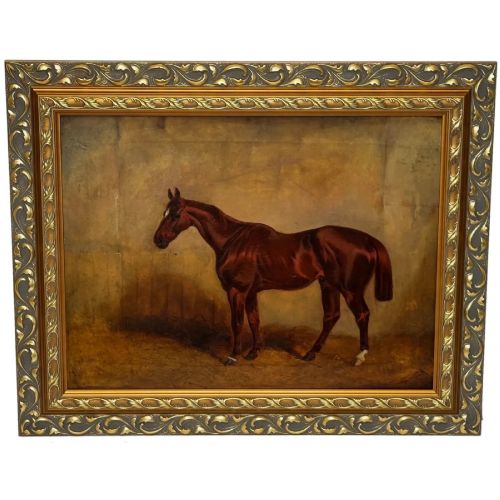
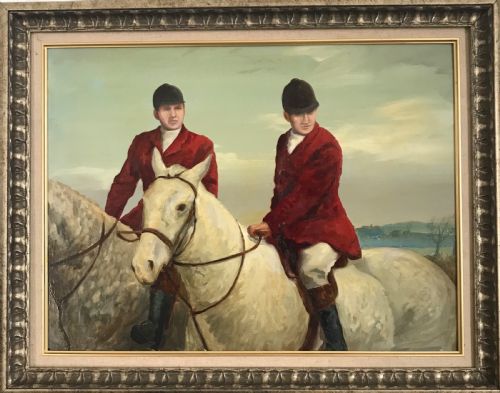
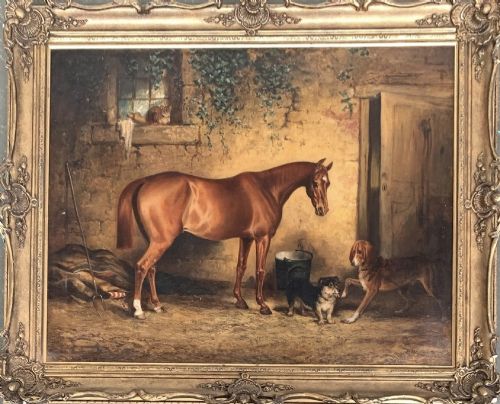
A hunter horse portrait represents a specific class of equine subject, focusing on the conformation and spirit of mounts used in hunting fields. Buyers searching this phrase will find canvases depicting individual animals, often shown in stables or within rural landscapes.
The selections on this page span the Victorian era and the nineteenth century, extending into early twentieth-century examples. Most works take the form of oil paintings on canvas, frequently housed within wood or gilt wood frames.
The subjects range from named hunters belonging to specific hunts to detailed studies of bays, chestnuts, and greys. These portrayals serve as historical records of notable animals and the artists who documented them.
How they were made
These works utilise oil paint applied to canvas surfaces, a medium that allows for subtle blending and the rendering of glossy equine coats. Artists built up the imagery through layered brushwork to capture the musculature and light reflecting off the horse.
The finished canvases are set into traditional surrounds, primarily constructed from wood and frequently finished with gilt layers. These frames complement the depth of the oil paintings while protecting the edges of the canvas.
Hunter Horse Portrait Retail Price Guide 2026
Typical asking prices for hunter horse portrait among the pieces listed under this phrase on Sellingantiques today, from the lower quarter to the upper quarter. They describe what is for sale here now, not the wider market.
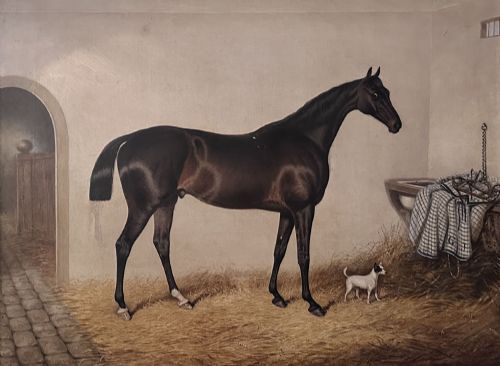
Several portraits thoughtfully include a small terrier keeping a watchful eye on the stable floor beside the main equine subject.
What varies in quality
The distinction between standard works and finer examples lies in the precision of the anatomical drawing and the psychological depth of the animal's depiction. Superior canvases render the bone structure, eye expression, and coat sheen with notable clarity.
Compositional complexity also marks the range, with simpler stable portraits differing from scenes that integrate grooms, terriers, or landscape elements. The handling of light within the stable or outdoor setting further separates routine studio production from masterly execution.
Charles Bilger Spalding·Henry Barraud·Benjamin Cam Norton·Edwin Frederic Holt·Alfred Moginie Bryant·Alfred Grenfell Haigh·Abraham Cooper RA·James Barenger
The Hunter Horse Portrait Glossary
- Bay
- A coat colour of horses characterised by a reddish-brown body with black mane, tail, and lower legs. It remains one of the most frequently depicted colours in equine art.
- Chestnut
- A horse coat colour featuring reddish or brownish shades without black points, varying from light gold to dark liver hues. This tone provides a warm palette for nineteenth-century oil paintings.
- Gilt wood
- Wood surfaces coated with a thin layer of gold leaf or gilt paint. This traditional framing technique adds brightness and contrast to darker oil canvases.
- Stable portrait
- An artistic genre depicting an animal housed within its stable environment, often incorporating architectural details and straw bedding. This setting highlights the individual character of the hunter.
Hunter Horse Portrait: Frequently Asked Questions
What is a hunter horse portrait?
A hunter horse portrait is an oil painting dedicated to depicting a horse bred and trained for hunting fields. These works focus on the specific physical traits and individuality of the animal.
Such paintings often record the names of the horses and the notable stables or hunts they were associated with during their working lives.
How do I identify the period of a painting?
The period can often be deduced from the clothing of any figures present, the style of the wooden frame, and the painting technique used by the artist. Victorian works frequently display specific compositional conventions and rich tonal palettes.
Signatures, dates inscribed on the canvas, and recorded details about the artist further help anchor the work to a specific decade.
Why do some show stables and others landscapes?
Stable interiors allowed artists to focus on the intimate details of the horse's coat, musculature, and immediate environment with controlled lighting. Outdoor settings placed the hunter in the broader context of the countryside and the hunt.
Both approaches served to highlight different aspects of the animal's daily life and utility to its owner.