



Hoshiarpur Table
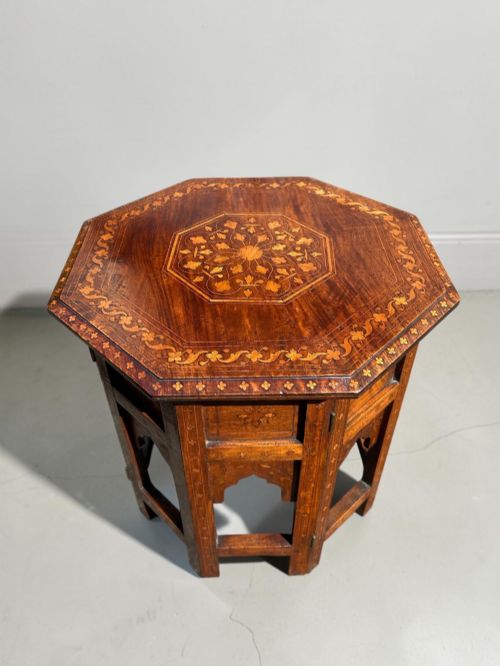
A hoshiarpur table brings dense geometric complexity into a room through intricate surface ornamentation and folding wooden frames.
Hoshiarpur Table
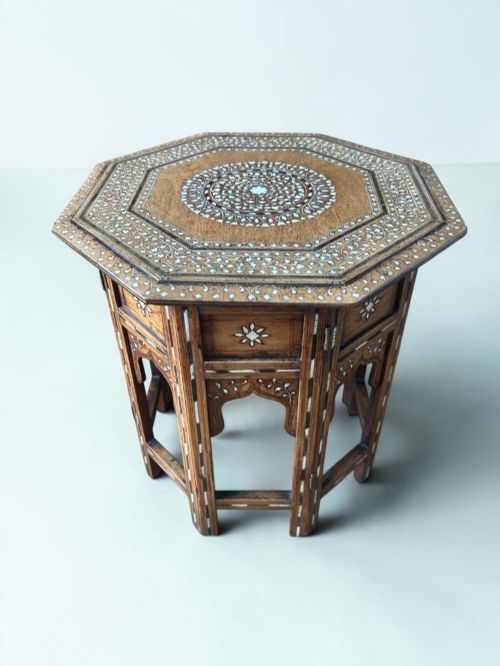
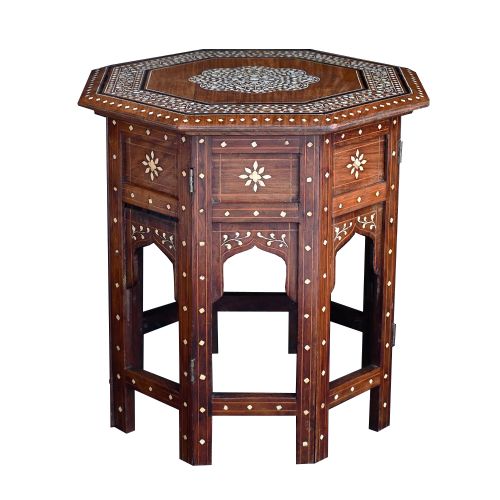
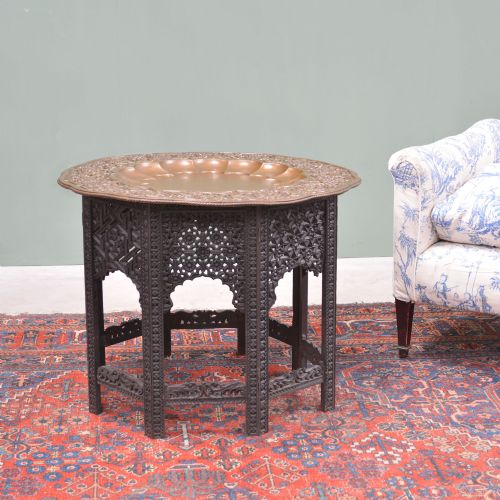
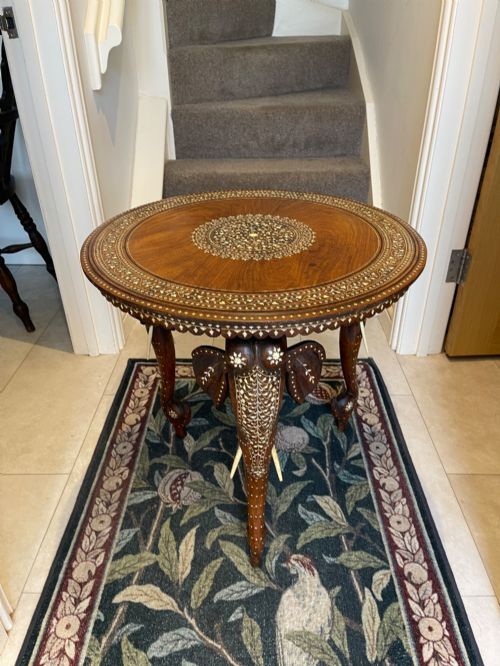
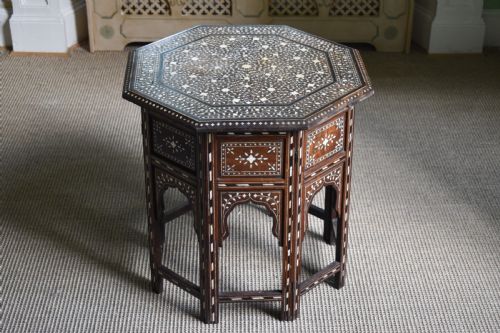
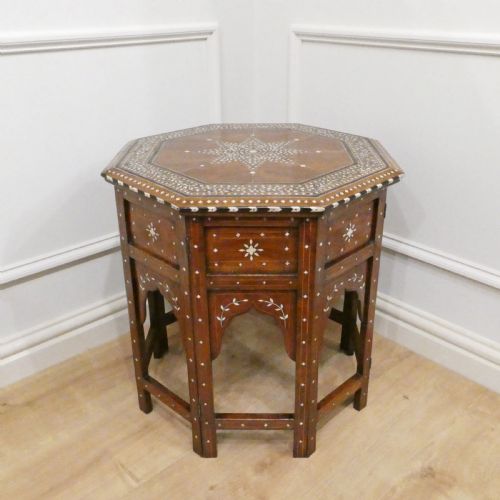
When someone searches for a hoshiarpur table, they encounter decorative occasional furniture originating from the Punjab region of India during the nineteenth and early twentieth centuries. These pieces typically manifest as octagonal side tables, tray top tables, and occasional stands designed for easy relocation.
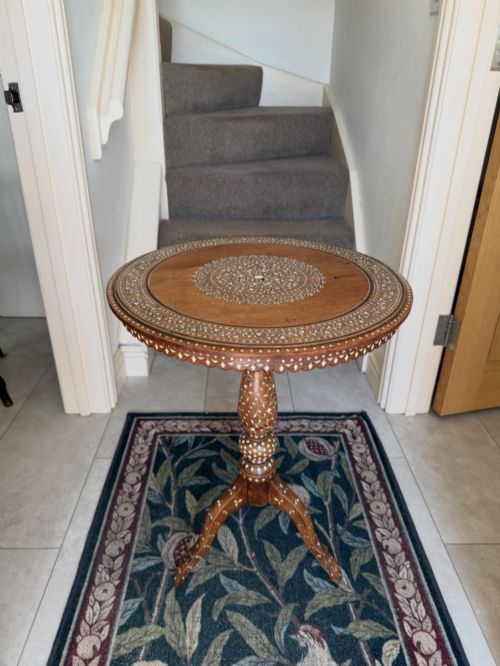
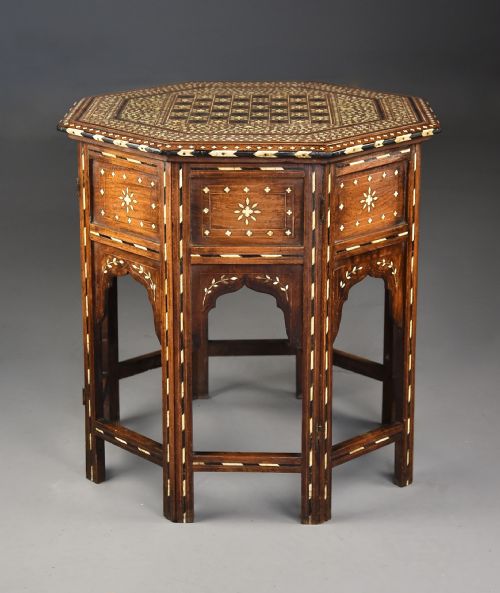
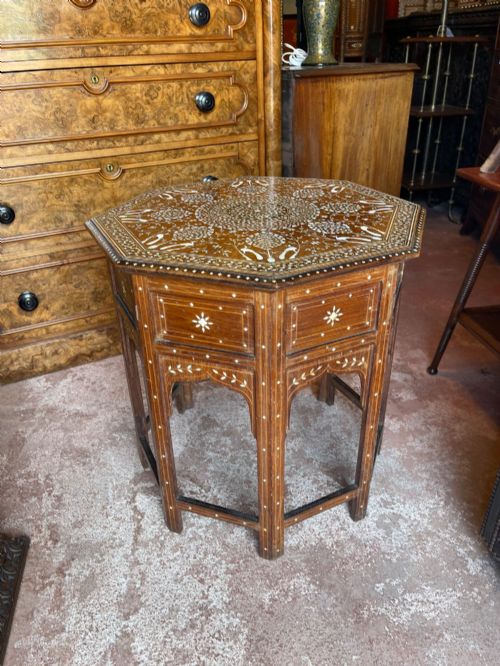
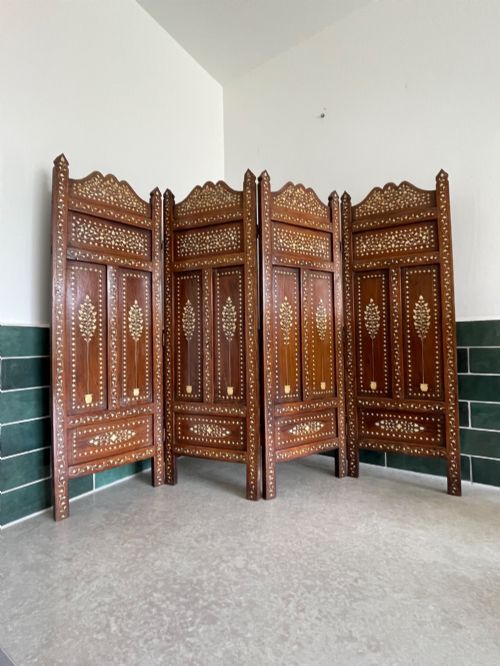
The version most frequently met on this page is the octagonal occasional table utilising a collapsible base beneath an elaborately patterned surface. Alongside standard side tables, occasional items such as table screens and pedestal forms appear in the listings.
Originating during the Anglo-Indian period, these items reflect the stylistic exchange between traditional Indian woodworking and British domestic tastes of the Victorian and Edwardian eras. The craftsmanship centres on dense ornamentation that covers every visible wooden surface.
What varies in quality
The level of detail in the bone and brass inlay work separates ordinary examples from finer specimens. Superior pieces maintain tight tolerances between the organic inlays and the surrounding timber without excessive filler.
Structural integrity of the folding mechanism and the crispness of the hand carving indicate the maker's skill. Tables with deeply undercut relief carving and precisely fitted joints represent the upper tier of the range.
Hoshiarpur Table Retail Price Guide 2026
Typical asking prices for hoshiarpur table among the pieces listed under this phrase on Sellingantiques today, from the lower quarter to the upper quarter. They describe what is for sale here now, not the wider market.
Materials recorded across the current inventory include bone inlay, brass wire, teak, rosewood, padauk, and copper accents.
The Hoshiarpur Table Glossary
- Octagonal
- Having eight sides. This geometric form is the standard shape for the tops of these tables.
- Bone inlay
- Small pieces of animal bone carved into geometric shapes and set into wood. The material provides a bright, creamy contrast against dark timbers.
- Anglo-Indian
- A design style produced during British rule in India that combined local craftsmanship with European furniture forms. These pieces catered to colonial homes and export markets.
- Collapsible
- Capable of folding flat for storage or transport. The base typically consists of intersecting wooden slats that lock together without metal hinges.
Hoshiarpur Table: Frequently Asked Questions
How do I clean a hoshiarpur table?
Dust the intricate carved surfaces gently using a soft, dry brush to prevent debris accumulation within the recesses.
Avoid liquid cleaners and excessive moisture, which can loosen the delicate bone and brass inlay elements over time.
Are these tables sturdy enough for daily use?
Most examples function well as occasional side tables for holding lightweight items such as books or small lamps.
Because many feature folding bases and delicate inlaid surfaces, heavy weights or frequent movement can strain the original joinery.
How can I date a hoshiarpur table?
Dating relies on stylistic clues, wood types, and construction methods spanning the nineteenth and early twentieth centuries.
Earlier nineteenth-century examples often display denser, finer bone inlay work, whereas later twentieth pieces tend toward broader carved patterns.