


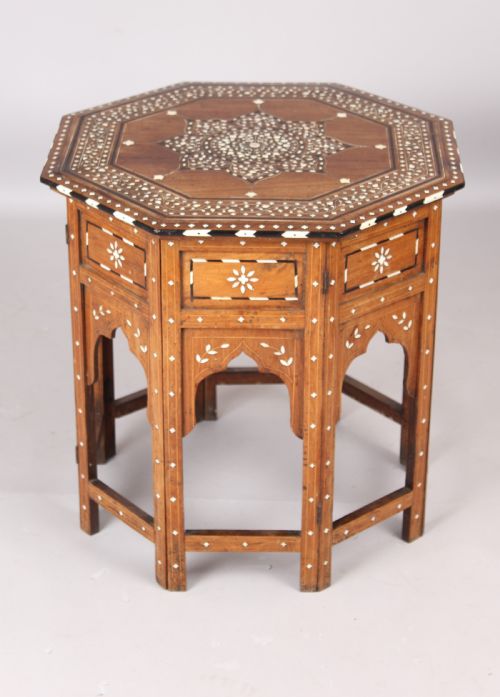


Hoshiarpur Accent Table
A hoshiarpur accent table brings intricate craftsmanship into a room, offering distinct geometric patterns and carved surfaces that collectors prize.
Hoshiarpur Accent Table
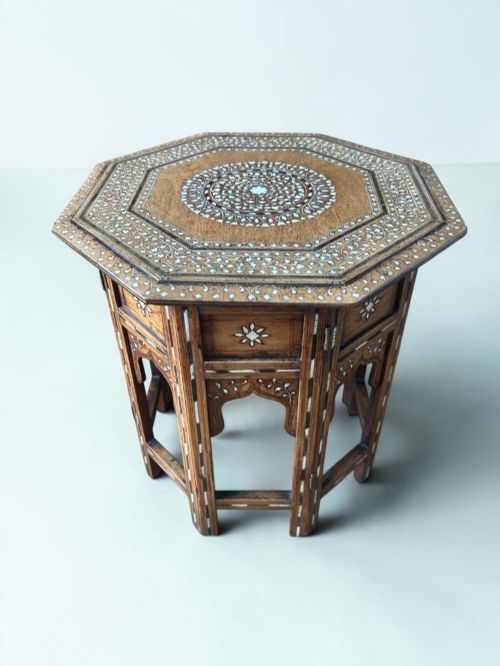
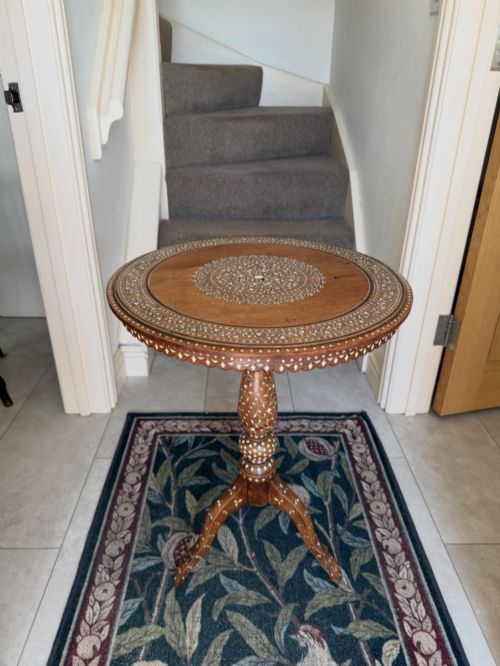
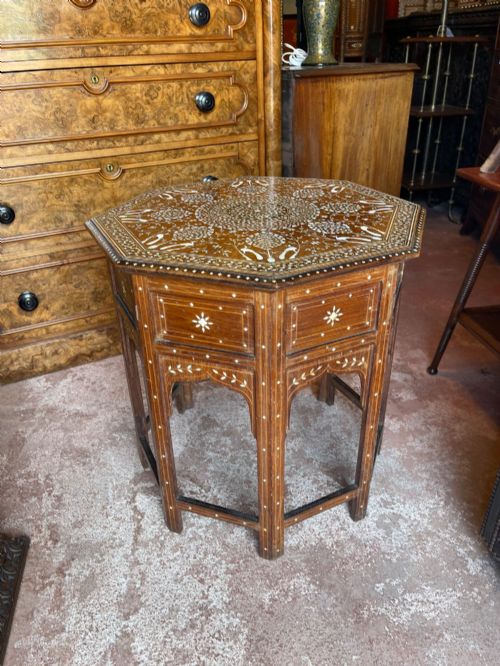
A hoshiarpur accent table is an occasional or side table originating from North India, featuring dense surface carving and contrasting inlays. These pieces often take the form of square, octagonal, or pedestal tables designed to serve as striking decorative elements in a room.
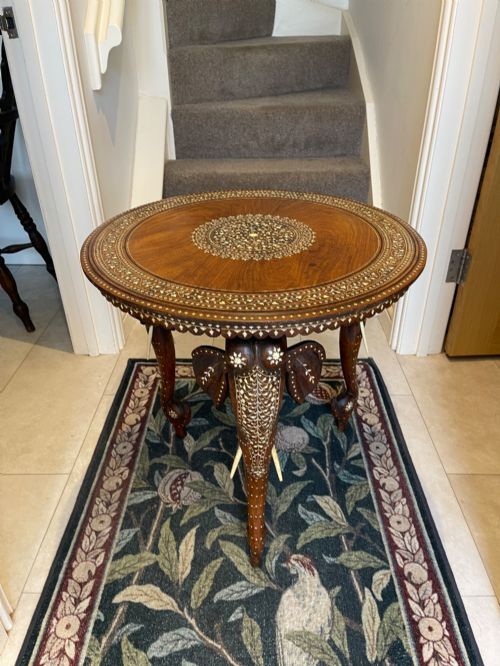
The versions most commonly met on this page span the late nineteenth century and the early twentieth century. Makers produced these items in various silhouettes, including tripod forms and figural bases such as elephant tables.
Anglo-Indian stylistic influences shape many of these designs, blending traditional Indian craftsmanship with British domestic tastes of the period. A buyer will encounter these works in formats ranging from small occasional tables to full-size pedestal examples.
Materials and Construction
Artisans built these tables using dense timbers such as teak, rosewood, and hardwood as the primary structural foundation. They then integrated contrasting materials into the surface to create elaborate visual patterns.
Bone inlay and ebony inlay feature prominently across these surfaces, alongside detailed brass inlay work. Craftsmen carved intricate botanical and geometric motifs directly into the timber before inserting the contrasting detail.
Hoshiarpur Accent Table Retail Price Guide 2026
Typical asking prices for hoshiarpur accent table among the pieces listed under this phrase on Sellingantiques today, from the lower quarter to the upper quarter. They describe what is for sale here now, not the wider market.
Listings on this site feature hoshiarpur accent tables spanning dates from eighteen sixty to nineteen ten, alongside Anglo-Indian occasional and pedestal forms.
Assessing Quality and Execution
Quality in a hoshiarpur accent table rests on the crispness and depth of the woodcarving. Superior examples display sharply defined patterns where every leaf and geometric line remains distinct.
The precision of the bone, brass, and ebony inlay work further distinguishes finer tables from simpler items. Tightly fitted inlay work without visible gaps indicates superior workshop execution.
The Hoshiarpur Accent Table Glossary
- Bone inlay
- A technique where small pieces of animal bone are shaped and set into recessed channels in the wooden surface to form decorative motifs. This method creates striking contrast against dark timber.
- Anglo-Indian
- A descriptive term for decorative arts produced in India during the British colonial period, combining local craftsmanship with British furniture forms. These pieces catered to both domestic and export markets.
- Occasional table
- A small, movable table intended for versatile use around a sitting room rather than primary dining. These pieces include side tables, pedestal tables, and small tripod designs.
- Pedestal table
- A table supported by a single central column rising from a base or feet. This configuration provides stability while maximising legroom.
Hoshiarpur Accent Table: Frequently Asked Questions
What is a hoshiarpur accent table?
A hoshiarpur accent table is a carved wooden occasional table featuring intricate bone, brass, or ebony inlay from North India. These pieces date primarily from the late nineteenth and early twentieth centuries.
Craftsmen created these works in shapes such as square, octagonal, and tripod pedestal designs, often incorporating Anglo-Indian stylistic elements for British colonial homes.
How were these tables used?
These tables served as decorative occasional and side furniture in nineteenth-century drawing rooms. Owners placed them beside seating to hold lamps, small decorative objects, or reading material.
Their striking inlaid surfaces ensured they functioned as visual focal points within a room rather than purely utilitarian objects.
How do I live with one?
Living with a hoshiarpur accent table involves placing it where dry conditions and stable temperatures protect the delicate timber and inlay work. Keeping the surface away from direct heat sources prevents the wood from warping and the inlay from loosening.
Regular dusting with a soft cloth maintains the carved details without damaging the contrasting bone or brass elements.
How do I tell periods apart?
Differentiating periods relies on examining the timber choice, inlay precision, and structural form recorded across nineteenth and early twentieth-century examples. Earlier nineteenth-century items typically showcase denser hardwood structures and traditional carving depths.
Later pieces from around nineteen hundred often incorporate varied geometric arrangements and distinct brass or bone patterns characteristic of Anglo-Indian export production.