


Horse in Stable Art
Horse in stable art captures the character of individual hunters, racers and studs through nineteenth-century portraiture.
Horse in Stable Art
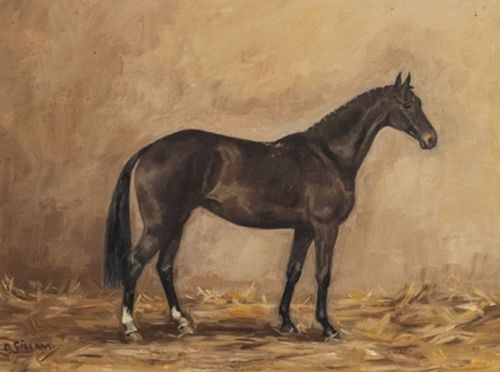
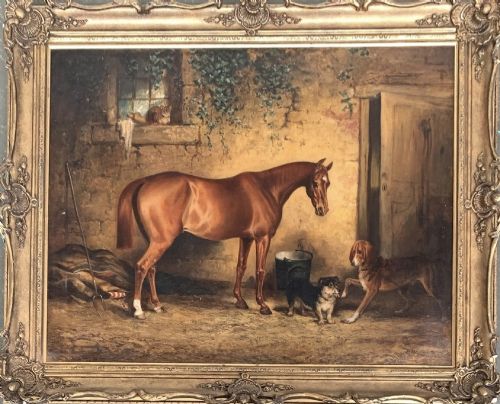
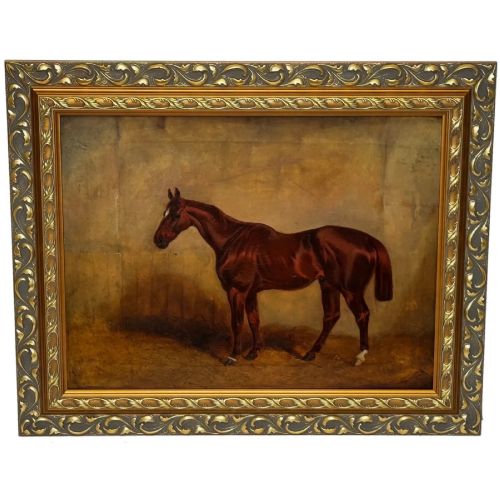
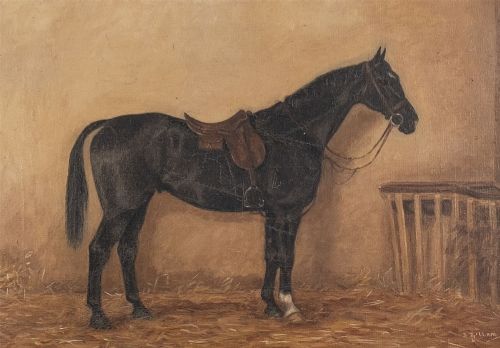
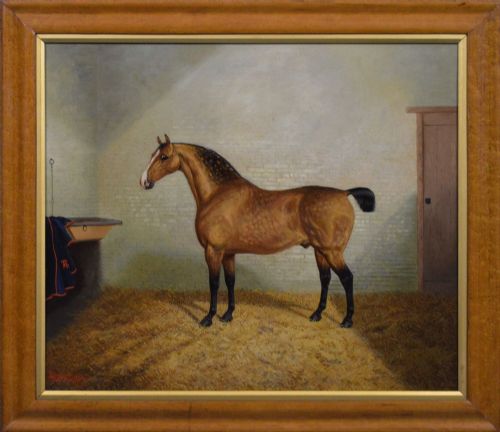
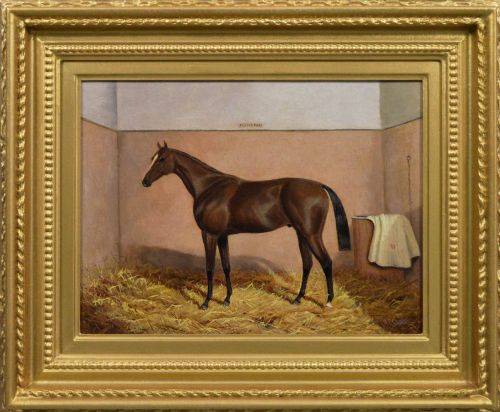
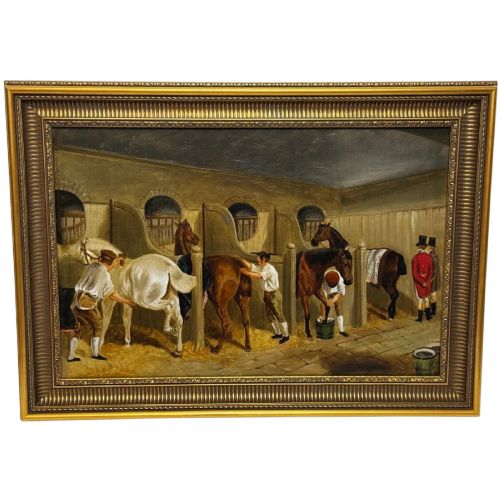
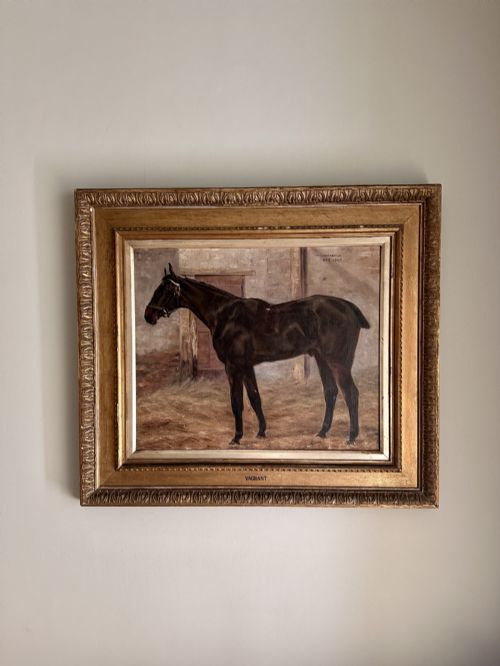
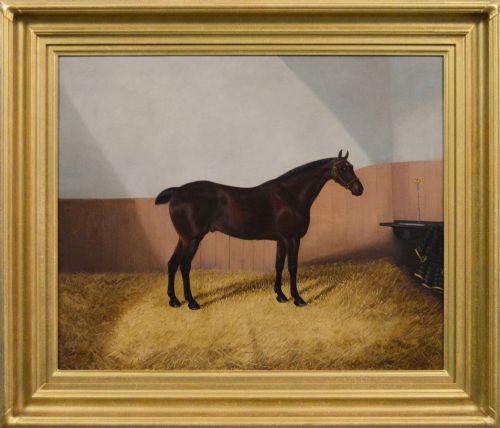
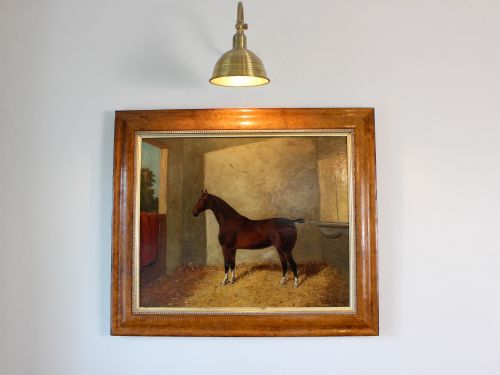
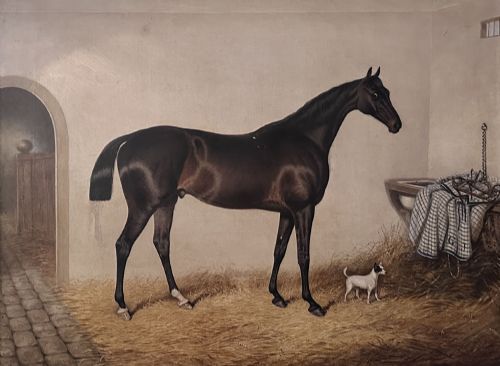
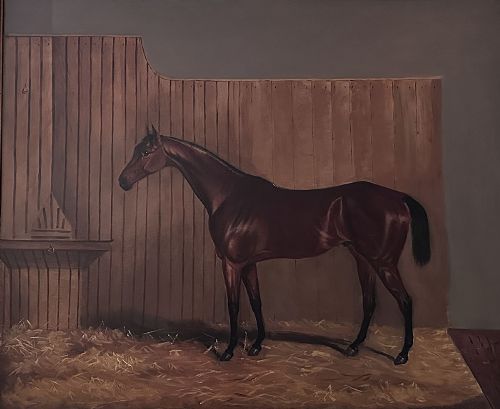
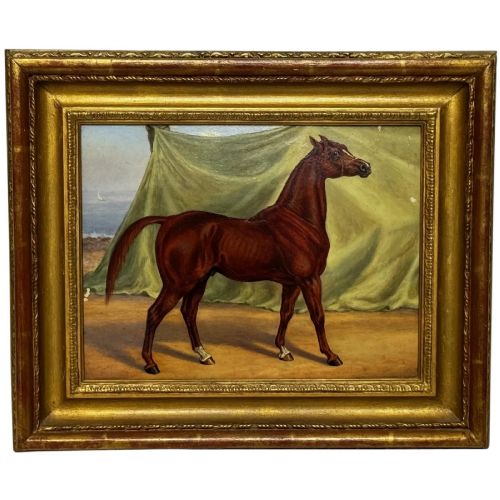
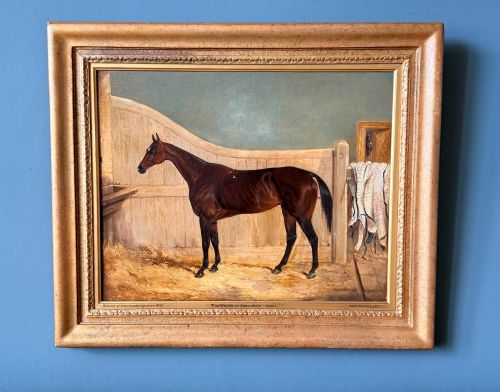
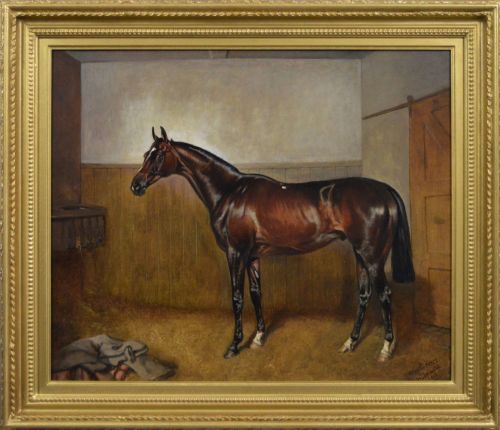
Horse in stable art consists primarily of oil paintings on canvas and panel, alongside watercolours and gouache works dating from the nineteenth and early twentieth centuries. These works portray named racehorses, hunters and stud animals, often shown inside traditional stable interiors alongside grooms or terriers.
The majority of pieces seen here belong to the Victorian era and the decades immediately following, reflecting a period of intense interest in sporting art and equine portraiture. Canvases range from intimate cabinet-sized portraits to larger framed oils, capturing animals such as chestnut hunters, bay mares and celebrated turf winners.
The style spans Victorian realism, sporting art and colonial subjects, including works originating from British stables as well as scenes set abroad. Many examples are framed in giltwood or gold leaf frames that complement the rich tones of the oil paint.
How they were made
These works were executed using oil paint on canvas or wood panels, allowing artists to build up the glossy sheen of a horse's coat through careful glazing and brushwork. Watercolours and gouache on paper were also employed for lighter, more immediate studies.
Pigments were applied to primed canvas to capture specific anatomical details, from the muscle definition of a stallion to the dappled markings of a buckskin. Many paintings are housed in original gilt, giltwood or gold leaf frames that add depth to the composition.
Horse in Stable Art Retail Price Guide 2026
Typical asking prices for horse in stable art among the pieces listed under this phrase on Sellingantiques today, from the lower quarter to the upper quarter. They describe what is for sale here now, not the wider market.
Keep an eye out for the occasional terrier lurking in the straw beside a very serious-looking stallion.
What varies in quality
The distinction between works rests upon the artist's command of equine anatomy, perspective within the stable interior, and the individual likeness of the animal. Finer pieces convey bone structure, muscle tone and light on the coat with precise observation rather than formulaic depiction.
Provenance and documentation elevate certain works, particularly when the horse, owner, or stable is identified through contemporary inscriptions or historical records. The execution of the surrounding interior - tack, straw and stable architecture - also separates standard commercial output from accomplished artistic achievement.
Charles Bilger Spalding·Henry Barraud·Albert Clark·Fred Fitzpatrick·John Alfred Wheeler·Thomas Walker Bretland·F.A. Clark·George E Sharpe·Samuel Spode·Benjamin Cam Norton·Edwin Frederic Holt·Alfred Moginie Bryant·Alfred Grenfell Haigh·John Nost Sartorius·John Ferneley Jnr·William Shayer Snr
The Horse in Stable Art Glossary
- Sporting art
- A genre of painting that depicts rural sports, hunting, shooting and equine portraits. It flourished in Britain during the eighteenth and nineteenth centuries.
- Equine portrait
- A painting dedicated to the likeness of a specific horse, often commissioned by owners or breeders to record a prized animal or race winner.
- Giltwood
- Wood carved and coated with gold leaf or a metallic gilding preparation. It provides a bright ornamental border to many nineteenth-century frames.
- Gouache
- An opaque watercolour medium used by artists to achieve solid areas of colour and sharp detail on paper. It often appears alongside traditional watercolour in nineteenth-century works.
- Roan
- A horse coat colour characterised by an even mixture of white hairs with dark hairs, frequently recorded in Victorian hunter paintings.
Horse in Stable Art: Frequently Asked Questions
What is horse in stable art?
Horse in stable art is a genre of nineteenth-century painting focusing on individual horses depicted inside traditional stable settings. These works often record specific racehorses, hunters or stud animals alongside stable details and handlers.
Created during the Victorian era and into the early twentieth century, these portraits combine rigorous equine anatomy with the warm, enclosed atmosphere of the stable interior.
Who painted these equine portraits?
These works were produced by specialist Victorian and Edwardian sporting artists who dedicated their careers to recording horses for owners, trainers and breeders. Painters often worked from direct observation at major racing stables and country estates.
Many pieces are signed by the artist or identify the specific horse, stable and owner through contemporary inscriptions on the canvas or stretcher.
How do I date an oil painting?
Dating relies on a combination of artist signatures, dated inscriptions, framing style and the canvas stretchers used during the period. Victorian and Edwardian works often exhibit specific stylistic markers in both the painting technique and the gilt framing.
Detailed provenance records and historical registries of winning racehorses or noted hunters can also help narrow down the exact decade of creation.
How should I display these paintings?
These oil paintings and watercolours suit traditional or transitional interiors where their dark, rich tones and gilt frames provide a natural focal point. They pair well with wood panelling, library spaces or studies.
Keep works away from direct sunlight and excessive humidity to protect the canvas, oil paint and delicate gold leaf frames over time.