
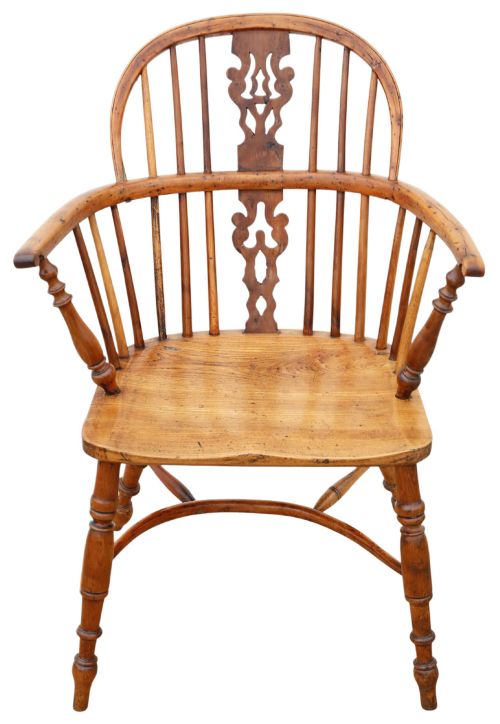
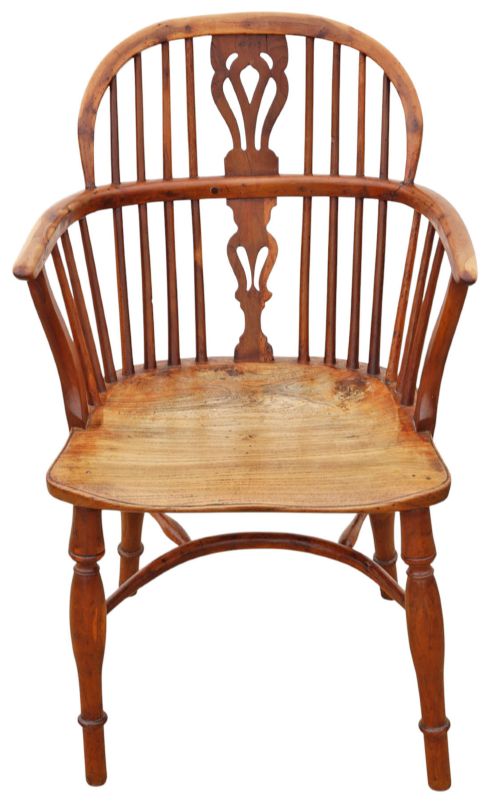
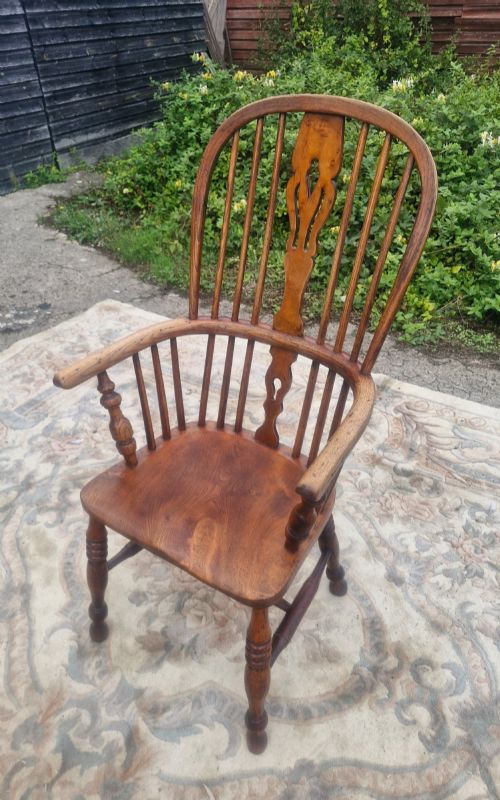

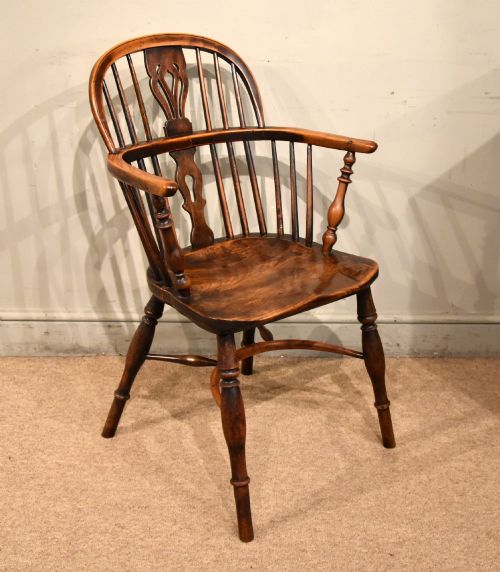
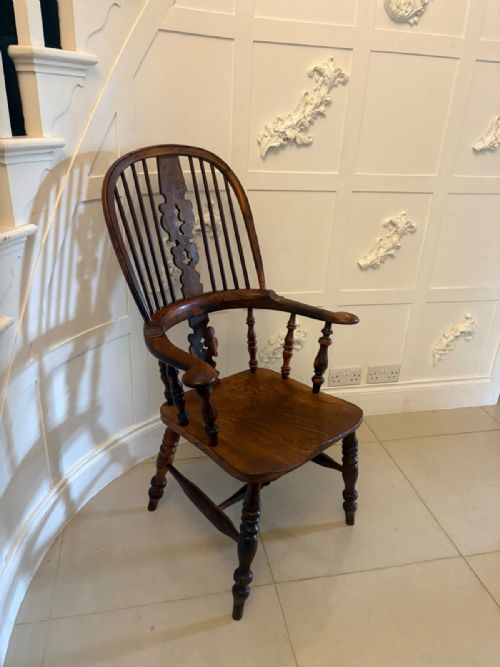
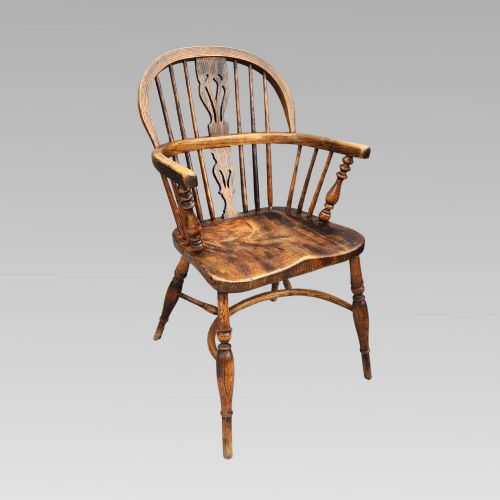
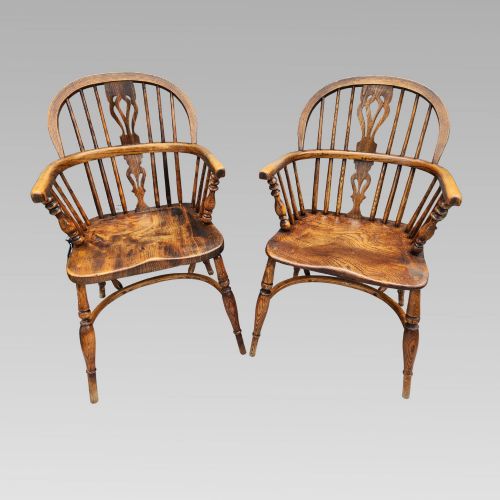
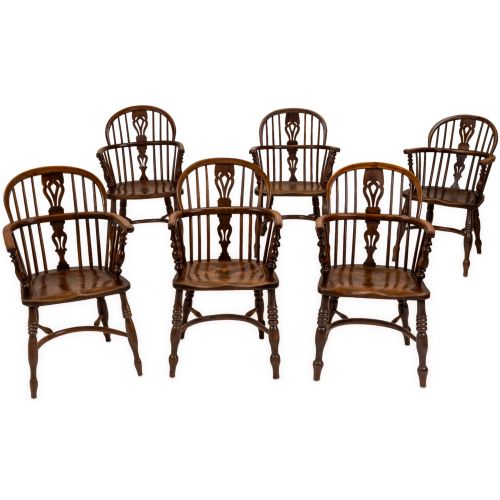

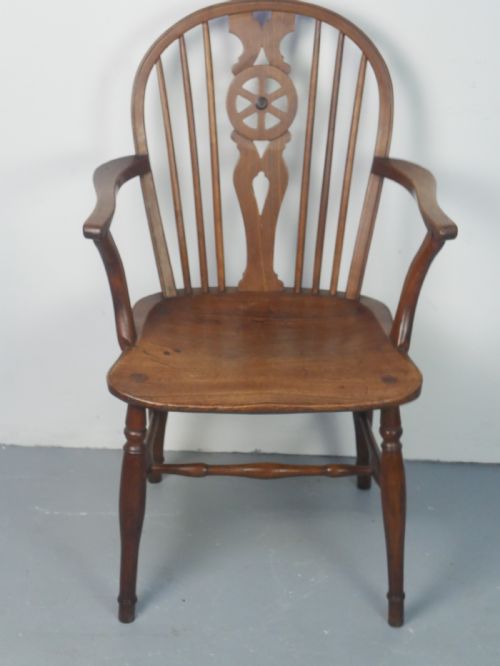
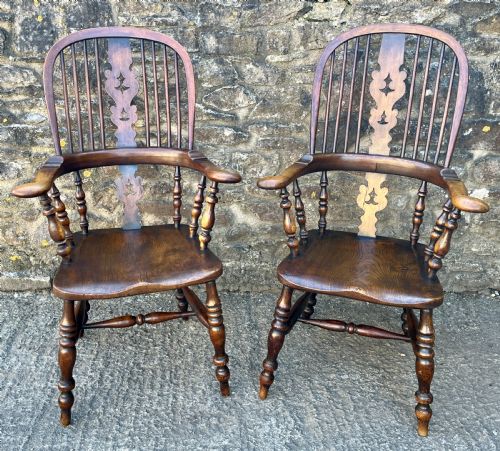
Hoop Back Carver Chair
A hoop back carver chair offers solid timber construction and comfortable country seating for daily use.
Hoop Back Carver Chair
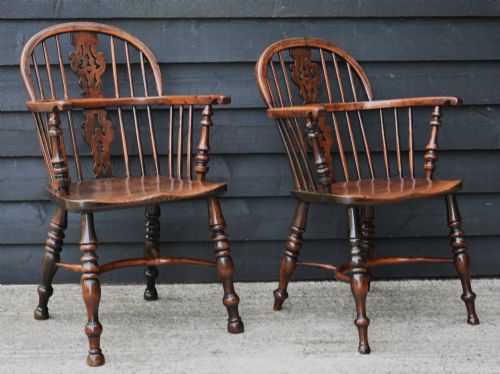
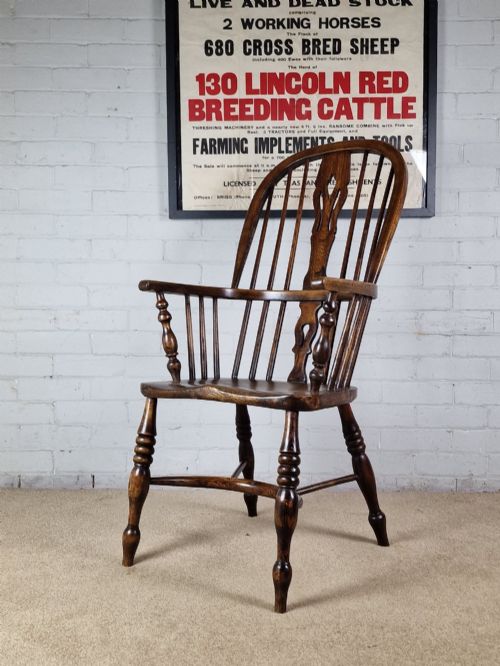
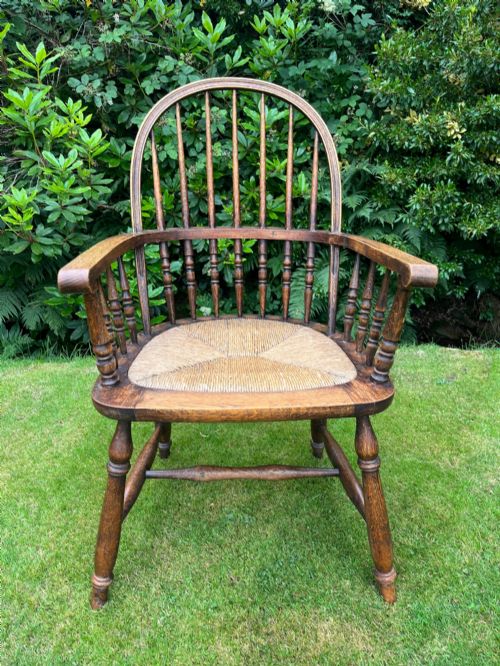
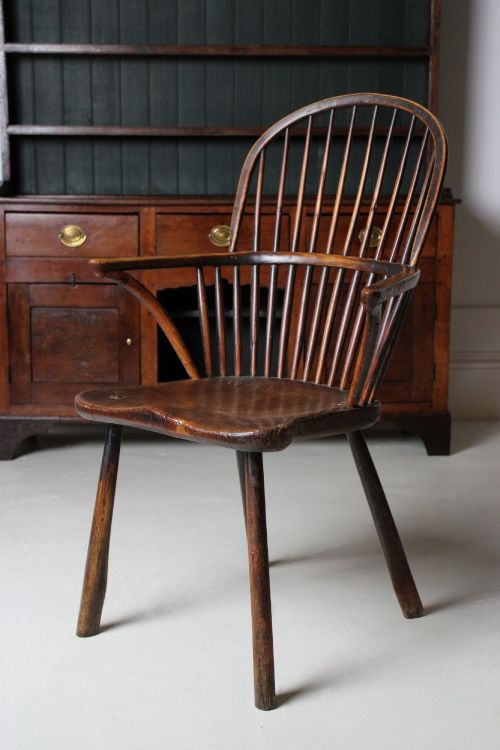
The form typically combines a bow or hoop back with armrests, standing on legs joined by stretchers. Makers utilised native woods to build sturdy seating for country houses and rural homes. The selection on this page ranges from early Georgian and Victorian examples to matched pairs and sets.
Most pieces function as desk chairs, fireside seats or dining carvers. Their robust vernacular design suits traditional interiors and modern spaces alike.
Materials and Construction
Makers constructed these chairs using a combination of native timbers, frequently pairing yew or elm for the seats with ash, beech or fruitwood for the legs and spindles. This method utilised the natural strength of each wood species, providing rigid support where needed and flexible durability in the bentwood hoop.
The hoop back was formed by steaming a single length of timber until pliable, then bending it into position and securing it into the solid wooden seat. Traditional joints relied on wedged tenons and turned spindles, assembling the framework without modern adhesives.
Surfaces developed a natural patina over decades of handling and wax polishing. Regional workshops applied subtle variations to the spindle arrangements, arm shapes and crinoline stretchers.
Several examples include crinoline stretchers, named after the whalebone undergarments fashionable when these curved wooden braces were first turned.
Standards of Quality
Quality in these chairs rests upon the selection of timber and the harmony of the proportions. Finer examples display striking grain patterns in the yew wood or elm seats, combined with well-turned spindles and balanced armrests.
The integrity of the construction distinguishes superior pieces from ordinary ones. Original wedged joints, minimal timber replacement and a deep, untouched patina indicate careful preservation by past owners.
The Hoop Back Carver Chair Glossary
- Hoop back
- A continuous bentwood rail forming the upper back and arm supports of a Windsor chair. This curved member distributes weight and provides ergonomic support.
- Carver
- An armchair designed to match a set of dining chairs, typically placed at the head of a table. These pieces feature integrated armrests for added comfort.
- Crinoline stretcher
- An arched underframe connecting the legs of a Windsor chair to provide structural rigidity. It often takes a horseshoe shape resembling a period petticoat hoop.
- Broad arm
- A Windsor chair design featuring wide, flat wooden armrests shaped from the solid timber or extended elbows. This provides a convenient surface for writing or resting.
- Vernacular
- Objects made by regional craftspeople following local traditions rather than strict academic design patterns. These pieces prioritise practical utility and available local materials.
Hoop Back Carver Chair: Frequently Asked Questions
How do I date a hoop back carver chair?
Dating relies on observing the turning of the legs, the thickness of the seat board and the method of construction. Earlier eighteenth-century examples often feature deep elm saddles and heavy underframes, while Victorian pieces show lighter turnings and standardised parts.
Regional characteristics also help determine the age and origin. Comparing the timber species and stretcher design against known provincial styles narrows down the decade of manufacture.
Are these chairs comfortable for daily use?
These chairs were built for practical domestic seating, offering supportive high backs and contoured wooden seats. The ergonomic sweep of the bentwood hoop accommodates sitting for extended periods.
Adding a loose seat pad can increase comfort if desired. The sturdy timber construction handles everyday domestic life without difficulty.
What is the difference between a yew and elm chair?
Yew wood typically displays a rich, variegated grain with warm golden and reddish tones, making it a prized material for high-status country chairs. Elm offers a dense, interlocking grain with pale brown tones, selected for its resistance to splitting when carved into solid seats.
Makers frequently combined both woods in a single chair, using yew for the upper spindles and elm for the heavy seat slab. This pairing optimized both the appearance and the structural performance of the seating.
Where should I place a Windsor carver at home?
A Windsor carver functions well as a desk chair, a fireside armchair or an accent piece in a hallway. Their sculptural wooden backs provide visual interest when viewed from the front or the rear.
They also serve as head chairs at a dining table. The modest footprint allows them to fit comfortably into both traditional and contemporary room layouts.