






Honey Pine Bench Seat
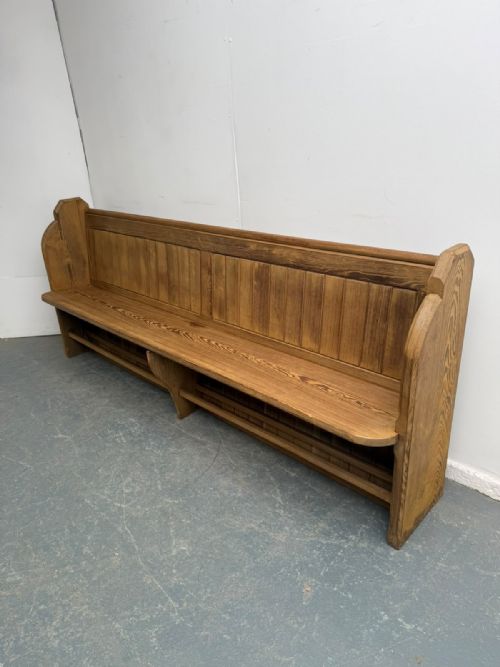
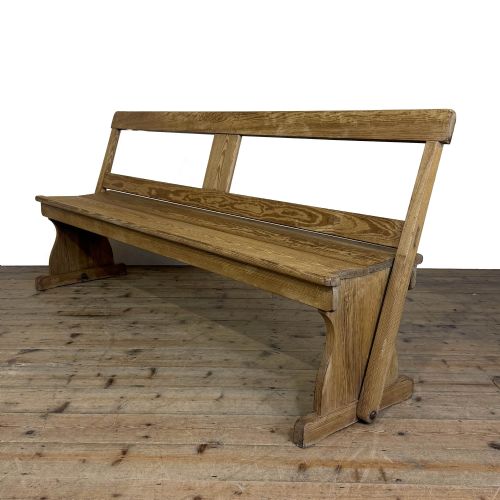
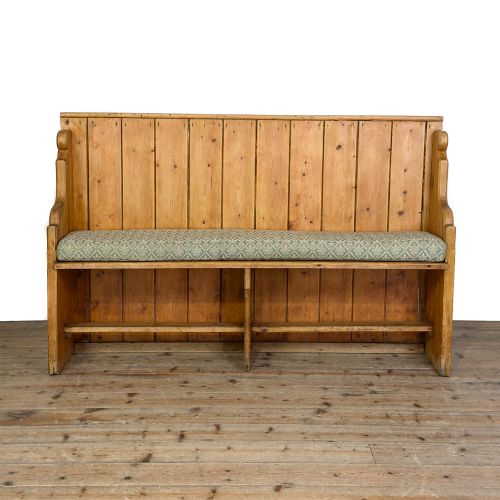
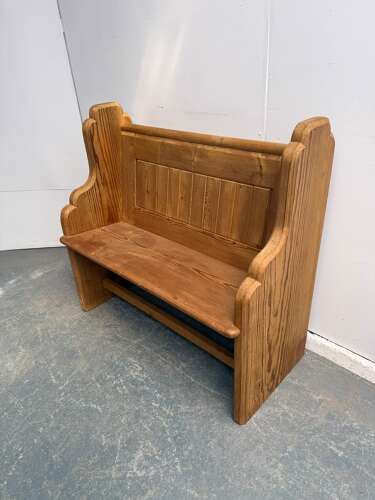
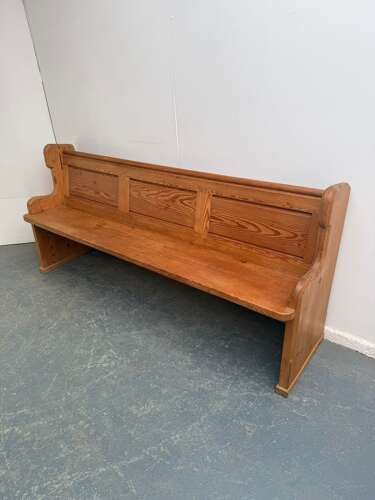
A honey pine bench seat brings warmth and honest utility to a hall or kitchen, offering the simple forms of country furniture.
Honey Pine Bench Seat
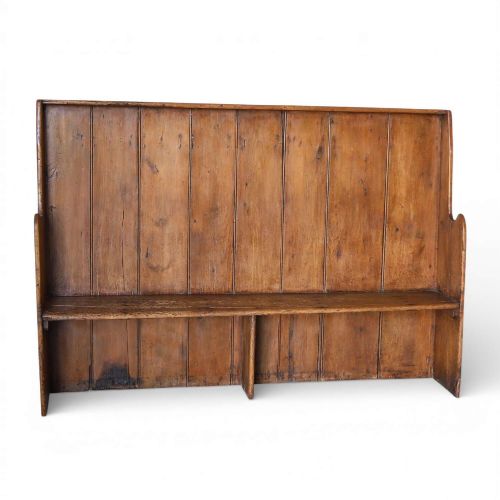
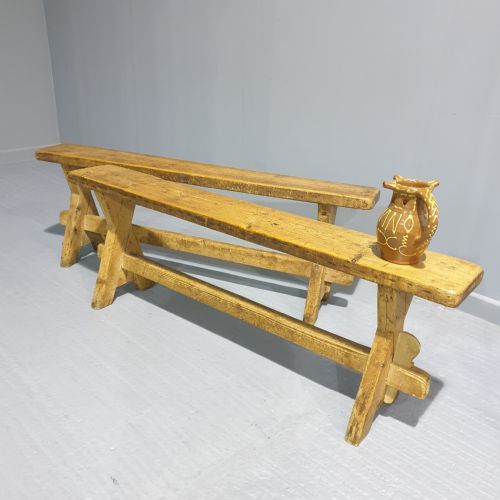
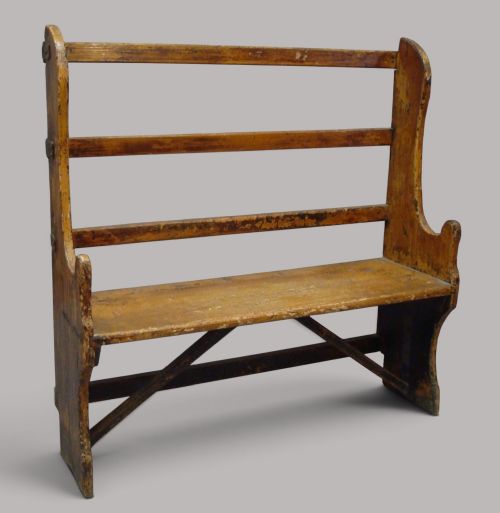
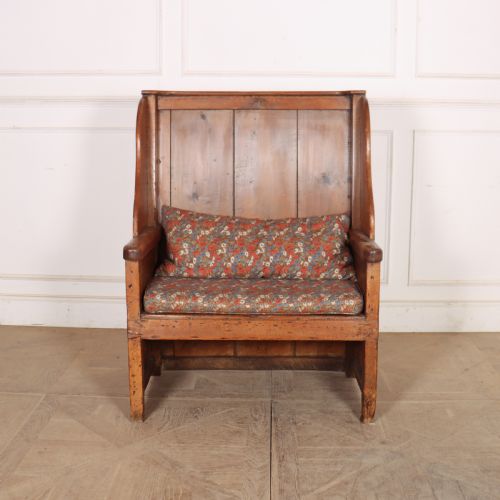
When you search for a honey pine bench seat, you encounter robust seating created for everyday use in churches, schools, taverns and rural homes. The selection spans straightforward long benches alongside high-back settles designed to shield occupants from draughts.
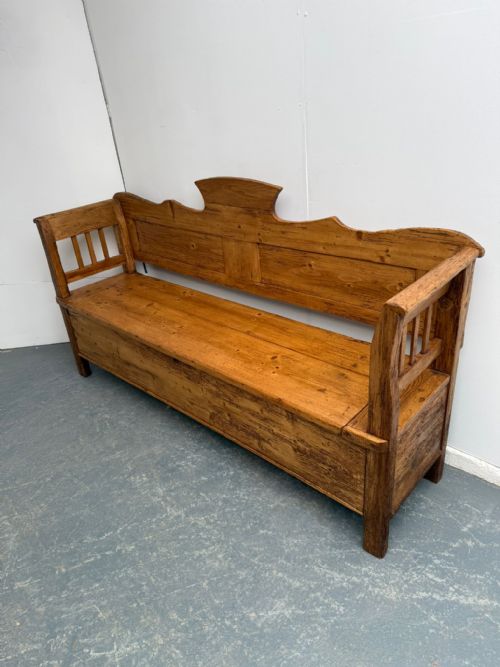
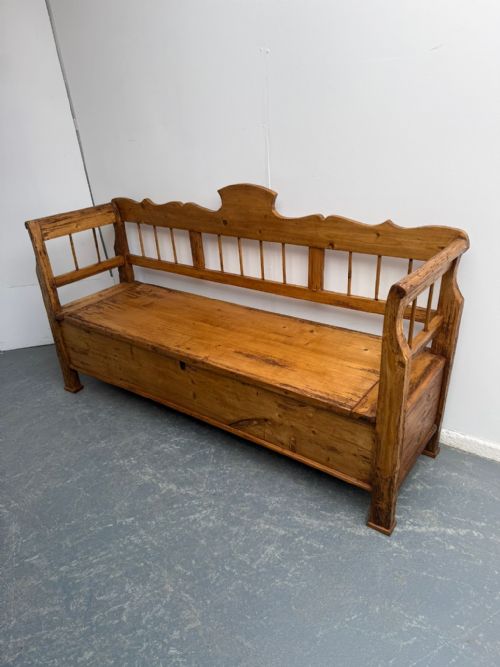
The examples gathered here date from the Georgian and Victorian eras, carrying patinas developed through generations of handling. Settles with enclosed storage boxes beneath the seat sit alongside open-framed church pews and school benches.
Geographic origins vary from English and Welsh country workshops to Swedish and Hungarian households. These vernacular pieces rely on practical construction rather than courtly ornament, suiting contemporary interiors that favour functional warmth.
How they were made
Makers utilised native pine and pitch pine, selecting softwoods that were locally available and straightforward to work with hand tools. Boards were joined to create solid panels for high backs and box bases, prioritising structural endurance.
Surfaces were finished with wax to nourish the timber and develop a deep, honey-brown sheen over decades of use. Certain examples display scumble paint finishes intended to imitate more costly hardwoods or grain patterns.
Honey Pine Bench Seat Retail Price Guide 2026
Typical asking prices for honey pine bench seat among the pieces listed under this phrase on Sellingantiques today, from the lower quarter to the upper quarter. They describe what is for sale here now, not the wider market.
Materials recorded across the selection include solid pine, pitch pine, iron fixings, and occasional fabric elements.
What varies in quality
Distinction across the range lies in the integrity of the timber's surface and the honesty of its proportions. Pieces retaining their original configuration and deep honey patina stand apart from those altered or overly stripped by later interventions.
The Honey Pine Bench Seat Glossary
- Settle
- A wooden bench with a high back, solid arms, and often an enclosed box seat beneath. This form evolved to keep out cold draughts in unheated historical rooms.
- Scumble
- A decorative paint technique involving translucent glazes dragged or brushed over a base coat to simulate wood grain. It was commonly applied to utilitarian pine furniture in country districts.
- Pitch pine
- A durable softwood timber derived from North American pine species, noted for its high resin content and distinct grain pattern. It provided exceptional strength for heavy-duty institutional seating.
- Patina
- The surface sheen and colour developed by timber over long periods through light exposure, handling, and repeated waxing. It serves as a visual indicator of age and genuine use.
Honey Pine Bench Seat: Frequently Asked Questions
What is a settle bench?
A settle bench is a high-backed wooden seat designed to keep out draughts in older homes.
Many examples include a hinged lid forming a box beneath the seat for storage.
How do I clean waxed pine?
Clean waxed pine gently with a soft, dry cloth to remove dust without disturbing the surface.
Apply a traditional beeswax periodically to nourish the timber and maintain the honey patina.
Where were these benches used?
These benches originated in churches, schools, taverns, and rural farmhouses for communal seating.
Today they function effectively in hallways, boot rooms, and around farmhouse kitchen tables.
How old is a Victorian pine bench?
A Victorian pine bench dates from the reign of Queen Victoria between eighteen thirty-seven and nineteen hundred.
Pieces from this era often feature simpler construction methods than earlier Georgian examples.