



Historical Wall Tapestry
These historical wall tapestry pieces bring centuries of textile artistry and narrative depth into modern rooms.
Historical Wall Tapestry
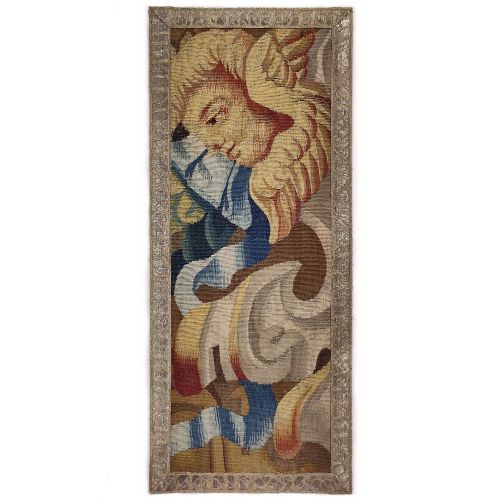
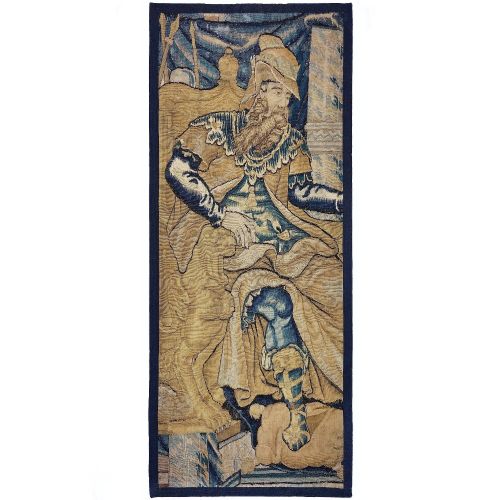
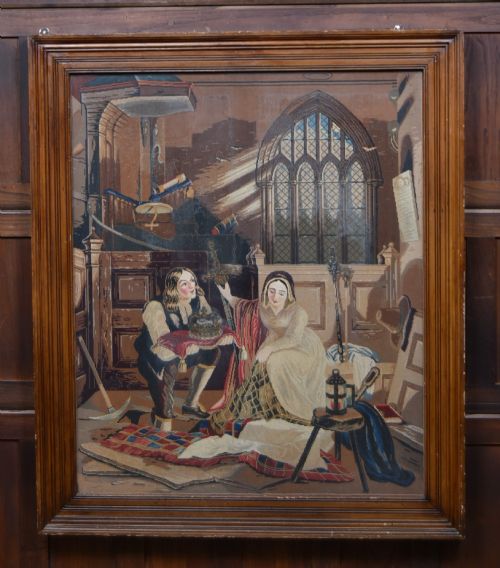
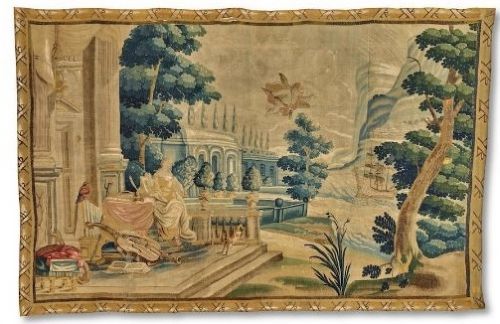
When you search for a historical wall tapestry, you encounter woven narratives and embroidered panels spanning from the sixteenth century through to the mid-twentieth century. The selection ranges from grand mythological Flemish scenes and medieval-style works to later Berlin wool work wall hangings and Scottish needlepoint pieces.
You are most likely to meet nineteenth-century interpretations of earlier styles alongside authentic seventeenth-century fragments and cushion covers. Object types stretch across framed artwork, large wall hangings, and needlework samplers, demonstrating varied regional origins from North Germany to Scotland and France.
How they were made
The makers of these textiles relied primarily on wool and silk threads, often worked onto canvas foundations or woven by hand on traditional looms. Surviving examples demonstrate meticulous needlework techniques, with some later nineteenth-century pieces mounted in giltwood or gilt wood frames.
Materials varied according to the period and purpose, ranging from heavy woollen wall hangings designed for insulation and display to finer silk embroidery and detailed needlework samplers. Framing materials such as glass and wood frequently appear on pieces adapted for domestic wall display.
Historical Wall Tapestry Retail Price Guide 2026
Typical asking prices for historical wall tapestry among the pieces listed under this phrase on Sellingantiques today, from the lower quarter to the upper quarter. They describe what is for sale here now, not the wider market.
Listings span periods from the sixteenth century to the mid-twentieth century, featuring wool, silk, canvas, and giltwood frames.
What varies in quality
Quality in these textiles rests upon the fineness of the thread work, the complexity of the narrative composition, and the integrity of the surviving fibres. Pieces executed with tight, uniform stitching and sophisticated polychrome palettes stand apart from simpler decorative works.
The degree of preservation and the fidelity of the historical revival style also dictate the standing of a piece. Earlier seventeenth-century origins and grand scale dimensions command attention for their historical weight, while later Victorian and mid-twentieth-century items reflect differing levels of workshop ambition.
The Historical Wall Tapestry Glossary
- Flemish tapestry
- A woven textile artwork produced in the historic Flanders region, renowned for intricate mythological and figural scenes.
- Needlework sampler
- A piece of embroidery produced by a maker to demonstrate proficiency in various stitches and alphabet designs, often dated and signed.
- Berlin wool work
- A type of coloured wool embroidery worked on canvas from printed grid patterns, popular during the nineteenth century.
- Giltwood
- Wood that has been coated with a thin layer of gold leaf, commonly used for framing antique wall art and mirrors.
- Cushion cover
- A textile piece, occasionally formed from repurposed tapestry fragments, designed to enclose a soft cushion pad.
Historical Wall Tapestry: Frequently Asked Questions
How were historical wall tapestries used?
These textiles were originally hung in large rooms to provide both decorative splendour and insulation against cold stone walls.
Over time, smaller panels and fragments were repurposed into cushion covers or mounted behind glass in wooden frames for domestic display.
How do I tell seventeenth-century pieces apart from nineteenth-century revivals?
Seventeenth-century works typically display the natural wear, organic dye shifts, and weaving techniques characteristic of early Flemish or North German production.
Nineteenth-century revival pieces, such as Gothic Revival or Berlin wool work, often utilise brighter chemical dyes and standard canvas grounds.
What materials should I expect to find?
The primary components recorded in these works are wool and silk threads stitched or woven onto canvas foundations.
Many pieces are preserved behind glass within wood or giltwood frames, whilst others remain flexible textile wall hangings.
Where were these textiles made?
The pieces originate from diverse European centres including Flanders, Germany, France, and Scotland.
Each region imparted distinct aesthetic traditions, from French Napoleonic embroidery to Scottish mourning needlepoint and German wool work.