


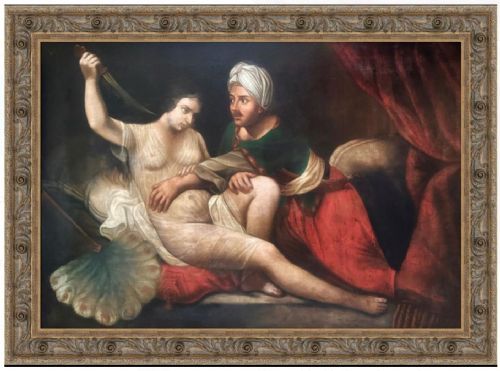
Historical Scene Canvas
A historical scene canvas brings centuries of narrative art into a room, capturing dramatic moments, social gatherings and maritime engagements in oil paint.
Historical Scene Canvas
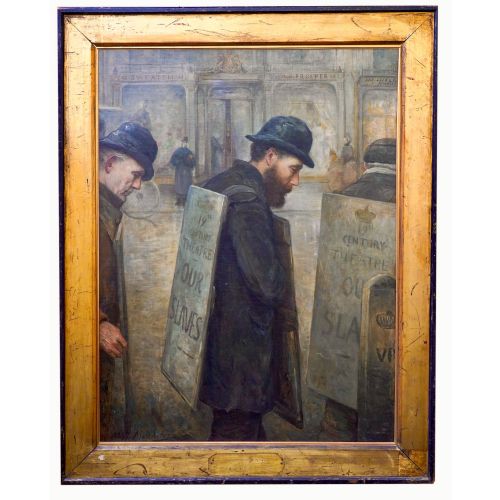
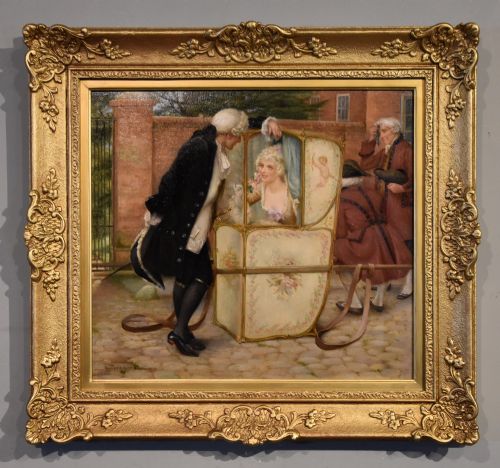
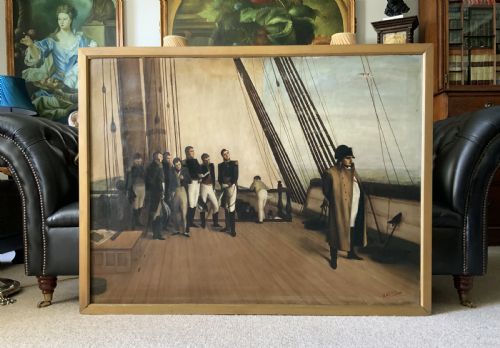
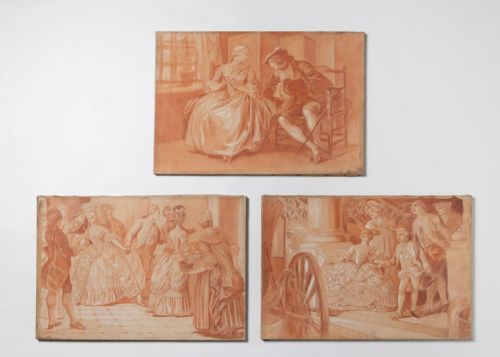
A historical scene canvas presents painted narratives spanning from seventeenth-century classical landscapes and maritime skirmishes to nineteenth-century genre art and Victorian social realism. These works depict domestic interiors, naval battles, literary episodes and figures in period attire engaged in daily or dramatic events.
Buyers encounter oil paintings originating from various European schools, with British and French nineteenth-century genre pieces appearing alongside Italian baroque religious and military subjects. The compositions range from intimate domestic encounters involving two figures to monumental canvases depicting large groups in stately homes or coastal settings.
The common thread across these works is their use of canvas as the primary support for narrative oil painting, often housed within heavy giltwood frames that reflect the aesthetic of their period of origin.
Quality and Execution
Quality rests in the handling of narrative detail, anatomical proportion and the modulation of light and shadow across the canvas. Stronger works demonstrate confident brushwork that defines character and architectural space convincingly.
The skill of the composition and the preservation of the pigment layers distinguish accomplished academic and named artists from more formulaic school works of the period.
The listings on this site feature oil on canvas works spanning from the seventeenth century to the mid-twentieth century.
Felix Stone Moscheles·Delapoer Downing·Robert Alexander Hillingford·Edwin Hughes·Alfred Holst Tourrier·George Morland·Frank Moss Bennett·Jean Sobieski·Antonio Tempesta·Pietro D’asaro·Andrea Celesti·Heywood Hardy·Rolinda Sharples·Willem Johannes Martens·Francis Russell Flint·Marcel Brunery·Henry Charles Bryant·Edward Fletcher·James Bertrand·Arthur David Mccormick·Jules Girardet·Abraham Cooper·James Hardy
The Historical Scene Canvas Glossary
- Genre art
- Depictions of everyday life and non-idealised subjects, often showing figures in domestic, social or historical settings. These scenes focus on narrative storytelling rather than portraiture or pure landscape.
- Oil paint
- A slow-drying paint made by mixing pigments with oils such as linseed. It permits subtle gradations of tone and rich colour saturation.
- Giltwood
- Wood carved and covered with a thin layer of gold leaf or gold paint. Frames of this material are typical of eighteenth and nineteenth-century display.
- Canvas
- Heavy woven fabric stretched tautly over a wooden stretcher frame to serve as a stable painting surface. It replaced wooden panels for many larger works from the seventeenth century onward.
- Baroque
- An artistic style originating in Italy during the early seventeenth century, characterised by drama, deep shadow and intense emotional expression in narrative subjects.
Historical Scene Canvas: Frequently Asked Questions
What periods do these paintings cover?
The listings span from the seventeenth century through the Victorian era up to the mid-twentieth century.
Most pieces originate from the nineteenth century, encompassing Victorian social realism, maritime scenes and historical genre painting.
How should I hang an oil painting?
Ensure the wall can support the weight of the canvas and its heavy giltwood frame securely.
Keep the painting away from direct sunlight, dampness and intense heat sources to protect the oil pigments and canvas.
What subjects are most common?
Common subjects include historical genre moments, literary adaptations, naval battles and domestic interiors with multiple figures.
Artists frequently drew inspiration from classical theatre, military campaigns and everyday historical narratives.
Are all the canvases framed?
Many works retain period giltwood or gold leaf wooden frames that complement their nineteenth or eighteenth-century origins.
Frames add significant presence to narrative scenes and help establish the historical context of the artwork.