


Historic Ship Painting
A historic ship painting captures the drama of naval warfare and maritime trade, offering a window into centuries of seafaring heritage for any collector.
Historic Ship Painting
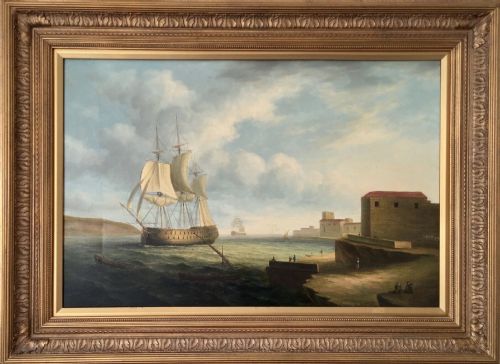
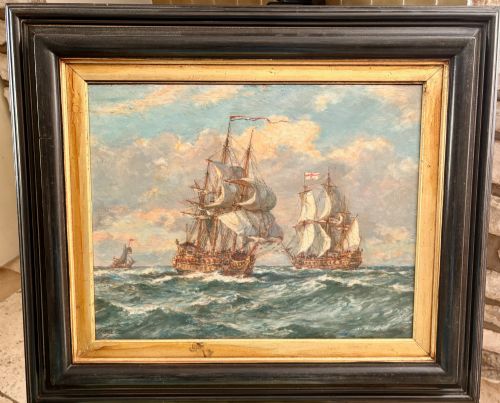
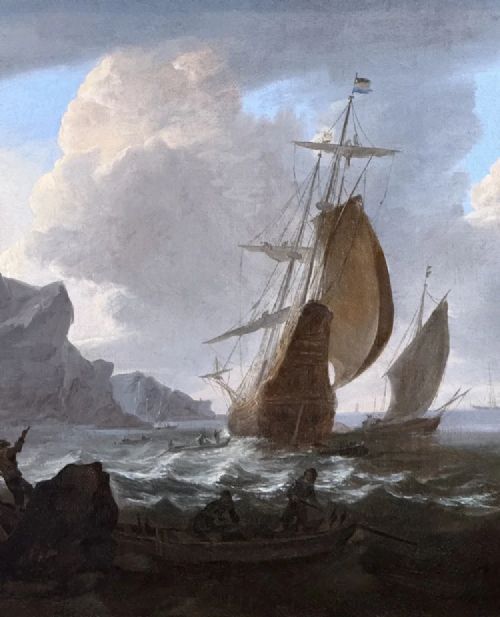
A historic ship painting encompasses oil paintings and watercolours depicting naval vessels, galleons, and merchant ships across various centuries. These works range from early depictions in the manner of the Dutch Golden Age to Edwardian watercolours and mid-century canvases.
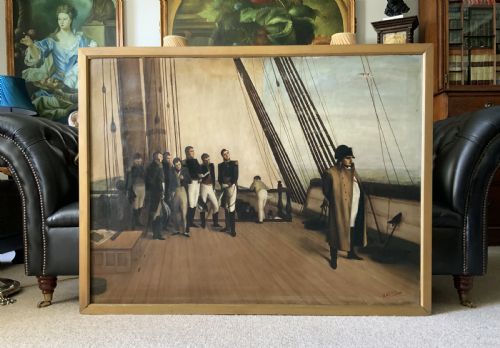
The selections span distinct periods including the seventeenth century, the Georgian era, and the Victorian maritime tradition. Buyers encounter subjects from specific naval engagements like Trafalgar to quiet scenes on the River Thames.
Object types include framed oil paintings on canvas or panel alongside works on paper. Alongside traditional paintings, the records show maritime art extending to model boats and pond yachts from around nineteen hundred.
Materials and Technique
Artists relied primarily on oil paint applied to canvas or wood panels, utilising the medium to build up deep tones for the sea and luminous highlights for billowing sails. Watercolours on paper appear in period works, allowing for delicate washes that capture coastal light and atmospheric skies.
Giltwood frames and gold leaf feature heavily in the presentation of these maritime works, often complementing the richness of the palette within. Panels provide a rigid support for detailed sixteenth and seventeenth-century style scenes, while woven canvas suits larger nineteenth-century compositions.
One listed model boat from around nineteen hundred proves that sailors were not the only ones carving frigates.
Assessing Quality
Quality rests upon the artist's command of rigging, hull construction, and nautical architecture, where precise draughtsmanship separates accomplished marine artists from amateur hands. The depiction of water movement, from choppy gales to calm harbour waters, dictates the visual success of the piece.
Condition of the canvas and pigment stability influence the piece, particularly where works have undergone past restoration or require conservation attention. The quality of the original framing, such as period giltwood surrounds, adds significantly to the integrity of the object.
Bernard Gribble·Charles William Wyllie·Dion Pears·Edward Fletcher·Joseph Heard·WF Mitchell
The Historic Ship Painting Glossary
- Galleon
- A large sailing warship used by European nations from the fifteenth to the eighteenth centuries. These vessels are frequently depicted in seventeenth-century style maritime art.
- Grisaille
- A painting executed entirely in shades of grey or neutral greyish-monotone. This technique appears in eighteenth-century naval seascapes.
- West Indiaman
- A large merchant ship trading between Europe and the West Indies. These vessels formed popular subjects for nineteenth-century ship portraits.
- Panel
- A flat wooden board used as a support for oil painting before canvas became standard. They are common in earlier maritime works.
- Maritime realismo
- An artistic approach focusing on accurate portrayal of ships and naval architecture. Works in this style document specific vessels like the HMS Blenheim.
Historic Ship Painting: Frequently Asked Questions
How do I date a historic ship painting?
Dating relies on the ship types, rigging styles, and naval uniforms depicted within the composition, alongside any signatures or contemporary inscriptions on the reverse. Examining the canvas weave, stretcher construction, and framing materials provides further chronological clues.
Comparison with documented works by identified marine painters helps narrow the decade of creation. Written records on the frame or canvas often confirm the specific vessel and year portrayed.
What is the difference between oil and watercolour marine works?
Oil paintings on canvas or panel offer rich textures and deep pigment layers capable of rendering turbulent seas and dramatic lighting effects. Watercolours on paper provide a lighter, more translucent quality well suited to atmospheric coastal views.
Oils generally required more robust framing and were designed for principal rooms, while watercolours needed careful protection behind glass from direct sunlight.
How were these paintings used originally?
Maritime paintings were commissioned by naval officers, shipowners, and merchants to document specific vessels, glorious victories, or commercial fleets. They served as proud statements of maritime enterprise and naval power in domestic and institutional interiors.
Owners displayed them in parlours, boardrooms, and captain's cabins to celebrate personal connections to the sea and notable historical engagements.
How should I care for an antique marine painting?
Protect the artwork from direct sunlight and sudden fluctuations in temperature and humidity to prevent canvas warping and pigment degradation. Keep oil surfaces clean using gentle dusting with a soft, dry brush, avoiding liquid cleaners.
Ensure watercolours remain sealed behind protective glazing with acid-free mounts to prevent paper foxing and fading over time.