



Historical Needlework
Historical needlework pieces are centuries-old textile artworks and samplers that bring tangible domestic history and meticulous hand-stitching directly into your interior.
Historical Needlework
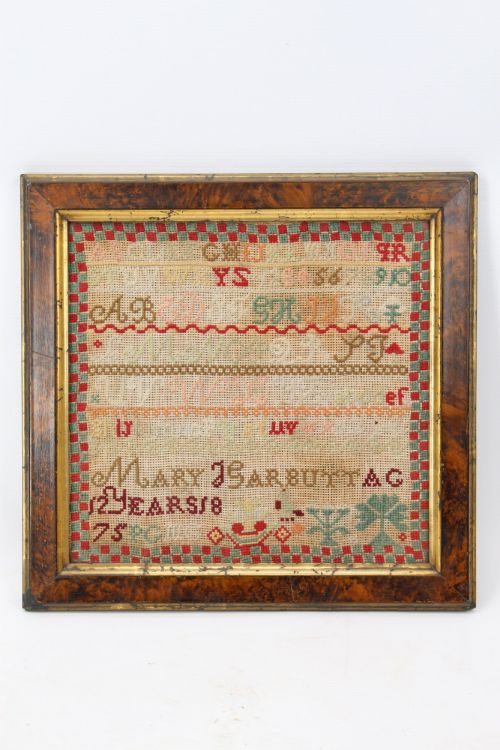
Historical needlework encompasses textile art, wall art, framed textile art, and needlework samplers created across several centuries. You are most likely to encounter Victorian and Georgian samplers alongside framed 18th-century panels and pictures.
The selection ranges from early British and continental samplers detailing names and dates to larger German Berlin wool work tapestries and 17th-century cushion covers. These works reflect both domestic education and ambitious decorative schemes of their respective eras.
Originating from British, Dutch, French, and German workshops, these textiles survive mounted in period frames or as wall hangings and coverlets. Each piece captures specific regional stitching traditions and aesthetic preferences from the 16th century onward.
Materials and construction
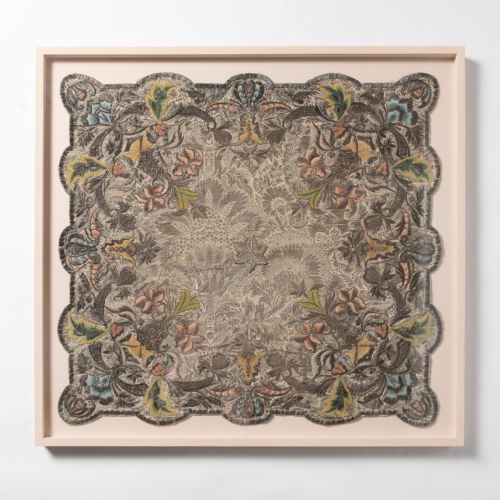
Maker execution relies on natural textile grounds such as linen, wool, and silk, providing the stable foundation for complex thread work. Workers stitched intricate designs using silk thread, wool, and occasionally metal thread for heightened visual texture.
Finished textiles were frequently mounted in wood frames, gilded wood frames, and protected behind glass to preserve the delicate fibres. Larger tapestries and wall hangings utilised robust weaving and embroidery techniques designed to span substantial wall spaces.
Historical Needlework Retail Price Guide 2026
Typical asking prices for historical needlework among the pieces listed under this phrase on Sellingantiques today, from the lower quarter to the upper quarter. They describe what is for sale here now, not the wider market.
The recorded styles include 18th-century British and Dutch, French Rococo and Baroque, alongside distinct Victorian and Georgian samplers.
Assessing quality and execution
Quality rests upon the precision of the stitching and the complexity of the pictorial composition, whether depicting domestic lettering on a sampler or detailed racing tracks and European figures. Superior examples demonstrate tight, uniform thread control and sophisticated colour palettes.
The preservation of the original linen or silk ground and the vibrancy of the remaining threads distinguish finer survivals from heavily degraded pieces. Original framing, particularly period gilded wood enclosures, adds substantial contextual integrity to the textile.
The Historical Needlework Glossary
- Sampler
- A piece of needlework produced as a demonstration or test of skill in various stitches, often featuring alphabets, numbers, and maker names with dates. These provide valuable genealogical and educational records.
- Berlin wool work
- A type of counted-thread embroidery popular in the 19th century, stitched in bright wool on canvas using graphed patterns. It produced dense, colourful tapestries and wall hangings.
- Tapestry
- A form of textile art traditionally woven on a loom by hand, though historical usage also describes heavy embroidered wall hangings and cushion covers. They often depict narrative scenes or historical landscapes.
- Metal thread
- Fine wire made of gold, silver, or gilt base metals incorporated into embroidery to add reflective metallic highlights. It appears in advanced continental and British decorative panels.
- Coverlet
- A decorative bedcover or bedspread, frequently quilted or embroidered, designed to lie atop other bed linens. Surviving examples showcase domestic textile arts on a larger domestic scale.
Historical Needlework: Frequently Asked Questions
How do I date a sampler?
Many historical needlework samplers include stitched dates, names of the maker, and their age, which provides a direct point of reference. Stylistic shifts in lettering fonts, framing, and motifs also help narrow down the decade of production.
Comparing the textile ground and thread types against known examples from periods like the Georgian or Victorian eras confirms the likely production window.
Where should I hang textile art?
Textile art and framed needlework panels require placement away from direct sunlight to prevent the fading of delicate silk and wool threads. Stable indoor humidity is essential to protect historical linen and wooden frames from warping.
Wall spaces in hallways, studies, or drawing rooms with indirect light offer ideal environments for displaying these fragile pieces safely.
What is Berlin wool work?
Berlin wool work is a vibrant form of embroidery that gained immense popularity during the mid-19th century. It utilised painted paper charts and brightly coloured Berlin wool to create lush, heavy tapestries.
These pieces are typically distinguished by their dense coverage, bold floral or pictorial designs, and large physical proportions.