



Historical Needlework Panel
A historical needlework panel brings centuries of domestic handwork and stitched narrative into modern interiors through surviving linen, silk, and wool.
Historical Needlework Panel
A historical needlework panel encompasses framed pictures, samplers, and covers worked by hand across the sixteenth, seventeenth, eighteenth, and nineteenth centuries. These textiles include stitched alphabets, pictorial scenes, heraldry, and decorative motifs created by makers ranging from young girls to professional embroiderers.
You are most likely to meet nineteenth-century samplers worked by named children alongside eighteenth-century framed panels and earlier fragments like coifs or cushion covers. The forms vary from modest schoolroom exercises to elaborate silk and metal thread pictures designed for wall display.
The historical needlework panel bridges domestic craft and fine art, capturing personal histories and prevailing artistic styles from the Renaissance to the Victorian era. Each piece preserves the specific aesthetic vocabulary of its period, whether that is Dutch restraint, French rococo flair, or Jacobean symbolism.
How they were made
Makers worked primarily on linen grounds, utilising silk, wool, and metal threads to build up dense pictorial surfaces and geometric patterns. The choice of ground fabric dictated the fineness of the stitches, with tightly woven linen supporting intricate needlepoint and embroidery.
Metal threads added shimmering highlights to silk embroideries, particularly in seventeenth and eighteenth-century examples designed to catch candlelight. Wool and silk yarns provided a rich palette of colour for figurative scenes and floral borders, often worked in counted thread techniques or free embroidery.
Historical Needlework Panel Retail Price Guide 2026
Typical asking prices for historical needlework panel among the pieces listed under this phrase on Sellingantiques today, from the lower quarter to the upper quarter. They describe what is for sale here now, not the wider market.
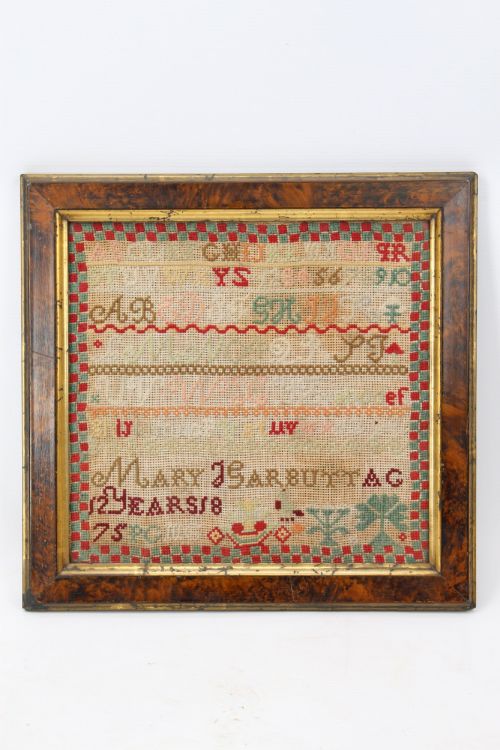
Young Mary J Garbutt recorded her age as twelve years old in stitches across an 1875 sampler.
What varies in quality
Quality rests in the precision of the stitching, the complexity of the design, and the survival of the original materials. Finer needlework panels display sophisticated tonal shading, intricate thread work, and well-proportioned composition that mark them out from simpler schoolroom pieces.
The condition of the textile and the integrity of its early mounting play a major role in distinction. Panels retaining their original framing and vibrant, un-faded threads demonstrate a higher degree of preservation and visual impact.
The Historical Needlework Panel Glossary
- Sampler
- A piece of needlework produced as a demonstration or test of skill in various stitches, often featuring alphabets, numbers, and motifs. These exercises provide valuable records of the maker's name, age, and date.
- Coif
- A close-fitting cap worn in the sixteenth and seventeenth centuries, frequently decorated with elaborate whitework or polychrome embroidery in silk and metal thread. Surviving examples often appear mounted as framed panels.
- Metal thread
- Flat or twisted metal wire, typically gilt or silver, used in embroidery to add reflective brilliance and texture. It appears frequently in high-status work from the seventeenth and eighteenth centuries.
- Tapestry
- A form of textile art woven on a loom rather than embroidered with a needle, depicting pictorial scenes. Antique cushion covers and wall panels utilise this dense, durable weave.
Historical Needlework Panel: Frequently Asked Questions
How should I display a historical needlework panel?
Keep textile panels away from direct sunlight to prevent the fading of silk and wool threads. Framing behind UV-filtering glass protects the delicate fibres from dust and physical damage.
Hang them on interior walls with stable humidity and temperature conditions to ensure the linen ground remains resilient over time.
Can I clean an antique needlework panel?
Surface dust can be gently removed with a soft brush, but wet cleaning or washing should be left to professional textile conservators. Many historic dyes are unstable and water will cause irreparable damage.
Leave the panel undisturbed within its frame unless structural intervention is strictly necessary for its preservation.
How do I date a needlework panel?
Look for stitched dates, maker names, and specific biographical details which frequently appear on nineteenth-century samplers. Stylistic clues in the costumes, lettering, and motifs help assign dates to unmarked pieces.
Compare the materials, such as the weave of the linen and the types of thread used, with documented examples from the same period.
What is the difference between a sampler and a needlework picture?
A sampler was originally created to practice stitches, record patterns, or demonstrate proficiency, resulting in rows of alphabets and assorted motifs. A needlework picture is designed from the outset as a complete pictorial scene for display.
Both fall under the broader heading of historical needlework panels but serve different documentary purposes.