


Antique Stitched Alphabet
These antique stitched alphabet pieces are textile works recording letters and names, offering a tactile piece of domestic history.
Antique Stitched Alphabet
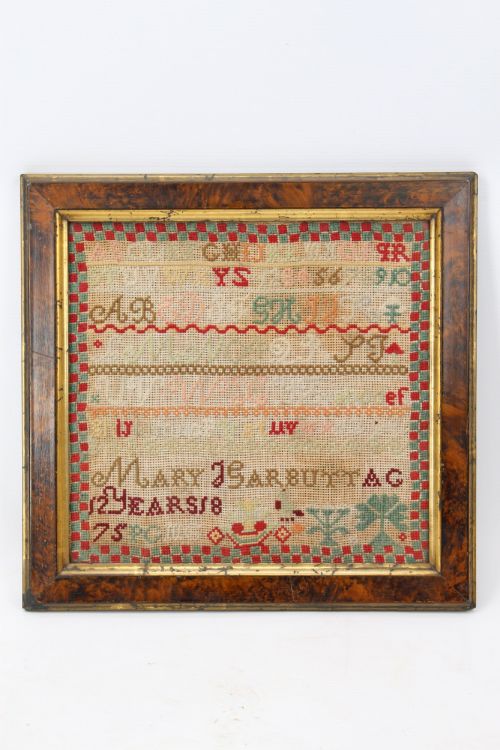
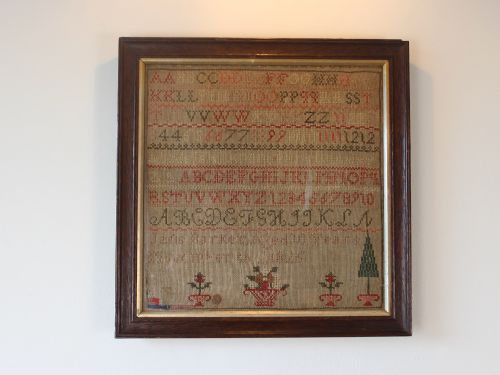
When you examine an antique stitched alphabet, you are looking at needlework samplers created across the Georgian and Victorian periods, alongside specific examples from the William IV and George II eras. These textiles often record the maker's name, age, and a date, such as the works by Mary J Garbutt or Ann Hodson.
You are most likely to meet Victorian and 19th-century examples on this page, frequently framed and executed as textile wall art. The forms range from miniature samplers to larger works incorporating alphabets, numbers, and religious texts like the Lord's Prayer.
Materials and construction
These pieces are built using linen grounds worked with thread, wool, silk thread, and silk. Makers employed various embroidery stitches to form the letters, numbers, and decorative motifs.
The completed textiles are typically mounted behind glass in wood frames to protect the delicate fibres. Many survive with their original framing or later mountings that preserve the textile wall art.
Listings span the Georgian and Victorian periods, featuring materials such as linen, silk thread, wool, wood, and glass.
Distinctions in quality
The distinction between ordinary and superior pieces rests on the execution of the stitching, the complexity of the design, and the clarity of the lettering. Finer examples display meticulous control over the alphabet and secondary motifs, sometimes incorporating pictorial elements or detailed borders.
Condition and legibility also separate examples, where stable linen grounds and vibrant surviving silk thread elevate a piece. Samplers that retain clear maker signatures, dates, and documented origins carry stronger historical interest.
The Antique Stitched Alphabet Glossary
- Sampler
- A piece of needlework produced as a demonstration or test of skill in various stitches. They frequently feature alphabets, numerals, and moral verses.
- Linen
- A strong, durable fabric woven from the fibres of the flax plant. It serves as the primary foundation cloth for the majority of these needlework pieces.
- Needlepoint
- A type of canvas work embroidery where yarn is stitched through a stiff open-weave canvas. It creates a dense, durable surface pattern.
- Embroidered Panel
- A decorative textile section worked with needle and thread upon a ground fabric. These panels were often framed for display as wall art.
Antique Stitched Alphabet: Frequently Asked Questions
What is an antique stitched alphabet?
An antique stitched alphabet is a needlework sampler where a maker practiced letters, numerals, and stitches, often recording their name and age.
These textiles were worked by hand, frequently during youth, to demonstrate proficiency in domestic needlecraft.
How were these samplers used?
These pieces served as practical references for marking household linens and clothing with initials and numbers.
Over time, they transitioned into decorative framed art displayed within domestic interiors to showcase accomplishments.
How do I date a sampler?
Many samplers include embroidered dates, maker names, and ages, which provide a direct record of their creation period.
Stylistic elements, materials like linen or silk thread, and framing methods also help place pieces within the Georgian or Victorian eras.
How should I care for a textile sampler?
Protect the piece from direct sunlight and moisture to prevent the linen ground and coloured threads from fading or degrading.
Keep the textile behind glass in its frame to shield the delicate embroidery work from dust and handling.