





Historical Bronze Plaque
These historical bronze plaque pieces bring substantial portraiture and commemorative design into your home, offering tangible connections to past exhibitions and notable figures.
Historical Bronze Plaque
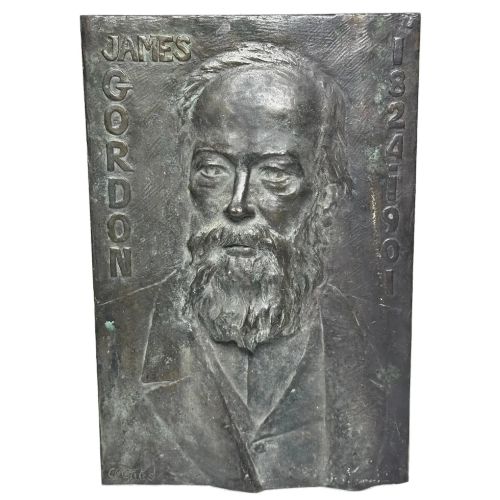
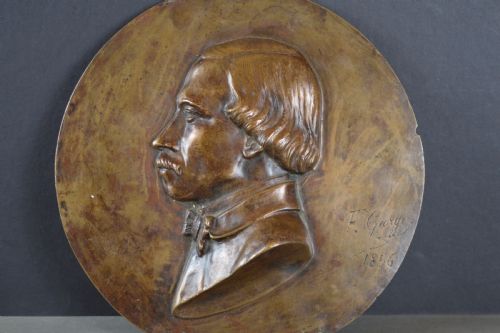
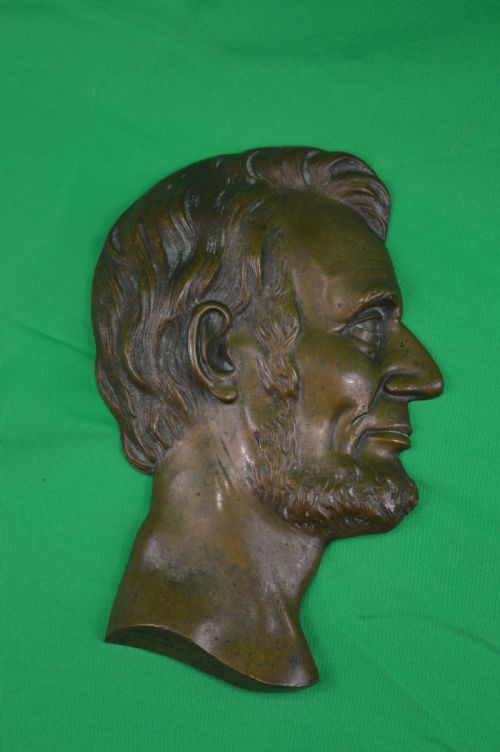
When you search for historical bronze plaque examples, you encounter wall plaques, relief plaques, and commemorative medals spanning from the early nineteenth century through to the Edwardian period and nineteen thirty. These objects celebrate international exhibitions, naval history, and figures such as Abraham Lincoln, William Shakespeare, and Charles Dickens.
The pieces on this page include framed medallion sets, ships badge crests, and portrait profiles originating from English, French, and Italian makers. You find both monumental cast iron pairs and patinated bronze castings mounted on materials like oak.
How They Were Made
Artisans produced these works using bronze and cast iron, often applying patination to enhance surface detail and depth. Many pieces incorporate secondary materials such as oak frames, paint finishes, and brass surrounds.
Casting methods captured intricate profiles and heraldic arms, while subsequent finishing involved signed engravings and mounted frames designed for wall suspension.
Shakespeare shares shelf space with a nineteenth-century cast iron double act, proving that even poets appreciate a heavy metal companion.
What Varies in Quality
Presentation also elevates a piece, particularly where original brass framing, matched pairs, or documented signatures from known sculptors and exhibition prize ties remain intact.
Smith, Beck And Beck·De Grave Short And Fanner·Alice Gates·J Lavergne
The Historical Bronze Plaque Glossary
- Patinated Bronze
- Bronze treated with chemicals to produce a specific surface colour or finish. This process protects the metal while highlighting sculptural details.
- Relief Plaque
- A wall-mounted artwork where the sculpted figures project from a flat background. These pieces offer three-dimensional depth within a single plane.
- Exhibition Medal
- A commemorative token awarded to participants or winners at international trade fairs and industrial shows. They record nineteenth-century manufacturing achievements.
- Tompion
- A wooden plug used to cover the muzzle of a naval cannon, often featuring a metal badge or crest. These items evolved into decorative royal navy wall plaques.
- Medallion
- A large medal created for commemorative or decorative purposes rather than personal wear. They frequently depict prominent literary, political, or historical figures in profile.
Historical Bronze Plaque: Frequently Asked Questions
How were historical bronze plaques displayed?
Many of these pieces were designed for interior wall mounting, utilising dedicated brass frames, wooden backing boards, or integrated hanging loops. They served as decorative displays in studies, libraries, and public rooms to demonstrate cultural or historical interests.
Larger examples, such as heavy ships badge crests and monumental pairs, required substantial fixings to support their weight securely on plaster or wood-paneled walls.
What subjects do these plaques typically depict?
The subjects range widely across portraiture, naval heraldry, and industrial exhibition commemorations. You frequently encounter profiles of literary figures, political leaders, and military commanders alongside architectural reliefs and international prize medals.
This variety reflects the nineteenth-century passion for celebrating both artistic achievement and significant historical events through durable metalwork.
How do I distinguish between periods?
Differentiating periods relies on stylistic cues, inscribed dates, and the specific context of the commemoration, such as international exhibitions held in eighteen sixty-two or nineteenth-century portrait conventions. Edwardian and later pieces often display distinct framing choices compared to earlier nineteenth-century works.
Signatures, foundry marks, and accompanying documentation further help anchor an object within its specific decade of production.
Can I polish patinated bronze plaques?
Polishing patinated bronze is generally discouraged because it removes the historical surface finish and highlights built up over decades. The original patination protects the metal and defines the shadows within the sculptural relief.
Maintenance should be limited to gentle dusting with a soft, dry cloth to preserve the integrity of the surface.