






Historic Wool Tapestry
A historic wool tapestry brings centuries of texture and narrative directly into a room, offering rich visual depth through woven stories.
Historic Wool Tapestry
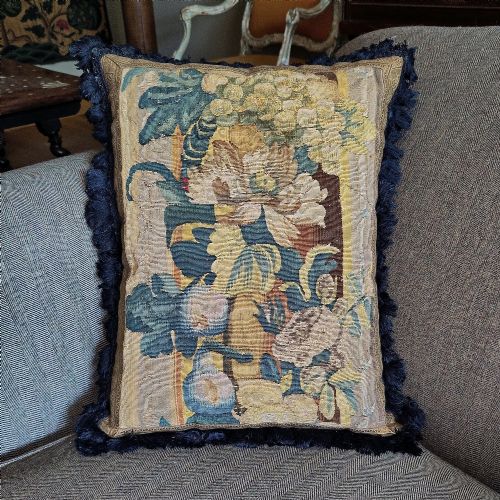
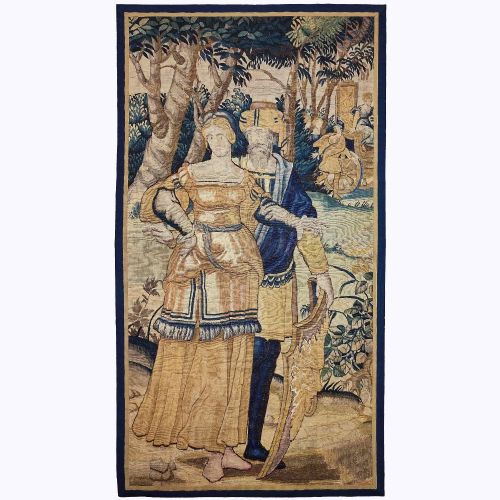
When you search for a historic wool tapestry, you encounter wall hangings, panels, cushions and framed pieces originating from the sixteenth century onwards. These works range from grand architectural panels to domestic needlework and cushion covers.
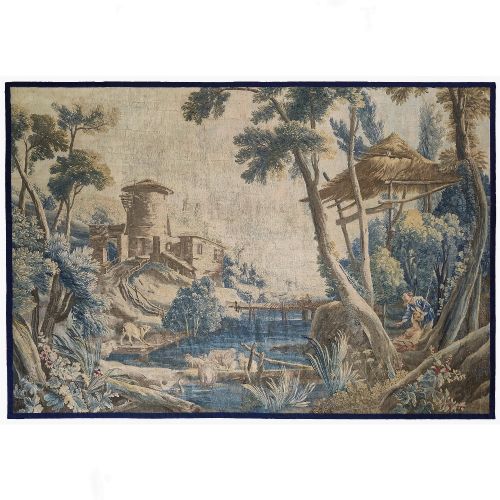
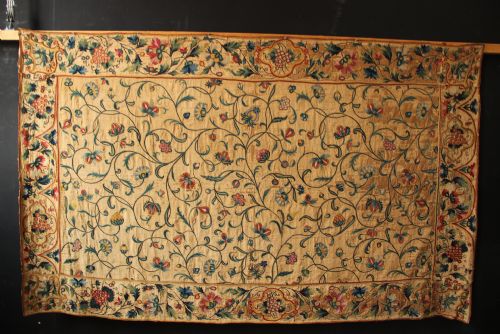
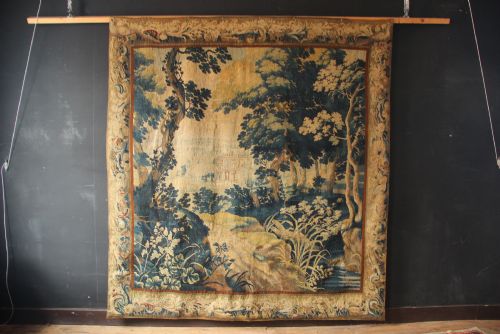
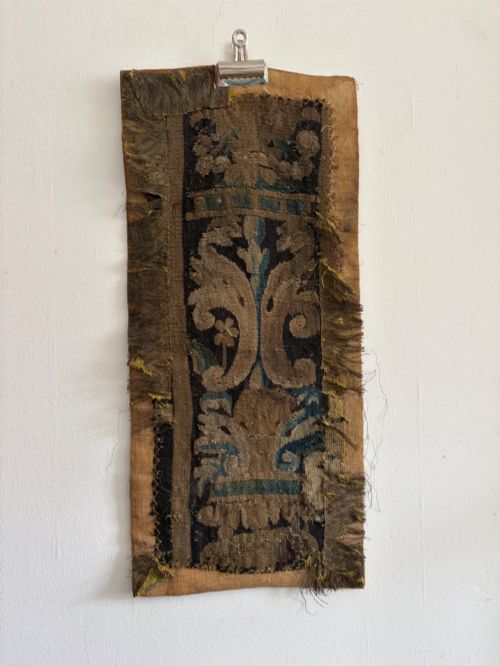
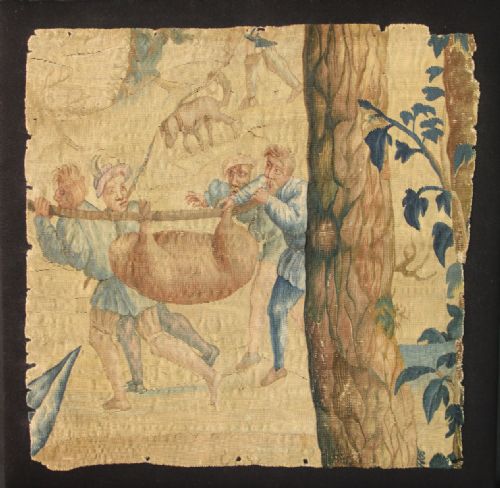
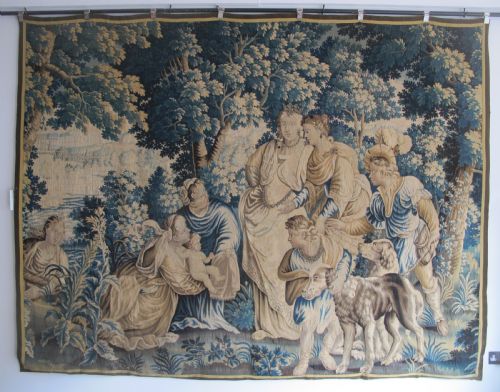
The selections here lean heavily toward seventeenth-century Flemish verdure designs, French Aubusson compositions, and English crewelwork. You will find complete pictorial scenes alongside border fragments and mounted textile art.
Origins stretch across England, Flanders, France, Italy, and Germany, reflecting diverse European weaving traditions. Pieces appear in various formats, from large wall art to smaller decorative cushions.
Factors that distinguish individual examples
Quality rests upon the density of the weave, the intricacy of the pictorial detail, and the complexity of the palette. Tightly packed wool and silk yarns create sharper definition in figures and foliage.
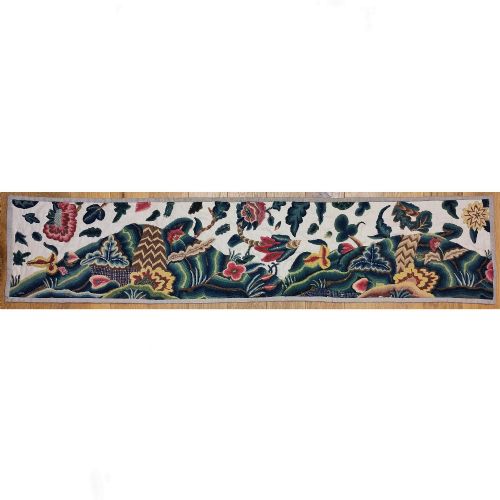
The survival of original borders and the structural stability of the textile matter significantly. Fragments mounted thoughtfully onto linen retain more historic integrity than heavily restored or altered compositions.
Historic Wool Tapestry Retail Price Guide 2026
Typical asking prices for historic wool tapestry among the pieces listed under this phrase on Sellingantiques today, from the lower quarter to the upper quarter. They describe what is for sale here now, not the wider market.
The inventory records Flemish, French, Italian, German, and English origins, encompassing Baroque, Renaissance, and Victorian stylistic revivals.
The Historic Wool Tapestry Glossary
- Verdure tapestry
- A wall hanging featuring a stylized landscape design dominated by foliage, trees, and often animals. These scenes draw the eye into deep, wooded vistas.
- Crewelwork
- Embroidery executed with wool yarn on a plain-weave fabric foundation, commonly associated with early English textile arts. It produces textured, tactile patterns.
- Aubusson
- Tapestries and flat-woven carpets produced in the French town of Aubusson and surrounding regions. They frequently depict pastoral or classical scenes.
- Needlework
- Hand-stitched textile art created by working thread through a mesh canvas ground. It encompasses samplers and cushion covers.
- Fragment
- A surviving portion of a larger textile work, often mounted or repurposed for display. Fragments preserve historic weave structures from damaged pieces.
Historic Wool Tapestry: Frequently Asked Questions
How do I hang a large textile?
Large wall hangings require careful weight distribution to prevent stress on the fibres. Professionals often sew a concealed fabric casing along the top edge to accommodate a supporting batten.
Alternatively, mounting the textile onto a padded and fabric-covered wooden board spreads the tension evenly across the entire surface.
Can I use these cushions daily?
Historic tapestry cushions made from seventeenth-century panels require gentle treatment. They serve best as decorative accents on armchairs or beds rather than heavy-use seating.
Keeping them away from direct friction helps protect the aged wool and silk threads from premature wear.
How are Flemish panels identified?
Flemish panels typically display characteristic verdure motifs, rich earthy palettes, and intricate botanical framing borders. The weave structure often utilises fine wool and silk yarns characteristic of sixteenth and seventeenth-century European workshops.
Subject matter frequently includes wooded landscapes, mythological figures, or hunting scenes rendered in deep greens and browns.
What is the difference between crewelwork and tapestry?
Crewelwork involves surface embroidery stitched onto a pre-woven linen or cotton foundation using wool yarn. Tapestries are woven on a loom where the design builds directly through the interlacing of warp and weft threads.
Both techniques produce historic textile art, but their structural creation methods differ fundamentally.