




Historic Wool Needlework
Historic wool needlework brings textured panels, cushions and framed wall art into a room, carrying the weight of centuries of domestic handcraft.
Historic Wool Needlework
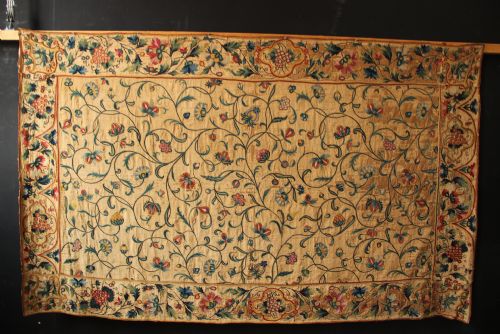
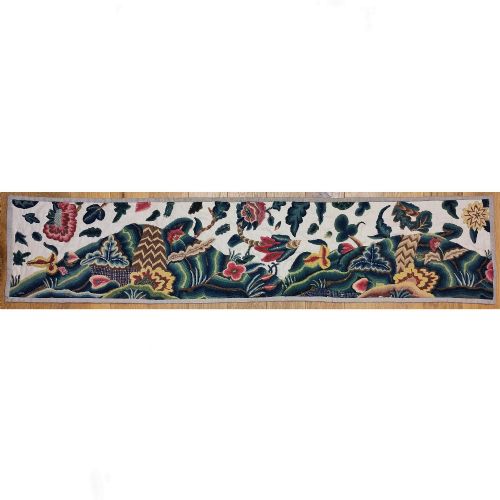
When someone searches for historic wool needlework, they are looking at textiles that survive from the seventeenth and nineteenth centuries, including crewelwork panels, tapestry cushion covers, framed wall art, and samplers. These pieces originate from English, French, Italian, German, and Scottish workshops, showing the wide geographic spread of domestic embroidery traditions over hundreds of years.
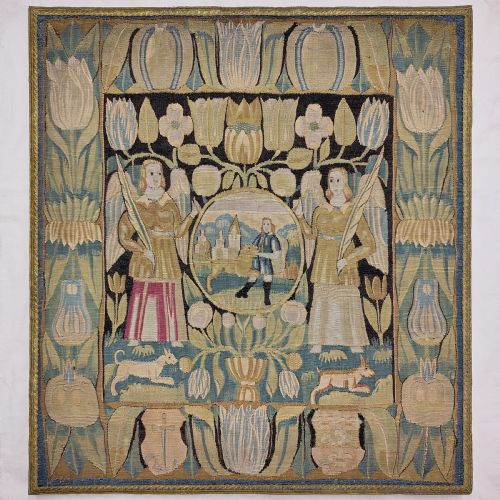
The versions most commonly met on this page are seventeenth-century tapestry cushion covers and Victorian needlework samplers, alongside framed textile wall art from the eighteen-eighties. Such objects range from large English crewelwork panels measuring over two metres to smaller North German cushions and nineteenth-century Scottish samplers worked by young girls.
Object types span framed wall art, wall hangings, cushions and soft furnishings, and tapestry cushion covers mounted in wood frames. Each piece demonstrates how historical interiors incorporated elaborate textile arts for both decoration and daily utility.
How historic wool needlework was made
Maker execution relies on natural fibres stitched across woven linen or canvas foundations, employing wool as the primary medium alongside silk accents. Artisans worked stitches such as crewelwork embroidery, needlepoint, and tapestry weaving to build dense, colourful surface patterns.
Framing and mounting techniques involved enclosing completed needlework panels within oak, gilded wood, or fabric borders like velvet, while backing elements occasionally incorporated glass for protection. These construction choices secured the delicate textile grounds against fraying and environmental damage over generations.
Historic Wool Needlework Retail Price Guide 2026
Typical asking prices for historic wool needlework among the pieces listed under this phrase on Sellingantiques today, from the lower quarter to the upper quarter. They describe what is for sale here now, not the wider market.
Maggie Muir, aged eleven, left a charming stitch error in her eighteen-eighty Scottish sampler for posterity.
What varies in quality
Technical execution defines the upper tier of these textiles, seen in the density and precision of the stitching across early English crewelwork or fine needlepoint panels. Superior examples maintain structural integrity in the linen or canvas ground and preserve the vibrancy of the original wool and silk threads.
Historical authenticity and material completeness dictate how a piece stands within its period, distinguishing finely worked seventeenth-century panels and dated Victorian samplers from later or altered examples.
The Historic Wool Needlework Glossary
- Crewelwork
- Embroidery executed with wool yarn on a linen or cotton twill fabric. This technique forms the basis of many large seventeenth-century decorative panels.
- Sampler
- A piece of needlework produced to demonstrate skill in various stitches, often featuring alphabets and figures. Nineteenth-century examples frequently record the maker name and age.
- Needlepoint
- Embroidery stitched over a stiff, open-weave canvas foundation rather than woven cloth. It completely covers the ground fabric to create durable upholstery and cushion covers.
- Tapisserie
- Woven or stitched textile panels designed for wall hanging or soft furnishings. Seventeenth-century examples often depict architectural or figural scenes.
Historic Wool Needlework: Frequently Asked Questions
How are historic needlework panels mounted?
These textiles are typically stretched over rigid backing boards and secured inside wooden frames, such as oak or gilded wood, to prevent sagging.
Some smaller panels and cushion covers retain their original soft backing materials like velvet, while others rely on modern conservation mounting to support the fragile fabric ground.
What is the difference between crewelwork and needlepoint?
Crewelwork uses wool yarn to work surface embroidery stitches directly onto a taut linen or twill foundation, leaving much of the background cloth visible.
Needlepoint covers an open-weave canvas foundation entirely with dense stitches, creating a flat, tapestry-like surface ideal for heavy-use items like cushions.
How do I date an antique sampler?
Victorian and earlier samplers often include stitched dates, maker names, and ages that provide direct evidence of their origin and production period.
When inscriptions are absent, dating relies on the style of the lettering, the fibre content, and the specific stitching techniques characteristic of seventeenth or nineteenth-century work.
Can historic wool textiles be cleaned?
Historic wool needlework requires delicate surface cleaning by textile conservators rather than standard washing, due to the fragile nature of old wool and linen fibres.
Dusting with a soft brush and protecting the piece from direct sunlight preserves the remaining dyes and stops the ground fabric from degrading further.