






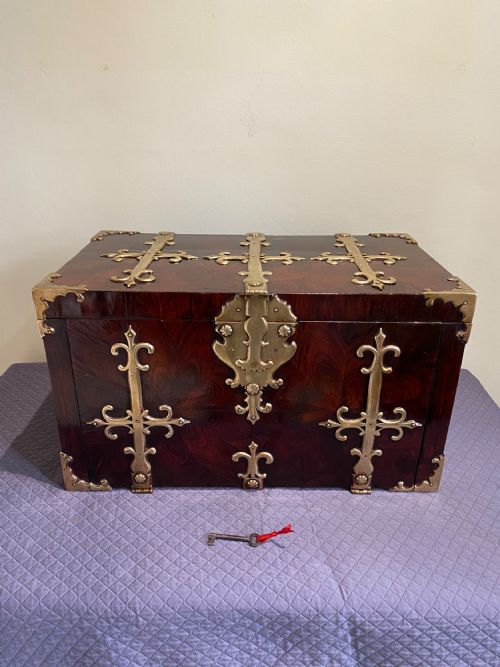


Historic Wooden Coffer
A historic wooden coffer offers robust domestic storage rooted in centuries of craftsmanship.
Historic Wooden Coffer
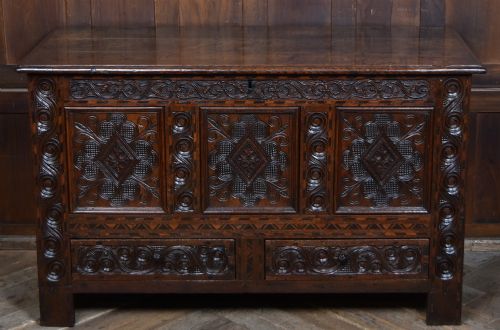
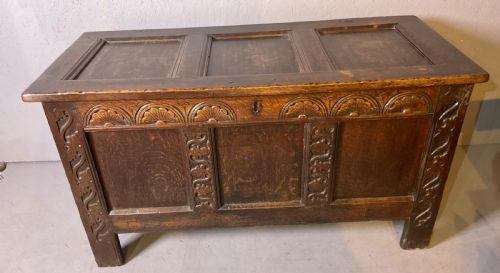
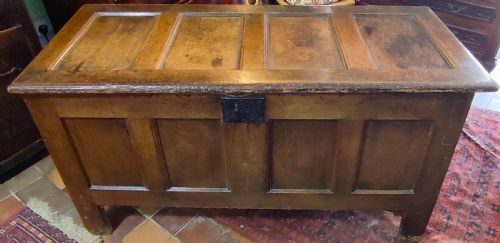
When you search for a historic wooden coffer, you encounter sturdy storage chests built across multiple centuries for domestic use. The majority of pieces on this page are formed from oak, spanning periods from the sixteenth century through to the nineteenth century.
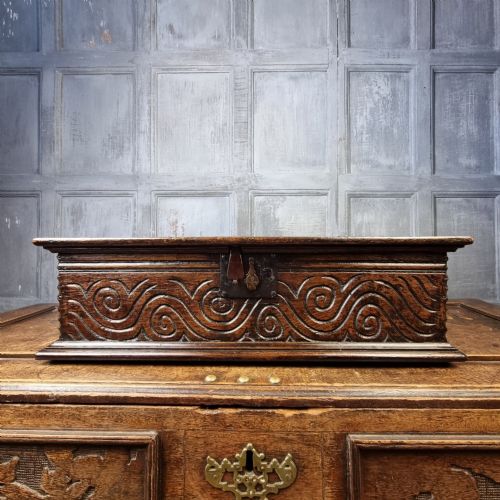
Forms range from boarded Elizabethan coffers and joined Lancashire examples to smaller Bible boxes and desk boxes. Alongside standard oak storage chests, you find specialised regional variants including sword chests and inlaid designs.
The materials and construction reflect utilitarian origins, often incorporating iron hardware alongside timber. While the bulk of the selection originates from English traditions, continental pieces such as kingwood strongboxes also appear.
How they were made
Carpenters constructed these pieces primarily using solid oak, employing joined or boarded techniques to form the main body. Early examples rely heavily on thick wooden boards secured with wrought iron hardware.
Decoration often involved hand carving on the frieze or panels, sometimes paired with wood inlay. Metalwork components such as brass or iron locks and hinges were integral to their function as secure storage.
Secondary timbers like pine appear in later nineteenth-century pieces. Construction methods shifted over time from simple boarded assembly to more complex joined framing.
Historic Wooden Coffer Retail Price Guide 2026
Typical asking prices for historic wooden coffer among the pieces listed under this phrase on Sellingantiques today, from the lower quarter to the upper quarter. They describe what is for sale here now, not the wider market.
Several centuries ago, someone trusted this box with their sword.
What varies in quality
The standard of carving and joinery dictates much of the distinction between pieces, with crisp execution of detail marking out better examples. The integrity of the original timber and the survival of period hardware significantly influence overall execution.
Proportion and decorative restraint separate standard utility chests from finer regionally attributed works. The presence of sophisticated elements like integrated internal drawers or complex inlay elevates the caliber of the object.
The Historic Wooden Coffer Glossary
- Boarded coffer
- A primitive storage chest constructed from thick planks fastened directly together, typical of sixteenth-century work. This method represents an early form of timber box construction before frame and panel techniques dominated.
- Joined coffer
- A chest built using a frame and panel technique where vertical stiles and horizontal rails hold thinner panels in place. This construction allowed timber to expand and contract naturally without splitting.
- Frieze
- The horizontal decorative band running beneath the top edge of a coffer or box. Carvers frequently embellished this area with geometric patterns, running scrolls, or inscribed dates.
- Strongbox
- A heavily reinforced small chest designed for securing valuables, often fitted with complex iron mechanisms. These pieces frequently feature dense hardwoods like kingwood rather than standard domestic oak.
Historic Wooden Coffer: Frequently Asked Questions
What is a historic wooden coffer?
A historic wooden coffer is a heavy storage chest used primarily for household goods, documents, or valuables before the widespread use of wardrobes and drawers.
Most examples date from the sixteenth to the eighteenth century and were built to withstand robust daily use in domestic or institutional settings.
How do I date an oak coffer?
Dating relies on examining construction methods, timber characteristics, and decorative motifs specific to particular periods. Boarded construction often points to earlier Elizabethan dates, whereas joined framing and specific carved details align with seventeenth and eighteenth-century styles.
Hardware styles, tool marks, and overall wear patterns provide additional clues regarding the era of manufacture.
Where were these coffers originally used?
These chests served various roles in homes, churches, and civic buildings for storing textiles, plate, and important records. Smaller variants like Bible boxes and desk boxes functioned as portable writing desks or secure book repositories.
Larger Lancashire and sword chests accommodated bulky items and military equipment within domestic halls.
How do I care for antique oak furniture?
Maintaining antique oak involves keeping pieces away from direct heat sources and sudden humidity changes to prevent timber splitting. Regular gentle dusting and occasional application of appropriate wax help preserve the finish without harming the wood.
Avoid modern liquid polishes that can build up a residue and degrade the historic surface over time.