






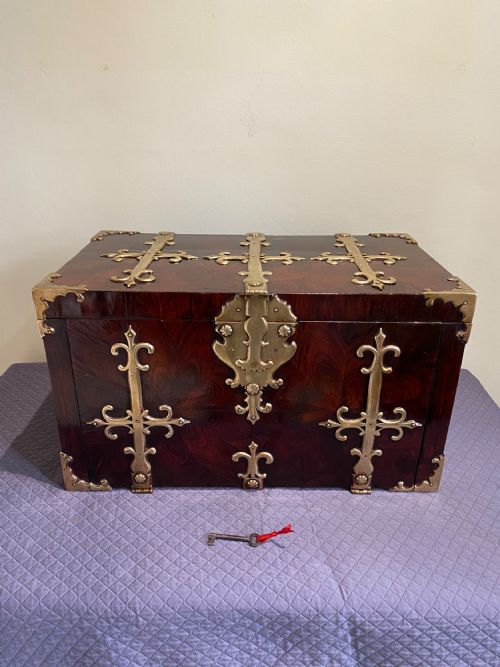


Historic Wooden Chest
Historic wooden chest examples here are sturdy storage pieces built from oak, pine, and kingwood across several early centuries.
Historic Wooden Chest
A historic wooden chest encompasses solid receptacles designed for storage and security, ranging from large coffers to smaller desk boxes and sword chests. When exploring these listings, a buyer encounters significant forms fashioned during the sixteenth, seventeenth, and eighteenth centuries.
The version most commonly met on this page is the oak coffer, alongside related functional boxes built for specific domestic or institutional uses. These pieces showcase vernacular construction methods rooted in early British and continental cabinet-making traditions.
Materials and construction methods
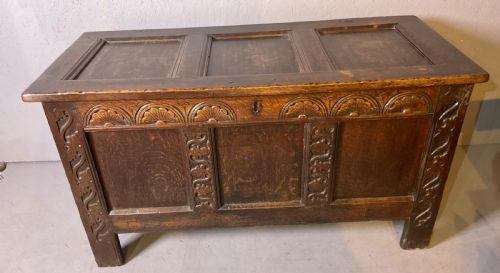
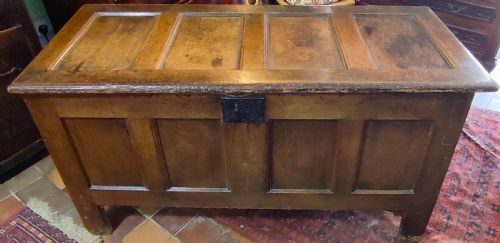
Makers relied primarily on native oak, shaped through heavy framing and boarded construction to withstand daily utility. Boards were frequently joined using traditional pegging methods, while smaller desk boxes and bible boxes utilised finer fitted panels.
Metal reinforcement was essential for security, incorporating wrought iron hinges, straps, and heavy locks. Certain pieces also feature decorative wood inlay or carved friezes that distinguish them from plain utilitarian trunks.
Historic Wooden Chest Retail Price Guide 2026
Typical asking prices for historic wooden chest among the pieces listed under this phrase on Sellingantiques today, from the lower quarter to the upper quarter. They describe what is for sale here now, not the wider market.
Storage forms on this page include boarded coffers, blanket chests, sword chests, and desktop bible boxes with internal drawers.
Factors distinguishing quality
Quality in these early pieces rests upon the integrity of the timber and the sophistication of the joinery. Joined frameworks with pegged tenons represent a higher standard of craftsmanship than simple nailed boarded boxes.
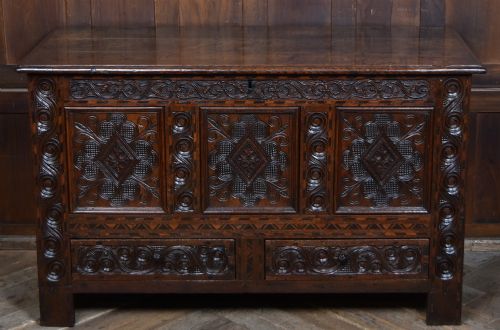
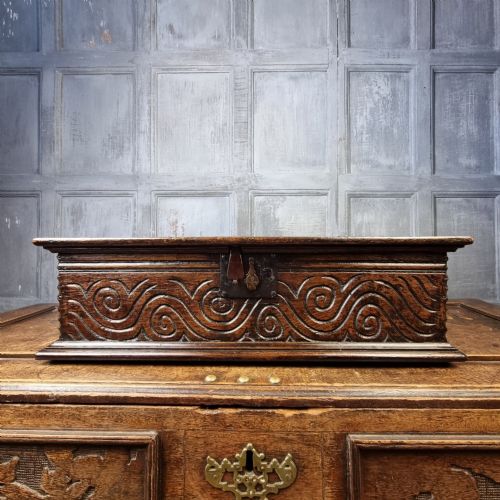
The presence of carved ornamentation, such as friezes on bible boxes or panel detailing on seventeenth-century coffers, elevates the status of a piece. Original hardware, including wrought iron strapwork and operational locks, contributes significantly to the integrity of the object.
The Historic Wooden Chest Glossary
- Coffer
- A large wooden chest traditionally used for storing valuables, linen, or documents. These sturdy receptacles often feature heavy lids and robust front panels.
- Bible box
- A small desktop box built to hold a family bible and writing materials. These portable containers frequently incorporate internal drawers and sloping carved lids.
- Joined oak
- Furniture construction utilising mortise and tenon joints secured with wooden pegs. This method provides superior structural stability compared to basic nailing.
- Boarded construction
- A simpler building technique utilising wide planks nailed or pegged at the edges. This method appears on early sixteenth-century coffers.
- Frieze
- A decorative horizontal band carved onto the upper section of a chest or box. These bands often display geometric patterns or running foliage.
Historic Wooden Chest: Frequently Asked Questions
What is an oak coffer?
An oak coffer is a heavy storage chest built primarily during the sixteenth and seventeenth centuries. These pieces served multiple domestic purposes, including seating and security.
They often feature hinged lids and boarded or joined construction using native English timber.
How were historic chests used?
Historic chests served as primary storage for textiles, valuables, and documents in early homes. Their robust construction allowed them to double as benches or tables when necessary.
Specialised variants, such as sword chests or bible boxes, accommodated specific items requiring safekeeping.
How do I identify a seventeenth century chest?
Seventeenth-century chests typically display joined oak construction with pegged mortise and tenon joints. Carved friezes, panelled fronts, and heavy wrought iron hardware are characteristic markers of this era.
Stylistic indicators often include Jacobean geometric motifs or simple linear carving.
What is a Lancashire coffer?
A Lancashire coffer is a regional seventeenth-century storage chest originating from the northwest of England. These pieces are defined by specific local joinery techniques and decorative carvings.
They represent the distinct vernacular traditions of provincial English cabinet makers.