








Historic Tapestry Art
Historic tapestry art brings centuries of woven narratives into modern rooms, offering heavy wool panels and detailed needlework fragments that transform blank walls.
Historic Tapestry Art
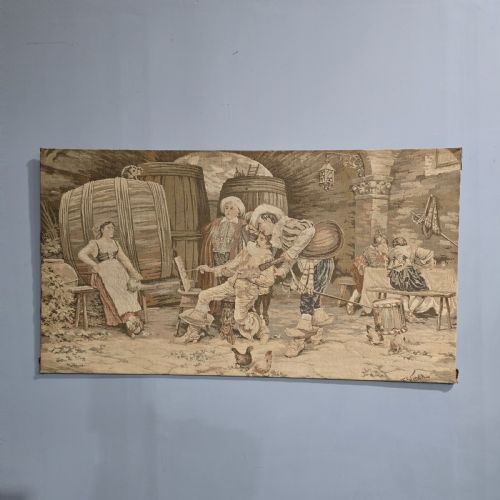
Historic tapestry art encompasses wall hangings, framed needlework samplers, cushion covers, and textile fragments originating from sixteenth-century workshops up to the nineteenth century. Buyers examine large room-scale panels alongside smaller mounted sections and framed pictures.
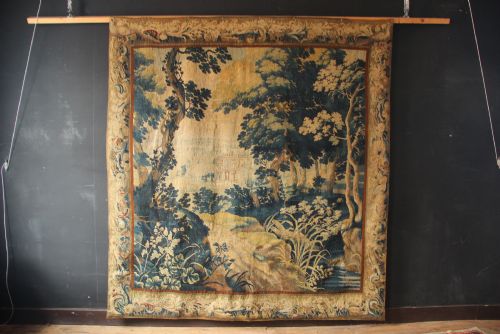
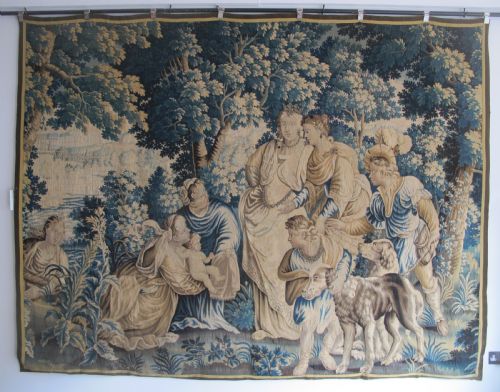
The most frequent examples on this page are seventeenth-century Flemish verdure panels and domestic needlework samplers from the Georgian and Victorian periods. These pieces demonstrate how woven textiles shifted from grand architectural installations to intimate domestic decoration over three hundred years.
Materials and construction methods
Weavers constructed these historic pieces primarily from wool and silk threads, frequently incorporating metal thread and linen backings for structural support. Artisans mounted many surviving fragments onto canvas or wood frames to preserve the fragile textile fibres.
Needlework samplers utilise cotton, silk, and wool threads worked on canvas grounds by hand. Frame makers housed panels in giltwood, oak, and carved wooden surrounds to protect the edges of the fabric.
Historic Tapestry Art Retail Price Guide 2026
Typical asking prices for historic tapestry art among the pieces listed under this phrase on Sellingantiques today, from the lower quarter to the upper quarter. They describe what is for sale here now, not the wider market.
Ann Hodson stitched her needlework sampler on the 13th of December in 1847 at the precise age of thirteen.
Evaluating quality and condition
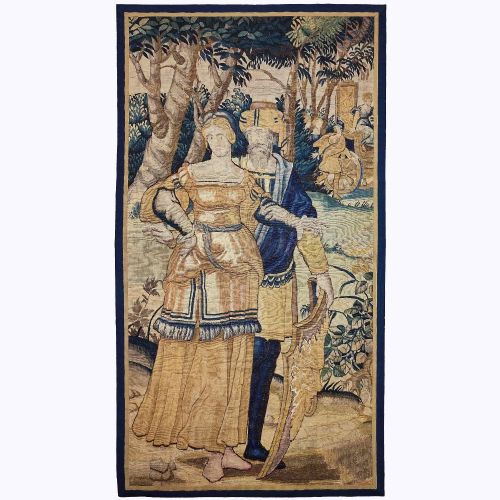
Quality rests upon the density of the weave, the complexity of the pictorial design, and the survival of the original borders or framing. Finer panels display intricate botanical verdure or figurative scenes executed with subtle colour gradations in wool and silk.
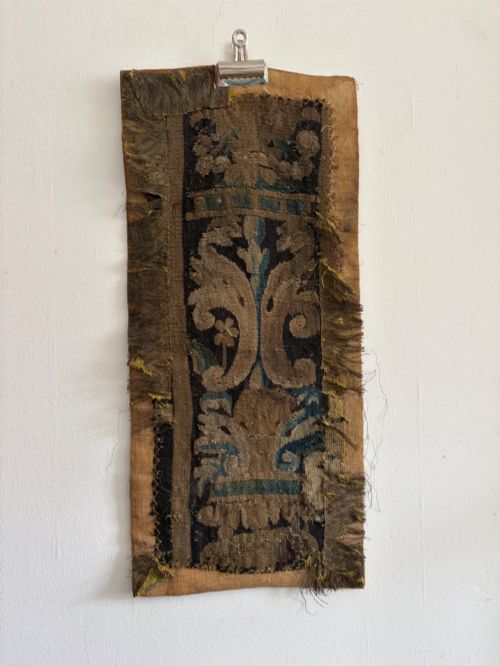
Condition varies according to age and exposure, ranging from complete large wall hangings to small fragmentary pieces mounted carefully onto modern linen supports. The crispness of the remaining embroidery stitches and the integrity of the textile determine the standing of each piece.
The Historic Tapestry Art Glossary
- Verdure tapestry
- A woven wall hanging dominated by botanical motifs, foliage, and woodland landscapes. These designs frequently feature stylised trees, leaves, and occasional animals.
- Needlework sampler
- A piece of canvas embroidered with alphabets, numbers, or pictorial motifs to demonstrate stitching proficiency. Young makers often signed and dated these works.
- Tapestry fragment
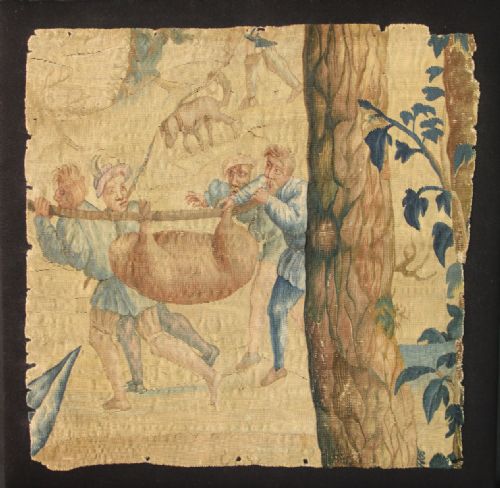
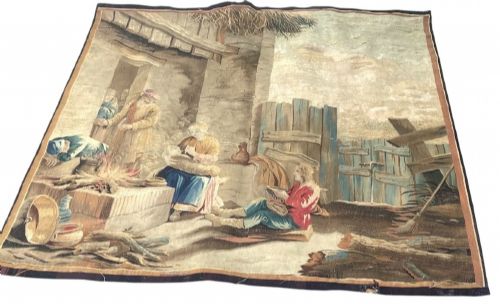
- A surviving section of a larger woven wall hanging, often cut down and mounted for display. These pieces isolate specific figures, borders, or landscape elements.
- Giltwood frame
- A wooden picture surround covered with a thin layer of gold leaf. These frames often house Italian and European textile panels.
- Metal thread
- Fine wire or metal-wrapped fibre woven into textiles to add reflective detail. Artisans employed this technique in select European panels.
Historic Tapestry Art: Frequently Asked Questions
How do I hang a heavy tapestry?
Large textile panels require professional weight distribution, often using a hidden wooden batten or Velcro strip attached to a sturdy linen backing. This method prevents the fabric from stretching under its own weight over time.
Smaller framed needlework pieces hang securely from standard picture hooks placed in solid wall fixings. Ensure the display area avoids direct sunlight to protect dyed wool and silk threads from fading.
What is a verdure tapestry?
A verdure tapestry depicts dense woodland foliage, trees, and plants without necessarily including human figures or narrative scenes. These botanical designs served as decorative wall coverings in European interiors.
Weavers rendered leaves and landscapes in various shades of green, blue, and brown using wool and silk threads. Seventeenth-century Flemish workshops produced many surviving examples of this style.
How do I date a needlework sampler?
Many samplers include embroidered names, dates, and ages stitched directly into the composition by the maker. Comparing the lettering style and motifs to documented examples helps establish the correct period.
Material analysis of the canvas backing and thread types provides additional confirmation of the manufacturing era. Georgian and Victorian pieces often show distinct structural characteristics.