





Historic Storage Coffer
A historic storage coffer is a robust wooden chest built to hold household valuables, offering a tangible link to centuries of domestic life.
Historic Storage Coffer
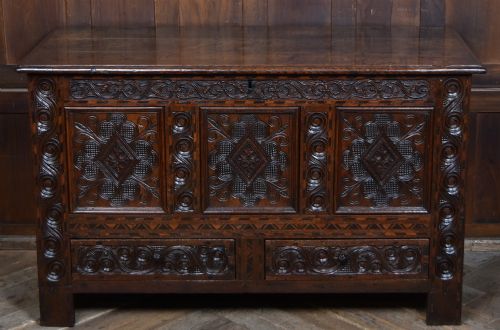
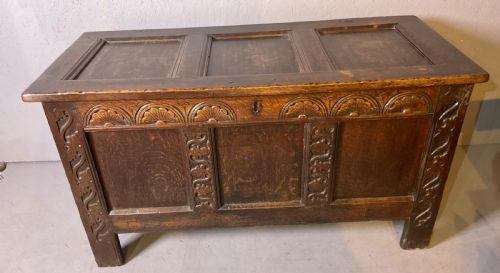
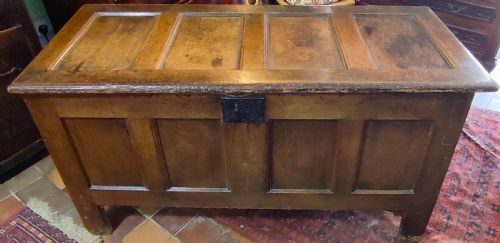
A historic storage coffer serves as a durable receptacle for linen, documents, and domestic goods, emerging in forms ranging from plain boarded construction to intricately carved receptacles. Buyers exploring this category encounter sturdy timber boxes that reflect the joinery traditions of past centuries.
The pieces present on this page date from the sixteenth century through to the nineteenth century, encompassing styles such as Elizabethan, Jacobean, Tudor, and Georgian. Oak is the primary medium, joined by pine in later examples.
Forms vary from simple boarded coffers and joined Lancashire coffers to sword chests and Bible boxes with internal drawers. The majority of items date from the seventeenth and eighteenth centuries, displaying the enduring utility of heavy timber furniture.
How they were made
Makers constructed these coffers primarily from solid oak, utilising heavy planks secured with peg joints or board construction in earlier sixteenth-century examples. Iron and wrought iron provide hardware such as hinges and straps, whilst brass appears on later or more decorative pieces.
Surface ornamentation relies on hand carving, particularly along the frieze, alongside occasional wood inlay. Construction methods transition from board-built chests to framed and panelled joined furniture as woodworking techniques advanced through the seventeenth century.
Historic Storage Coffer Retail Price Guide 2026
Typical asking prices for historic storage coffer among the pieces listed under this phrase on Sellingantiques today, from the lower quarter to the upper quarter. They describe what is for sale here now, not the wider market.
Listings feature oak as the dominant material, complemented by pine, iron, wrought iron, and wood inlay across multiple centuries.
What varies in quality
Quality in a historic storage coffer rests upon the crispness of the hand carving and the integrity of the original timber construction. Pieces retaining their early joined frames and genuine hardware sit at a different level from heavily restored examples.
The complexity of the form influences the piece, with specialised items like sword chests and carved Lancashire coffers or Bible boxes offering greater detail than plain utility storage. The depth of the colour in the aged oak and the survival of original internal components further distinguish the examples.
The Historic Storage Coffer Glossary
- Coffer
- A heavy wooden chest used for storing valuables, textiles, and domestic goods. It represents one of the earliest forms of household furniture.
- Boarded coffer
- A chest constructed from thick planks nailed or pegged at the edges rather than set into a joined frame. This technique is typical of sixteenth-century and earlier work.
- Joined coffer
- Furniture built using mortise and tenon joints to create a structural frame holding inset panels. This method provides greater stability than simple board construction.
- Bible box
- A small desktop box featuring a sloped or flat lid, often fitted with internal drawers. These pieces were designed to secure sacred texts and writing materials.
- Frieze
- The horizontal decorative band running along the upper portion of a coffer front. Carvers frequently decorated this area with geometric patterns or running motifs.
Historic Storage Coffer: Frequently Asked Questions
How were these coffers used?
Households utilised these chests to store valuable items such as table linens, woollens, silver, and important family documents. Because timber was strong and lids could be secured with padlocks, they offered reliable security.
In some instances, specific forms like sword chests were built for particular items, whilst smaller Bible boxes sat on tables to hold books and writing equipment.
How do I live with a historic coffer?
Living with a historic storage coffer involves placing the piece away from direct heat sources and strong sunlight to protect the aged oak and prevent timber splitting. They function well as blanket chests at the end of a bed or as coffee tables in a living space.
The flat lids provide useful surface area while the internal compartment continues to offer practical storage for household items.
How do I tell the periods apart?
Differentiating periods relies on observing construction methods and decorative styles. Sixteenth-century examples often utilise simple boarded construction, whilst seventeenth-century joined coffers display framed panels and characteristic Jacobean or Elizabethan carving.
Later eighteenth and nineteenth-century pieces show shifts towards Georgian proportions, pine secondary woods, or specific regional forms like Lancashire coffers.