



Historic Ship Oil Painting
A historic ship oil painting brings centuries of naval engagement and coastal trade straight onto the wall with oil paint and canvas.
Historic Ship Oil Painting
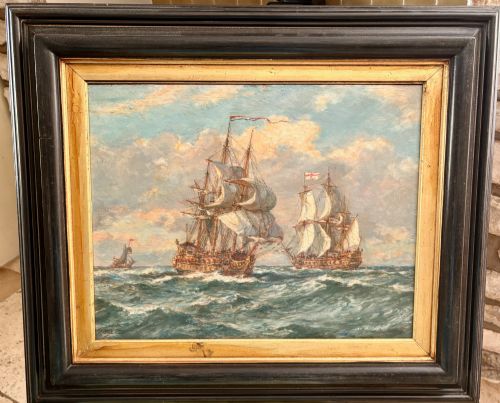
A historic ship oil painting captures maritime scenes ranging from naval battles and grand galleons to river traffic on the Thames. These works span periods such as the Edwardian era, Victorian maritime art, and mid-century marine realism.
Buyers frequently encounter works executed on canvas or panel, often framed in wood or gilt settings. Subjects include specific vessels like HMS Swift, RMS Lusitania, and naval engagements involving Napoleonic themes.
The assortment on this page reflects traditional marine art alongside nineteenth-century maritime pieces. Works capture both serene coastal passages and dramatic moments of naval history.
Materials and Techniques
Artists utilise oil paint applied to prepared canvas or wooden panels to build up rich marine compositions. These paintings frequently incorporate traditional framing materials including wood and gold leaf or gilt finishes.
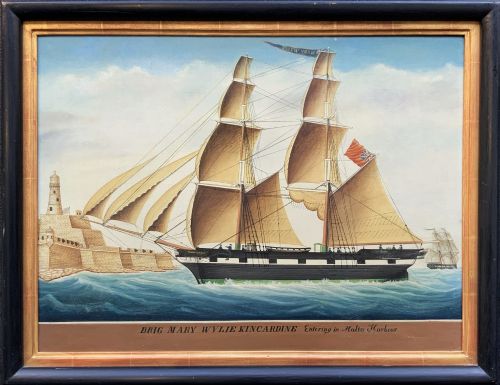
Techniques range from detailed maritime portraits of specific vessels off lighthouses to broader realisms depicting sea battles and river traffic. Painters rely on the fluid handling of oil to render water, sky, and rigging.
Historic Ship Oil Painting Retail Price Guide 2026
Typical asking prices for historic ship oil painting among the pieces listed under this phrase on Sellingantiques today, from the lower quarter to the upper quarter. They describe what is for sale here now, not the wider market.
Napoleon occasionally joins naval men on deck, reminding us that even emperors appreciated a good sea breeze.
Judging Quality
Quality rests upon the artist's ability to render nautical architecture, rigging, and atmospheric conditions with precision. Works by documented painters command attention for their rigorous adherence to maritime detail.
The handling of the medium determines the depth of the water and the luminosity of the sky. Superior examples demonstrate confident brushwork that distinguishes between calm coastal waters and the turmoil of sea battles.
Bernard Gribble·Charles William Wyllie·Dion Pears·Joseph Heard·Edward Fletcher
The Historic Ship Oil Painting Glossary
- Galleon
- A large sailing warship used by European nations from the sixteenth to the eighteenth centuries. These multi-decked vessels frequently appear in historic marine art.
- Gilt
- A thin layer of gold applied to wood framing or decorative elements. This finish enhances the presentation of nineteenth-century maritime paintings.
- Panel
- A rigid wooden support used by artists instead of stretched canvas. Panels are common in earlier or panel-manner marine works.
- West Indiaman
- A large merchant ship engaged in trade between Europe and the West Indies. These vessels form the subject of specific ship portrait paintings.
Historic Ship Oil Painting: Frequently Asked Questions
What periods do these paintings cover?
The works span from the eighteenth-century representation of vessels like HMS Swift through Victorian and Edwardian maritime art up to mid-century marine realism.
Creators captured naval engagements, liners, and river scenes across successive generations of painting.
What materials were used by the artists?
Painters worked primarily with oil paint on stretched canvas or wooden panels. Frames commonly consist of wood enhanced with gold leaf or gilt.
These traditional materials ensure the longevity of the maritime scenes.
How do I identify a ship portrait?
A ship portrait focuses primarily on documenting a specific vessel, such as a West Indiaman or a cruiser, often shown in profile or navigating near a known landmark like a lighthouse.
These pieces prioritise accurate nautical details over broad landscape composition.
Where were these marine scenes set?
Settings range from open sea battles and coastal waters off Valletta Harbour to domestic locations like the River Thames with the Tower of London.
Artists recorded both historic naval actions and everyday commercial shipping lanes.