



Historic Ship Artwork
Historic ship artwork captures maritime history through paintings, watercolours, and etchings spanning multiple centuries.
Historic Ship Artwork
Historic ship artwork encompasses maritime paintings, watercolours, and etchings depicting naval vessels, sailing ships, and river scenes. Buyers searching this phrase will find depictions ranging from early nineteenth-century brig portraits to Edwardian and mid-century marine realist scenes.
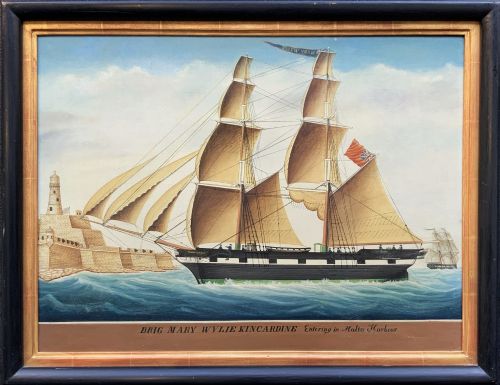
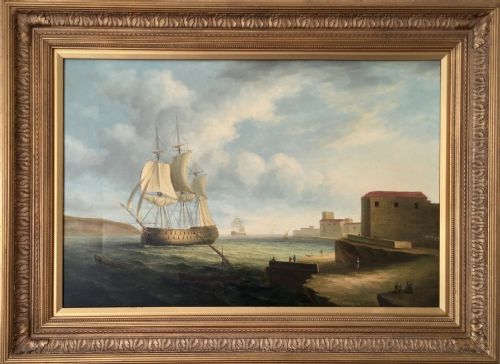
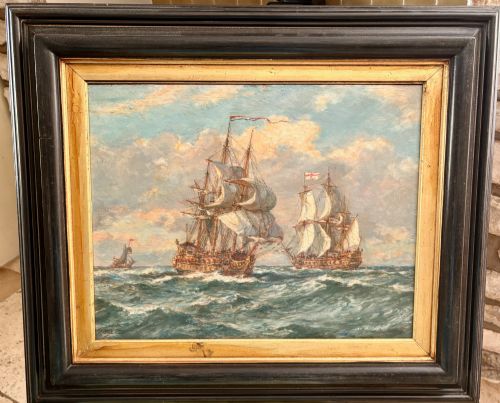
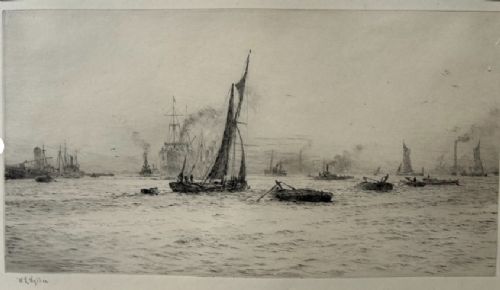
The selections on this page feature oil paintings on canvas and panel, alongside works on paper. Subjects vary from specific named vessels like the brig Mary Wylie and HMS Swift to broader scenes of naval battles, lighthouses, and the River Thames.
Originating across the nineteenth, twentieth, and Edwardian periods, these works document shipping heritage through traditional maritime art and Napoleonic realism. Framed artworks and prints present detailed accounts of naval architecture and historic waterways.
Factors in quality
Quality in historic ship artwork rests upon the precision of maritime detail and the artist's command of vessel rigging, water, and atmospheric light. Works by documented marine painters demonstrate superior handling of perspective and historical accuracy compared to anonymous studio pieces.
The integration of canvas preparation and stable paint layers distinguishes well-preserved oils from those requiring extensive restoration. Original framing and signed etchings further differentiate the standing of individual pieces within the genre.
Historic Ship Artwork Retail Price Guide 2026
Typical asking prices for historic ship artwork among the pieces listed under this phrase on Sellingantiques today, from the lower quarter to the upper quarter. They describe what is for sale here now, not the wider market.
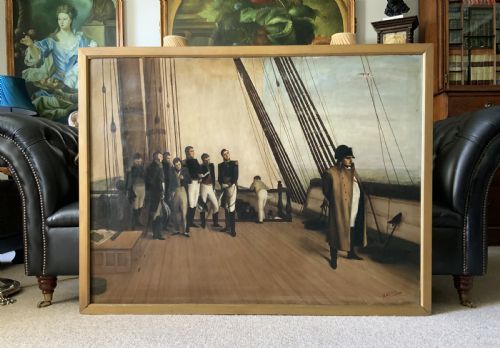
Napoleon Bonaparte occasionally photobombs nineteenth-century naval scenes when artists decide sea battles need a touch of imperial drama.
James Hardy·Bernard Gribble·William Lionel Wyllie·Charles William Wyllie·Dion Pears·Joseph Heard·WF Mitchell·Edward Fletcher
The Historic Ship Artwork Glossary
- Brig
- A two-masted, square-rigged sailing vessel commonly depicted in nineteenth-century maritime paintings.
- Etching
- A printmaking technique where lines are incised into a metal plate with acid before being inked and pressed onto paper. This method allows for exceptional linear precision in architectural and ship rigging details.
- Marine realism
- An artistic style focused on the accurate, detailed representation of ships, water, and naval operations without romantic idealisation. It demands deep technical knowledge of vessel construction.
- Panel painting
- A work executed on a flat piece of wood rather than stretched canvas, often providing a rigid support associated with earlier painting traditions.
Historic Ship Artwork: Frequently Asked Questions
What periods do these artworks represent?
The listings span from the early nineteenth century through the Edwardian era up to the mid-twentieth century.
Pieces reflect shifts in maritime art styles, ranging from Georgian and Victorian marine traditions to mid-century marine realism.
How were these marine paintings created?
Artists utilised oil paint on canvas or wood panels, alongside watercolours and ink on paper.
Mastery of canvas preparation and pigment layering allowed painters to capture the complex details of naval rigging and water.
Are the ships in the artworks real?
Many works depict specific, historically documented vessels such as HMS Swift, the brig Mary Wylie, and RMS Lusitania.
Artists often recorded named naval ships and cruisers with careful attention to their actual structural specifications.
Where do these maritime scenes take place?
Locations include notable waterways such as the River Thames in London, Valletta Harbour in Malta, and coastal lighthouses.
Scenes also capture historic naval engagements, including Trafalgar and various open-sea battles.