



Historic Sailing Artwork
Historic sailing artwork brings home the salt air and timber of maritime tradition through oils, watercolours, and etchings.
Historic Sailing Artwork
Historic sailing artwork comprises paintings, prints, and watercolours that capture ships, riverscapes, and naval engagements from past eras. Buyers searching for historic sailing artwork encounter pieces ranging from Edwardian river scenes to nineteenth-century maritime oil paintings on canvas and panel.
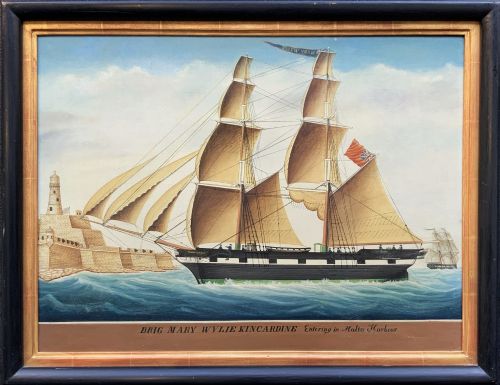
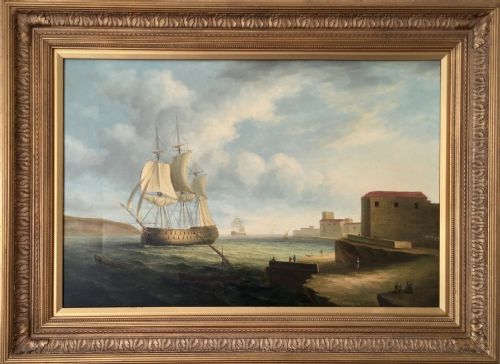
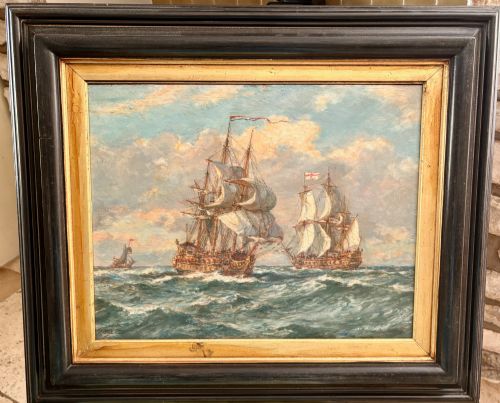
The selection here includes framed artwork and fine art prints depicting named vessels such as the brig Mary Wylie and HMS Swift. Works extend from Georgian maritime scenes through to mid-century marine realism.
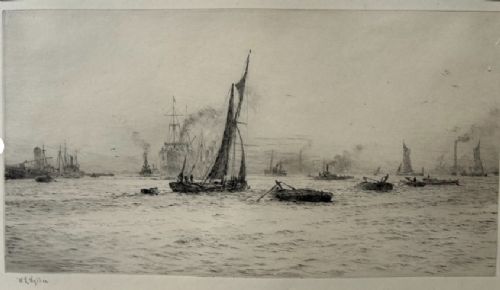
Mediums span oil paint, watercolour, and pencil on paper, often housed in frames featuring gold leaf. These works document naval history, lighthouses, and bustling commercial waterways like the Thames.
How they were made
Artists applied oil paint to stretched canvas, wooden panels, or paper surfaces to achieve detailed renderings of rigging, hulls, and turbulent seas. Watercolours were worked on paper to capture lighter atmospheric effects in coastal and river views.
Framing typically involved wood and gold leaf, providing a formal presentation for maritime portraits and battle scenes. Etchings relied on inked metal plates pressed onto paper to produce detailed monochrome impressions.
Panels offered a rigid support for precise marine portraits, while canvas accommodated larger compositions of sea battles and coastal shipping.
Historic Sailing Artwork Retail Price Guide 2026
Typical asking prices for historic sailing artwork among the pieces listed under this phrase on Sellingantiques today, from the lower quarter to the upper quarter. They describe what is for sale here now, not the wider market.
Ships often sail through centuries of salt spray only to be trapped forever behind nineteenth-century glass.
What varies in quality
Quality in these works rests upon the precision of maritime detail, particularly in the rigging, hull construction, and handling of water and light. Hand-signed etchings and original oil paintings by documented artists command closer attention than unsigned or later derivative pieces.
The condition of the canvas, panel, or paper influences the integrity of the piece, alongside the preservation of original gold leaf frames. Depth of colour and the artist's command of perspective determine the visual impact of the maritime scene.
James Hardy·Bernard Gribble·William Lionel Wyllie·Dion Pears·Joseph Heard·Robert Anderson·Edward Fletcher
The Historic Sailing Artwork Glossary
- Marine painting
- Artwork focusing primarily on ships, shipping, sea battles, and coastal views. This genre includes both historical naval actions and everyday commercial maritime traffic.
- Etchings
- Prints produced by scratching a design through a protective ground on a metal plate, which is then acid-bit and inked. Signed impressions indicate direct involvement or approval by the artist.
- Oil on panel
- A painting executed on a flat wooden board rather than woven canvas. Panels provide a stable, rigid surface favoured for detailed nineteenth-century marine portraits.
- Watercolour
- A painting method using water-soluble pigments on paper. It allows for transparent washes that suit calm river scenes and coastal atmospheres.
- Gold leaf
- Extremely thin gold beaten into sheets, used to gild frames. It adds a decorative, reflective border suited to traditional maritime artwork.
Historic Sailing Artwork: Frequently Asked Questions
What is historic sailing artwork?
Historic sailing artwork encompasses paintings, watercolours, and prints depicting ships, naval battles, and maritime scenes from past centuries.
These pieces use mediums like oil on canvas, oil on panel, and pencil to record naval architecture and coastal history.
How do I identify the period?
Periods are identified through clothing styles, vessel types, framing materials, and dated signatures or inscriptions on the artwork.
Nineteenth-century works often feature detailed square-rigged ships, while Edwardian and mid-century pieces reflect changing maritime and artistic conventions.
Where should I hang these pieces?
These works suit studies, living rooms, and hallways where traditional frames and maritime themes complement interior decor.
Protect paintings and watercolours from direct sunlight to preserve canvas integrity and paper quality over time.
What subjects are depicted?
Subjects range from named vessels and naval engagements to lighthouses, riverscapes, and bustling commercial ports.
Works capture specific historical events like Trafalgar alongside everyday shipping on the River Thames and foreign harbours.