



Historic Nautical Painting
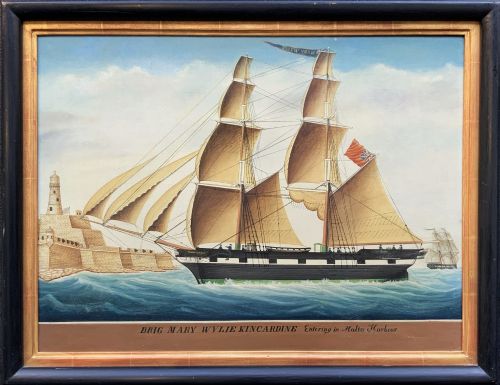
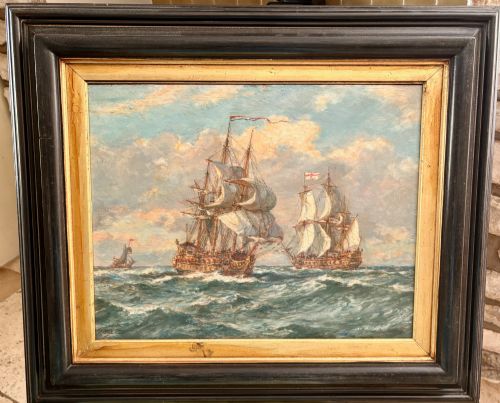
A historic nautical painting captures the drama of the open sea and the majesty of traditional vessels.
Historic Nautical Painting
When you search for a historic nautical painting, you are looking at maritime artworks capturing ships, naval battles, and coastal lighthouses. These pieces document maritime history from the Georgian era through to the mid-twentieth century.
The works on this page frequently take the form of oil paintings on canvas or panel, alongside watercolours and framed artwork. You will also encounter model boats and pond yachts representing the same maritime traditions.
Originating across the nineteenth and twentieth centuries, these works span periods such as the Edwardian era, Victorian maritime, and mid-century marine realism. They depict specific vessels like the HMS Swift, RMS Lusitania, and various named warships or merchant ships.
What Varies in Quality
The distinction between standard works and exceptional pieces lies in the precision of the maritime detail and the fidelity of the ship portraiture. Master maritime artists accurately rendered rigging, hull construction, and naval architecture with specialist knowledge.
Atmospheric rendering and composition also separate the tiers of quality, distinguishing mechanical vessel illustrations from compelling seascapes. The handling of water, light, and coastal topography dictates the artistic merit of each canvas.
Historic Nautical Painting Retail Price Guide 2026
Typical asking prices for historic nautical painting among the pieces listed under this phrase on Sellingantiques today, from the lower quarter to the upper quarter. They describe what is for sale here now, not the wider market.
Listings span the Edwardian period, 19th Century, and 1950, utilising oil paint, watercolour, canvas, and gold leaf.
Bernard Gribble·Dion Pears·Joseph Heard·WF Mitchell·Edward Fletcher
The Historic Nautical Painting Glossary
- Brig
- A two-masted, square-rigged sailing vessel commonly depicted in nineteenth-century marine art.
- Galleon
- A large, multi-decked sailing ship used primarily by European nations from the 16th to 18th centuries.
- West Indiaman
- A large merchant ship trading between Europe and the West Indies, frequently featured in maritime portraiture.
- Panel
- A rigid support surface made of wood used by artists in place of canvas for oil paintings.
Historic Nautical Painting: Frequently Asked Questions
What do these paintings depict?
These artworks illustrate significant vessels, naval battles, and coastal landmarks like lighthouses and harbours. They record specific ships such as the RMS Lusitania and HMS Victory.
Subjects range from formal ship portraits commissioned by captains to dramatic depictions of sea battles and peaceful river traffic on the Thames.
How are the different periods identified?
Periods are identified through costume details, painting techniques, framing styles, and inscriptions detailing specific dates or events. Artworks from the Georgian and Victorian eras often display traditional maritime realism.
Edwardian and mid-century pieces introduce varied brushwork and document later vessels, including twentieth-century liners and cruisers.
Are all the pieces oil paintings?
While oil paint on canvas or wood panel forms the majority of the works, the selection also includes delicate watercolours on paper. These mediums were chosen by marine artists depending on whether they required deep texture or fine linear detail.
In addition to flat artwork, the category occasionally includes physical objects like model boats and pond yachts.
How should I display a maritime painting?
Historic nautical art suits traditional interiors, studies, or rooms with maritime or coastal themes. Proper placement avoids direct sunlight to protect oil paint and paper watercolours from fading.
Ensuring stable room humidity protects both the canvas and any original wood framing or gold leaf detailing.