


Historic Maritime Art
Historic maritime art captures the power of the sea and the age of sail through paintings, watercolours, and etchings that bring naval history directly into a room.
Historic Maritime Art
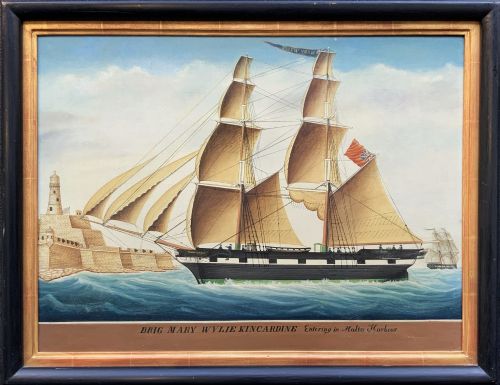
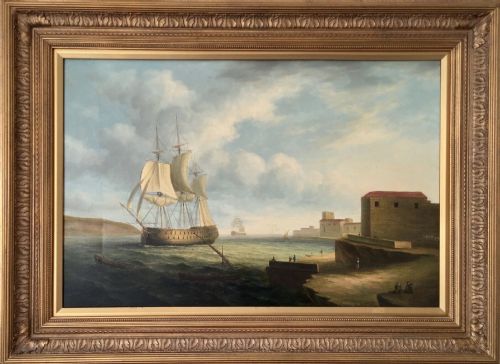
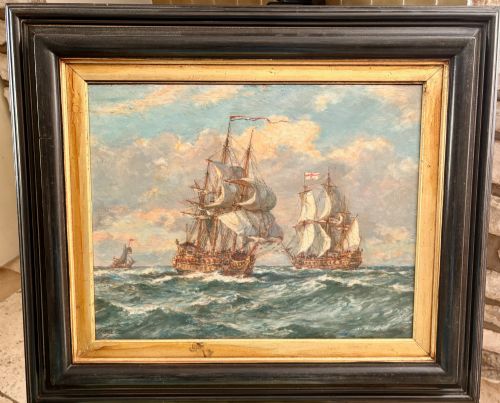
When searching for historic maritime art, collectors encounter works depicting naval battles, specific named vessels, and busy river scenes from the nineteenth and early twentieth centuries. These pieces record the maritime heritage of Britain and Europe through detailed portrayals of ships like brigs, galleons, and cruisers.
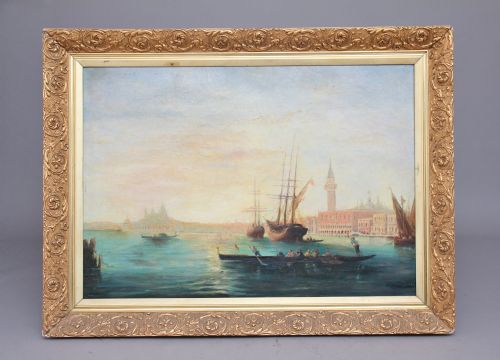
The selection here ranges from watercolours of the River Hull to oil paintings of the Venetian lagoon and actions involving famous vessels such as HMS Victory and the RMS Lusitania. Buyers meet both grand naval portrayals and quieter topographical watercolours documenting harbours and lighthouses.
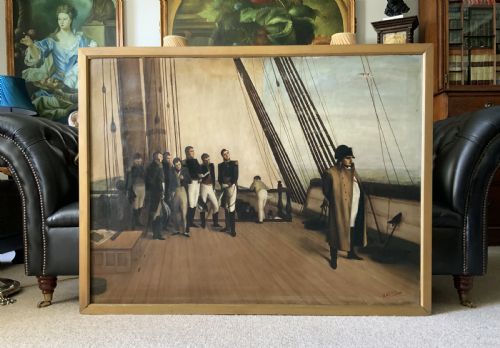
Most examples date from the nineteenth and Edwardian periods, executed in traditional media that capture the atmospheric light of coastal and river environments. Works vary from detailed ship portraits intended to document specific vessels to broader romantic scenes of naval engagements.
Materials and methods
Painters of historic maritime art worked primarily in oil paint on canvas or panel, and in watercolour on paper, utilising pigments that captured the shifting tones of water and sky. Oil paintings on panel and canvas allow for deep layering to show dark hulls and foaming wakes, while watercolour provides translucent washes suitable for coastal light.
Framing often incorporates gold leaf to accentuate the depth of the painted surface, while graphic works include original pencil signed etchings on paper. Architectural salvage and carved wood items also appear, demonstrating the diverse ways makers recorded maritime subjects.
Artists relied on precise observation of rigging, hull construction, and atmospheric conditions to ensure authenticity, whether depicting a West Indiaman off Eddystone Lighthouse or a modern cruiser of the Royal Navy.
Listings feature works from the 18th, 19th, and 20th centuries, including Edwardian watercolours and Victorian oil paintings on canvas and panel.
Judging quality
Quality in these works rests on the accuracy of the vessel's rigging and architecture combined with the artist's handling of light, water texture, and atmosphere. Pieces by documented artists command attention for their detailed draughtsmanship and compositional balance.
The vitality of the water and the convincing depiction of movement distinguish superior works from rigid or formulaic ship portraits. Strong provenance, such as original signatures or historical inscriptions identifying specific ships and locations, elevates a piece.
James Hardy·Bernard Gribble·William Lionel Wyllie·Charles William Wyllie·Dion Pears·Henry Barlow Carter·Joseph Heard·WF Mitchell·Robert Anderson·Edward Fletcher·R I Barrow
The Historic Maritime Art Glossary
- Brig
- A two-masted, square-rigged sailing ship frequently depicted in nineteenth-century marine paintings. These vessels formed the backbone of commercial and naval transport.
- Etching
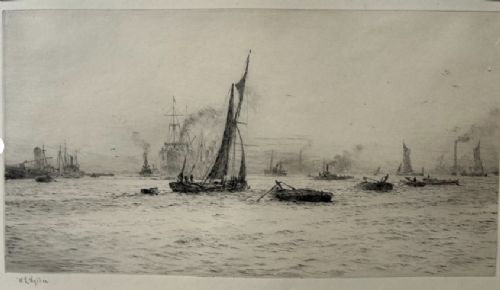
- A printmaking process where lines are bitten into a metal plate with acid before being inked and pressed onto paper. William Lionel Wyllie utilised this technique for detailed river views.
- Ship portrait
- A specialised painting genre focused on recording the exact appearance of a named vessel, often commissioned by its captain or owner. These works prioritize nautical accuracy above general landscape aesthetics.
- Panel painting
- An artwork executed on a flat wooden support rather than canvas. This method provides a rigid surface that painters favoured for detailed harbour scenes.
- Watercolour
- A paint consisting of pigment suspended in a water-soluble binder, applied to paper to create luminous washes. Nineteenth-century artists used this medium extensively for topographical and coastal views.
Historic Maritime Art: Frequently Asked Questions
What is historic maritime art?
Historic maritime art encompasses paintings, watercolours, and etchings depicting ships, naval battles, and coastal or river scenes primarily from the nineteenth and early twentieth centuries.
These works document naval history, named vessels, and maritime commerce through traditional artistic mediums.
How were these paintings displayed?
Historically, maritime paintings and watercolours were framed securely, often incorporating gold leaf to enhance the visual impact of the subject matter.
Collectors today hang them in studies, libraries, or living spaces to complement traditional or nautical interiors.
How do I identify the ship in a painting?
Many historic marine paintings include inscriptions on the canvas, reverse, or frame detailing the name of the vessel, its captain, or the location.
Artists often researched ship registries and naval records to ensure accurate depictions of flags, rigging, and hull designs.
What periods do these artworks cover?
The pieces available range from eighteenth-century depictions of historic vessels like HMS Swift to Edwardian views and mid-twentieth-century oil paintings.
Nineteenth-century works and Edwardian pieces form the largest portion of the available material.