





Historic House Art
Historic house art captures notable architectural properties and domestic interiors through centuries of painting, watercolour, and printmaking.
Historic House Art
Historic house art encompasses depictions of significant buildings, country estates, and notable domestic interiors, recorded across various periods from the seventeenth century onward. Buyers seeking these works will find a diverse selection of mediums that document architectural heritage and interior spaces.
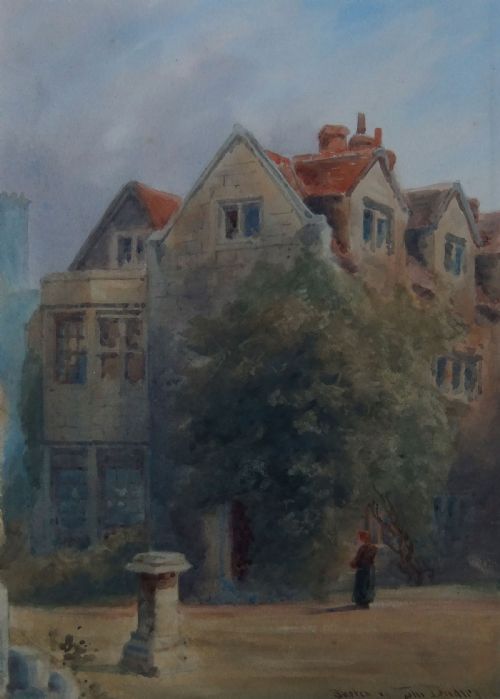
The pieces available span oil paintings on canvas, watercolours, and early engravings, often capturing specific landmarks such as Newstead Abbey, Hampton Court, and Shakespeare's Birthplace. These works frequently document the evolving appearance of great English and Scottish properties.
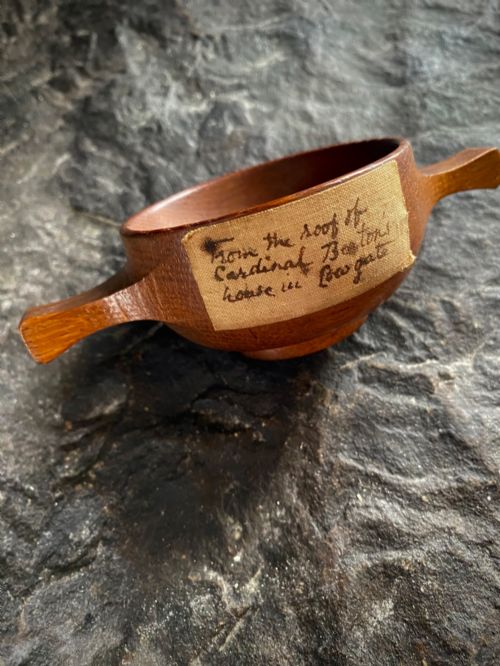
In addition to paintings and prints, the category extends to related objects with direct architectural provenance, including treen items accompanied by period labels detailing their origin from historic structures like Cardinal Beaton's house.
Materials and Techniques
Artists rendering historic properties utilised traditional oil on canvas to achieve depth and atmospheric detail in large architectural prospects and interior scenes. Watercolours on paper offered a lighter medium well suited for capturing precise architectural facades and garden settings on location.
Printmakers employed engraving and etching techniques to produce detailed monochrome records of historical figures and notable manors for wider circulation. Wooden artefacts such as quaichs incorporated material salvaged directly from the roofs and structures of ancient buildings.
Historic House Art Retail Price Guide 2026
Typical asking prices for historic house art among the pieces listed under this phrase on Sellingantiques today, from the lower quarter to the upper quarter. They describe what is for sale here now, not the wider market.
One surviving artefact is fashioned from the roof timbers of a cardinal's Edinburgh townhouse, complete with its original nineteenth-century explanatory label.
Assessing Quality in Architectural Depictions
Quality in these works rests upon the precision of architectural perspective and the artist's ability to render the specific character of a building and its interior. Finer oil paintings and watercolours demonstrate careful handling of light across masonry and panelled rooms, whereas lesser works rely on formulaic representation.
Provenance and documentation significantly influence the standing of a piece, particularly when works are signed by known artists or accompanied by detailed contemporary labels verifying the depicted location. The survival of original framing and the stability of the support material also contribute to the integrity of the piece.
Tom Dudley·Robert Thomas Buttery·A Gilbert·CB Prescott·Margaret Thompson
The Historic House Art Glossary
- Oil painting
- A work executed with pigments bound in a drying oil medium, typically applied to canvas or wood panels. This technique allows for rich colour depth and extensive working time.
- Watercolour
- A painting method in which pigment is suspended in a water-soluble vehicle, usually applied to paper. It is valued for its luminosity and immediacy.
- Etching
- A printmaking process where lines are incised into a metal plate with acid before being inked and pressed onto paper. This method produces fine, sharp linear details.
- Treen
- Small handmade wooden objects for domestic use, often turned on a lathe. Collectors prize items associated with specific historic events or buildings.
- Provenance
- The documented history of ownership and origin for an artwork or object. A clear provenance helps establish authenticity and historical context.
Historic House Art: Frequently Asked Questions
What periods do these artworks cover?
The selections span multiple centuries, beginning with seventeenth-century records and extending through the eighteenth and nineteenth centuries into the early twentieth century.
Most surviving pieces originate from the Victorian era, reflecting a strong contemporary interest in documenting national architectural heritage and ancestral homes.
How were these architectural scenes recorded?
Artists utilised oil paints on canvas, delicate watercolours on paper, and detailed monochrome etchings to capture both exterior facades and interior rooms.
Some items incorporate physical materials salvaged directly from notable historic buildings during renovations.
Are the depicted houses still standing?
Many of the buildings featured in these works, such as Hampton Court and Newstead Abbey, remain standing as preserved historic sites.
Other pieces document spaces or structures that have undergone significant alterations or vanished over time, offering a record of past domestic interiors.
How do I identify the specific location depicted?
Many works include contemporary inscriptions, signatures, or historical labels on the reverse that explicitly name the house or room shown.
Archival details and artist records often help connect the visual evidence to specific English and Scottish estates.