

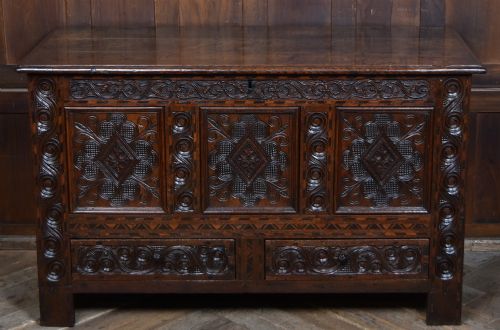

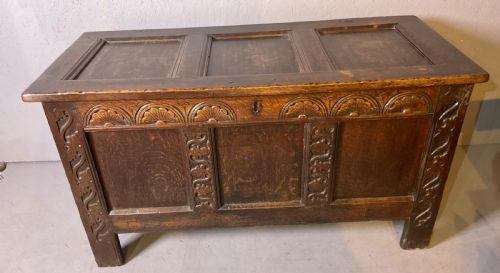

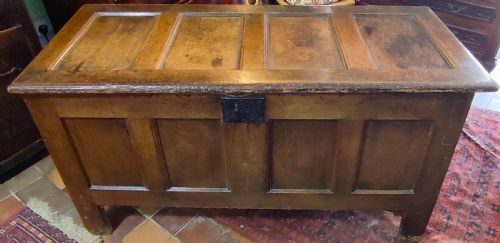


Historic Blanket Chest
These historic blanket chests are sturdy timber storage pieces built to last centuries, prized for their deep connection to early domestic craft.
Historic Blanket Chest
A historic blanket chest represents a solid wooden storage vessel, primarily encountered on this page as an oak coffer or chest dating from the sixteenth to the nineteenth century. These items take the form of heavy-duty boxes utilised for household linens, valuables, and domestic storage.
The selections span distinct periods including Elizabethan, Jacobean, and Georgian eras, showing regional varieties such as Lancashire pieces and specialised forms like sword chests or boarded coffers. Buyers find both carved and inlaid surface treatments alongside plain utility boxes.
Earlier examples display joined or boarded timber construction rooted in sixteenth and seventeenth-century traditions, while later iterations stretch into pine and eighteenth-century forms. Each piece offers a direct tangible link to historic domestic interiors.
Materials and construction
The primary material across the listings is oak, worked heavily with iron, wrought iron, and brass hardware components. Wood inlay and pine also appear, anchoring the construction in traditional timber trades.
Joinery methods rely on sturdy pegged joints, panel framing, and boarded construction characteristic of early English cabinet making. Metal hinges, straps, and locks reinforce the heavy timber lids and sides.
Historic Blanket Chest Retail Price Guide 2026
Typical asking prices for historic blanket chest among the pieces listed under this phrase on Sellingantiques today, from the lower quarter to the upper quarter. They describe what is for sale here now, not the wider market.
One specialised listing preserves a historic sword chest, proving that timber boxes once kept sharp arguments safely out of reach.
Distinctions in quality
Quality rests upon the integrity of the original timber and the sophistication of the period joinery or carving. Pieces featuring detailed seventeenth-century carving or complex inlay demonstrate a higher level of artisan skill than plain utility chests.
The presence of untouched period hardware, such as original wrought iron hinges and locks, elevates a piece. Preservation of the original surface patination distinguishes superior examples from heavily altered or restored items.
The Historic Blanket Chest Glossary
- Cofer
- A large strongbox or chest used for storing valuables, clothes, or documents. These objects form the primary category of storage furniture seen here.
- Boarded construction
- A method of building chests using simple thick planks nailed or pegged together at the edges. This technique represents an early and direct form of box making.
- Joined oak
- Furniture construction utilising interlocking mortise and tenon joints secured with wooden pegs. This method provides greater stability than simple boarded boxes.
- Wood inlay
- The technique of inserting pieces of contrasting timber into depressions within a solid wood surface to create decorative patterns. It frequently appears on seventeenth-century examples.
- Jacobean style
- The design aesthetic spanning the early seventeenth century, characterised by solid proportions and geometric carved decoration. It defines several pieces in this collection.
Historic Blanket Chest: Frequently Asked Questions
What is a historic blanket chest?
A historic blanket chest is a sturdy wooden storage box built centuries ago to hold household linens, clothing, and valuables. These pieces range from early sixteenth-century boarded coffers to later eighteenth-century joined oak chests.
They serve as foundational items of early domestic furniture, offering deep interior storage combined with period craftsmanship and visible timber patination.
How were these chests used?
These chests were primarily utilised in historic homes for safekeeping textiles, blankets, clothing, and family documents. Because wardrobes were uncommon in early centuries, large timber boxes functioned as the main secure storage.
Specialised variants, such as sword chests, also held specific weaponry or municipal records, while others doubled as seating benches within the home.
How do I date a historic chest?
Dating relies on observing construction methods, wood types, and decorative styles such as Elizabethan, Jacobean, or Georgian carving. Early sixteenth-century pieces often use simple boarded planks, while seventeenth-century examples typically employ joined oak framing.
Hardware styles, including wrought iron hinges and locks, further help identify the manufacturing period alongside regional characteristics like those found on Lancashire pieces.
How do I live with a historic chest?
Living with a historic chest involves placing it in a stable environment away from direct heat sources and dramatic humidity shifts to protect the antique oak and pine. These robust pieces function effectively as coffee tables, end-of-bed linen storage, or hallway focal points.
Their heavy timber construction allows them to endure daily use while maintaining their historic character within modern interiors.