



Hinged Side Tray Table
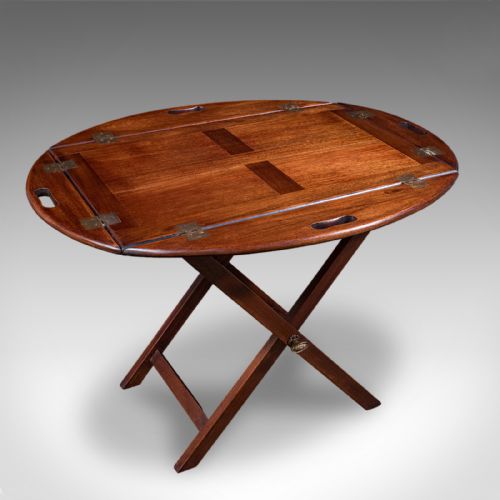
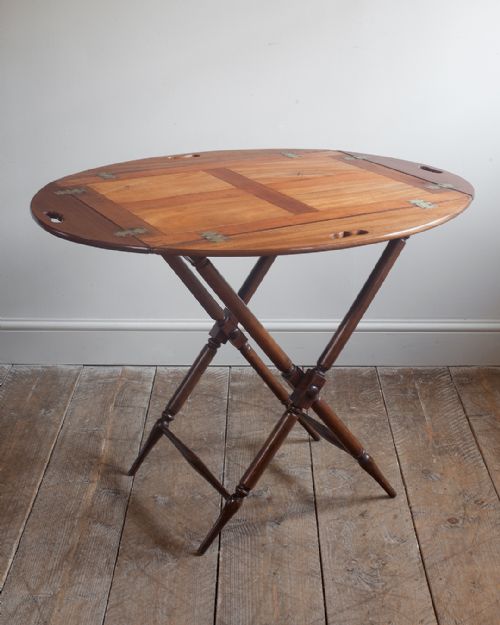
A hinged side tray table is a versatile British serving piece and occasional stand that combines a removable tray top with a folding base, prized for compact living.
Hinged Side Tray Table
When you search for a hinged side tray table, you are looking at utilitarian serving furniture adapted for domestic display and entertaining. The form bridges the gap between formal dining service and portable hospitality.
The most common examples encountered on this page date from the Georgian, Victorian, and Edwardian periods, alongside later revival pieces. These items typically pair a deep-sided wooden tray with a collapsible X-frame or folding stand.
Makers designed these objects to be packed away when not in use, making them practical additions to smaller reception rooms. Their dual nature as both a removable tray and a stable side table defines their enduring appeal.
How they were made
Cabinet makers built these trays predominantly in mahogany and oak, selecting dense hardwoods capable of enduring repeated lifting and carrying. The timber grain was often polished to a deep lustre, highlighting the natural figure of the wood.
Hinges, carrying handles, and support brackets utilised brass, providing both structural reinforcement and a neat metallic contrast against the dark wood. Joinery techniques focused on strength, particularly where the drop-flap hinges met the tray walls.
Hinged Side Tray Table Retail Price Guide 2026
Typical asking prices for hinged side tray table among the pieces listed under this phrase on Sellingantiques today, from the lower quarter to the upper quarter. They describe what is for sale here now, not the wider market.
The folded flaps double as impromptu breadboards for gentlemen who fancied a midnight snack.
What varies in quality
Quality rests primarily in the timber selection and the crispness of the original joinery. Finer trays feature figured mahogany boards and hand-cut dovetails, whereas simpler utilitarian versions rely on plain plank construction.
The sophistication of the folding stand also dictates the grade of the piece. Superior examples possess well-balanced, tightly-turned stands and robust brass hardware that operate smoothly without wobble.
The Hinged Side Tray Table Glossary
- Butler's tray
- A portable rectangular or oval wooden tray with hinged sides that fold down to form a flat surface or lock upright for carrying. These trays usually rest on a separate folding wooden stand.
- Drop-flap serving stand
- An alternative description for a tray table featuring hinged sides that drop down when released. It was historically used by domestic staff to serve drinks or small dishes.
- X-frame
- A folding base constructed from two intersecting wooden legs that cross in the centre like the letter X. This design allows the stand to collapse flat for storage.
- Canvas webbing
- Heavy-duty woven fabric straps occasionally used inside folding stands to support the tray or stabilise the wooden frame. It offers flexibility while maintaining tensile strength.
Hinged Side Tray Table: Frequently Asked Questions
What is a hinged side tray table used for?
These tables served historically in British country houses and town homes for transporting food and beverages from the kitchen to the drawing room. The raised sides prevented glassware and porcelain from sliding off during transit.
Today, buyers use them as flexible coffee tables, bedside stands, or drinks stations in sitting rooms. Their ability to fold flat makes them exceptionally useful in modern spaces where floor area is at a premium.
How do I date a mahogany tray table?
Dating relies heavily on timber characteristics, construction methods, and the style of the turnings on the stand. Georgian examples often feature rich, faded mahogany patination and hand-forged brass fittings, while Victorian versions can be heavier and more robustly carved.
Revival pieces from the early twentieth century often copy eighteenth-century proportions but employ machine-cut joints and modern hardware finishes. Comparing the wear on the underside of the tray to the stand helps confirm if the two components started life together.
How do I care for an antique wood tray?
Maintain the finish by dusting with a dry, soft cloth and occasionally applying a quality beeswax to nourish the dry hardwood. Avoid placing hot cups or damp glasses directly onto antique polish to prevent water rings.
Keep the tables away from direct heat sources and strong sunlight, which can dry out the timber and fade the mahogany. Regular waxing preserves the natural sheen and protects the historical surface.