







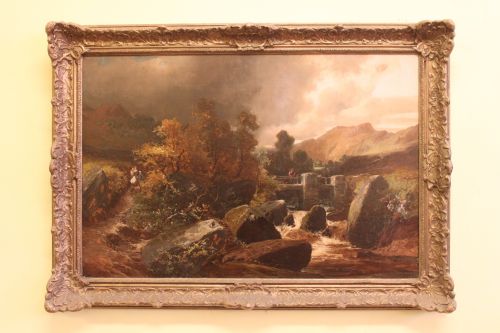

Highland River Oil Painting
These highland river oil painting works bring wild Scottish waters and rugged glens straight into your room.
Highland River Oil Painting
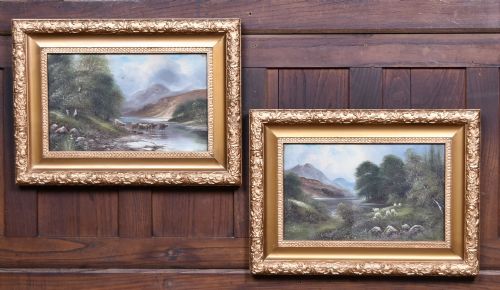
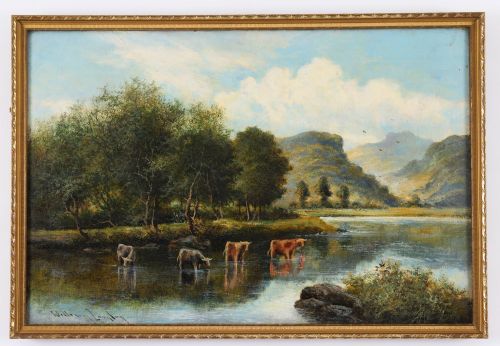
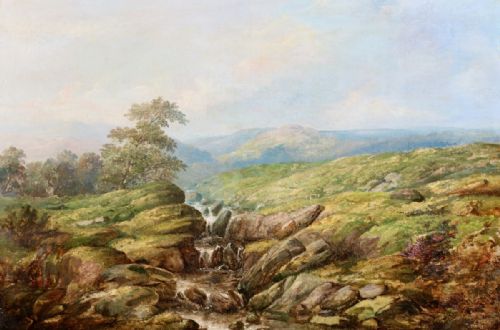
A highland river oil painting captures the dramatic scenery of Scotland through traditional brushwork and atmospheric compositions. Most examples on this page date from the nineteenth century and the Victorian era, depicting rocky riverbeds, mountain passes, and rural bothies.
Artists working within the Scottish School and Victorian Naturalism styles focus on natural light, moody skies, and rushing waterways. These canvases range from intimate wood panels to large framed artworks suited to prominent wall display.
The subjects frequently feature cattle, stags, and herdsmen moving through expansive highland landscapes alongside winding rivers. Such pieces reflect a nineteenth-century fascination with untamed British wilderness and pastoral life.
How they were made
Makers applied oil paint onto stretched canvas or prepared wood panels using traditional brushes and palette knives. These foundational materials support layered pigments that build depth in water, sky, and foliage.
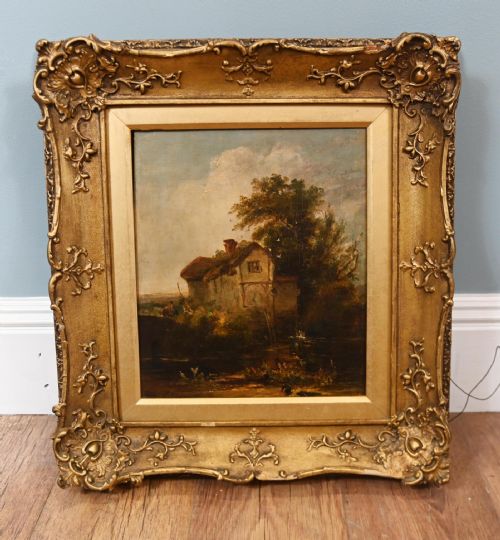
Gesso and gold leaf frequently finish the heavy wooden frames that accompany these works, providing a decorative border. The combination of durable oil mediums and robust wooden supports ensures the survival of these landscapes over generations.
Highland River Oil Painting Retail Price Guide 2026
Typical asking prices for highland river oil painting among the pieces listed under this phrase on Sellingantiques today, from the lower quarter to the upper quarter. They describe what is for sale here now, not the wider market.
The selection includes oil paintings on canvas and wood panel created across the eighteenth, nineteenth, and early twentieth centuries.
What varies in quality
The distinction between works rests upon the handling of light, atmospheric perspective, and the fluidity of the brushwork describing moving water. Finer examples demonstrate a confident command of tone that suggests distance and moisture in the air.
Signature placement and documented attribution to listed artists elevate certain canvases above anonymous studio pieces. Furthermore, the preservation of the original gilt gesso framing contributes significantly to the overall integrity of the piece.
William Langley·William George Tennick·Archibald Kay·H Wallace·Tom Seymour·Nasmyth·George Melvin Rennie·Frederick Richard Lee·Henry Birtles·Louis Bosworth Hurt·A De Breanski·Sidney Richard Percy·John B MacDonald·Benjamin Williams Leader·William Crampton·Clarence Roe
The Highland River Oil Painting Glossary
- Canvas
- A heavy woven fabric stretched across a wooden frame to serve as a painting surface. It provides a durable ground for oil pigments.
- Wood panel
- A rigid support made from timber used by artists for smaller or earlier landscapes. It offers a smooth, stable surface for detailed brushwork.
- Gesso
- A plaster-like mixture applied to wooden frames as a base for gilding and ornamentation. It creates a smooth white surface ready for gold leaf.
- Oil paint
- A slow-drying medium made from pigment particles suspended in a drying oil such as linseed. This medium allows for subtle blending and rich colour depth.
- Gold leaf
- Thin sheets of hammered gold applied to picture frames for decorative enrichment. It reflects ambient light to frame the artwork effectively.
Highland River Oil Painting: Frequently Asked Questions
Where should I hang these landscapes?
Select an interior wall away from direct sunlight and damp conditions to protect the canvas and wooden frame.
Allow enough space for the proportions of the frame to complement your room without crowding surrounding furniture.
What frames are original?
Frames showing matching period wear, gesso ornamentation consistent with the canvas date, and stable corner joints are typically original.
Subsequent re-framing often leaves minor impressions on the canvas edges where earlier mouldings rested.
How do I identify Scottish School works?
Look for distinctive regional topography, such as specific Scottish glens, rivers, and atmospheric weather patterns recorded by local painters.
Signatures matched against nineteenth-century exhibition records further confirm the regional origin.