







Highland Mountain Artwork
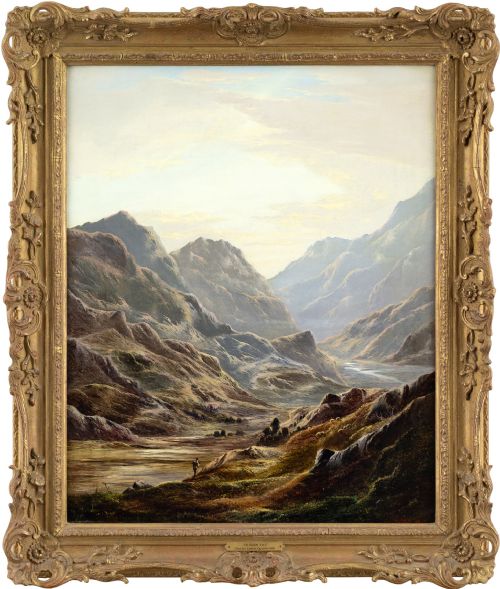
These highland mountain artwork pieces capture vast Scottish landscapes and craggy peaks, offering buyers a direct window into nineteenth and early twentieth century rural scenery.
Highland Mountain Artwork
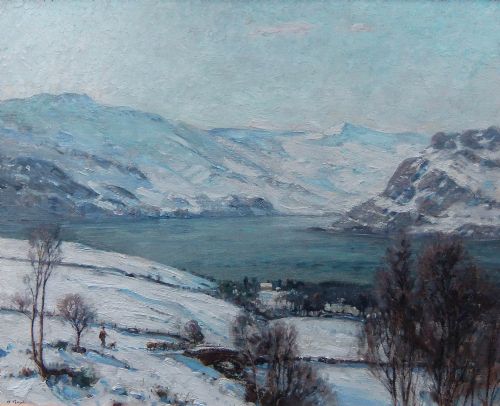
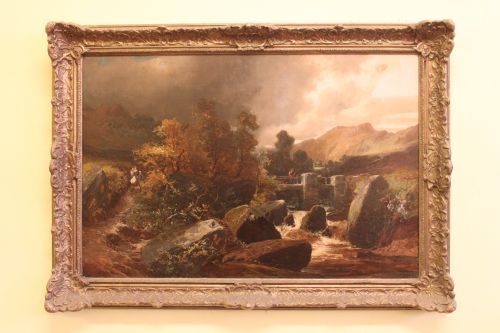
When you search for highland mountain artwork, you encounter nineteenth and early twentieth century visual depictions of rugged terrain, glassy lochs, and remote valleys. These works typically focus on specific geographic locations across Scotland and the Lake District, recording specific atmospheric conditions from morning mist to sunset.
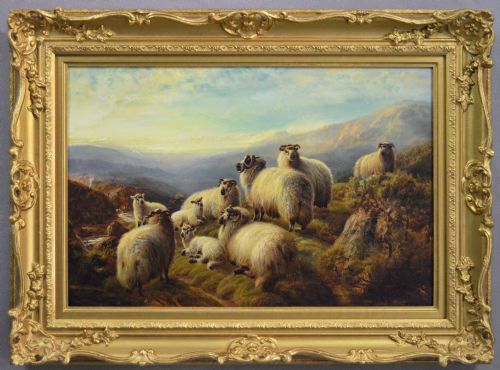
The version you are most likely to meet on this page is an oil painting on canvas or panel, frequently framed in giltwood. These pieces often incorporate pastoral elements such as highland cattle, sheep, or solitary figures navigating the expansive topography.
The chronological scope spans from the Victorian era into the 1930s, embracing traditional British styles alongside Scottish impressionism. Works range from intimate watercolours and gouache studies to large gallery-scale canvases designed for prominent wall display.
Materials and construction
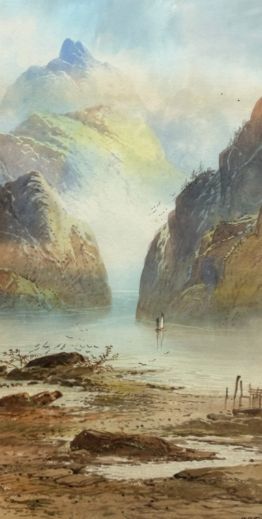
Artists primarily applied oil paint onto stretched canvas or wooden board, utilising rich pigment layers to build depth in mountainous skies and dark water. Watercolours and gouache on paper also appear, offering lighter, more immediate impressions of Scottish weather and topography.
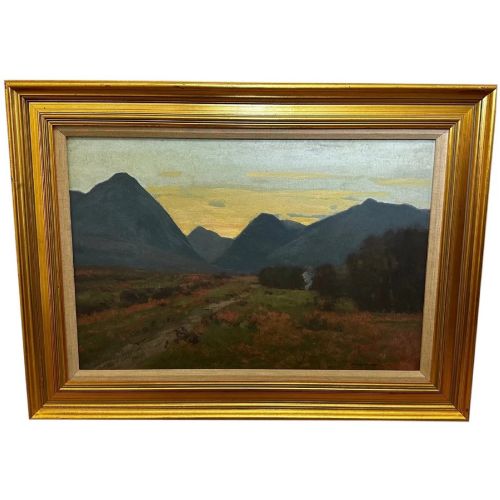
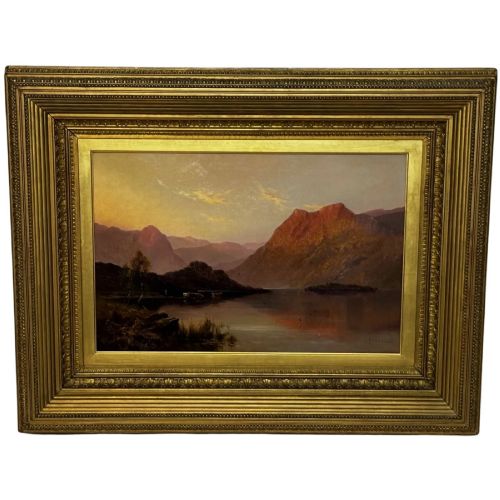
Framing forms an integral part of the physical object, with heavy gilded wooden mouldings historically paired with these landscape paintings to enhance their visual presence. Support materials range from robust timber panels to traditional woven canvas grounds prepared with gesso.
Highland Mountain Artwork Retail Price Guide 2026
Typical asking prices for highland mountain artwork among the pieces listed under this phrase on Sellingantiques today, from the lower quarter to the upper quarter. They describe what is for sale here now, not the wider market.
Several sheep painted by William Henry Mander appear to have witnessed more Victorian mist than most humans.
Distinctions in quality
Quality in these landscape paintings rests upon the artist's command of light, atmospheric perspective, and topographical accuracy. Superior examples demonstrate confident brushwork that distinguishes between jagged rock, soft heather, and the reflective surface of a loch.
The integration of livestock or human figures further separates standard decorative pieces from accomplished works of fine art. Strong compositions balance the monumental scale of the mountains with nuanced handling of foreground detail and changing weather.
Alfred de Breanski Snr·William Henry Earp·George Houston RSA RSW·Louis Bosworth Hurt·Benjamin Williams Leader
The Highland Mountain Artwork Glossary
- Giltwood
- Carved wood treated with gold leaf or metallic gilt finish, commonly found on the ornate frames enclosing Victorian oil paintings.
- Gouache
- An opaque water-based medium that allows artists to build solid, matte colour fields on paper.
- Impressionism
- A style focusing on the visual impression of the moment, particularly shifting light and open-air conditions.
- Loch
- The Scottish term for a lake or sea inlet, frequently serving as the central compositional mirror in highland scenery.
- Provenance
- The documented history of ownership surrounding a work of art, establishing its authenticity and exhibition record.
Highland Mountain Artwork: Frequently Asked Questions
What subjects appear in highland mountain artwork?
These paintings depict rugged mountain ranges, remote glens, and expansive lochs across Scotland and Northern England. Artists frequently populate these natural vistas with grazing highland cattle, sheep, and figures engaged in rural labour.
Scenes also capture specific weather events, including morning mists over Ben Lawers or golden light sinking across Loch Tay. The human presence remains secondary to the sheer scale of the surrounding topography.
How do I date an antique landscape painting?
Dating relies upon stylistic markers, framing techniques, and the known active periods of the listed artists. Victorian works often display dramatic tonal contrasts and meticulous detail, whereas early twentieth-century pieces lean towards looser impressionistic brushwork.
Physical examination of the canvas weave, stretcher frames, and backing paper can also provide chronological clues. Signatures and exhibition labels affixed to the reverse offer definitive points of reference.
Where were these paintings displayed originally?
Victorian and Edwardian households hung these large landscapes in principal reception rooms, libraries, and formal dining spaces. Their substantial giltwood frames were designed to project status and bring the grandeur of the British countryside indoors.
Collectors today place them in similar domestic settings where adequate wall space allows the expansive compositions room to breathe. Proper placement avoids direct sunlight to protect the integrity of the oil pigments and paper works.
What is the difference between oil and watercolour?
Oil paintings utilise slow-drying binders that allow artists to blend rich colour layers and achieve heavy impasto texture on canvas or board. Watercolours employ translucent pigments on paper, capturing fleeting weather effects with lighter, more immediate washes.
Oils generally required heavy protective frames under glass or left open, while watercolours demand careful conservation behind glass to prevent moisture damage. Both mediums document the same dramatic terrain through distinct technical approaches.