

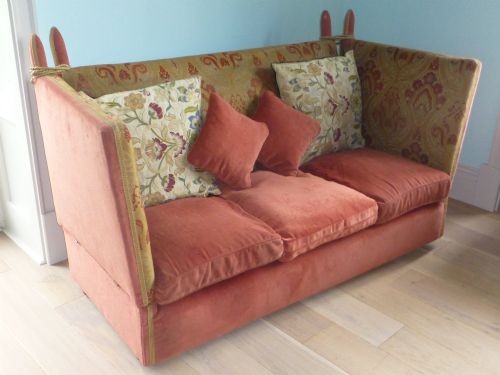
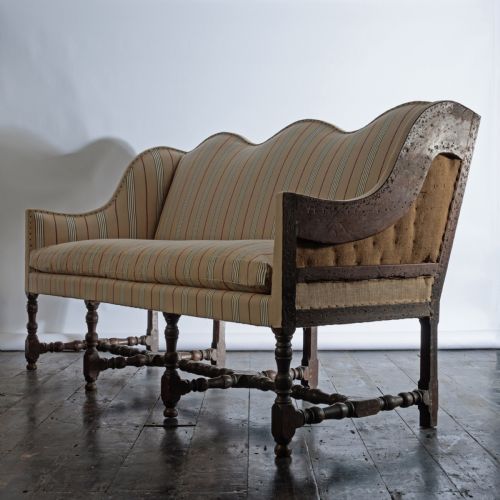


High Backed Settee
A high backed settee offers commanding presence and deep seating, drawing the eye instantly to any room.
High Backed Settee
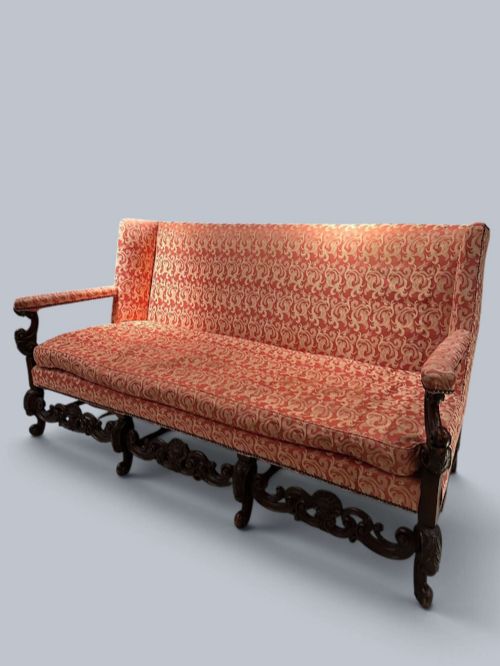
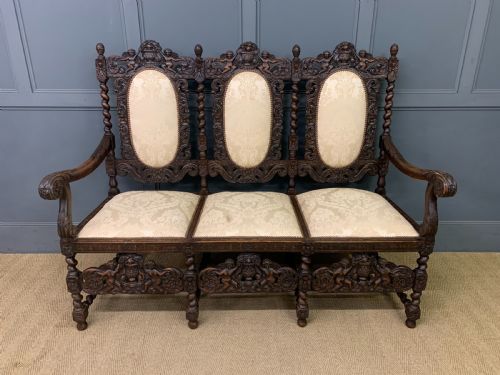
A high backed settee provides elevated seating framed in walnut, mahogany, oak, or giltwood, designed with substantial vertical reach. You will encounter forms spanning the seventeenth century through the Edwardian era, incorporating revived historical aesthetics.
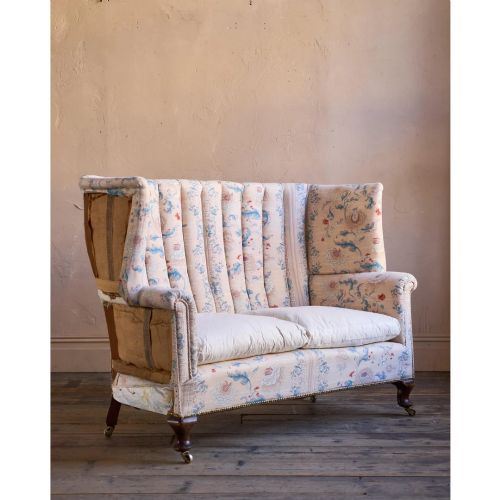
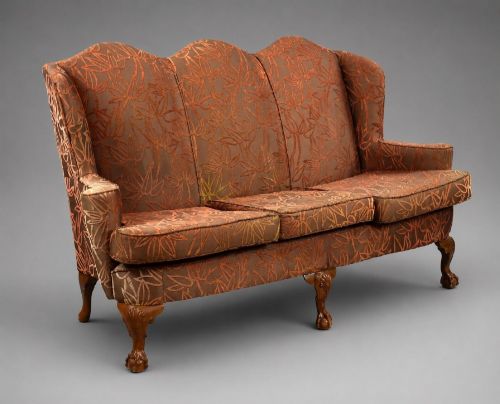
The selections here highlight distinct regional and stylistic revivals, including Carolean, Queen Anne, and George II influences. Many examples integrate upholstered wingbacks, drop arms, or buttoned padding suited to formal reception rooms.
Makers utilised sturdy hardwoods to support tall frames, frequently pairing exposed timber with rich textiles such as velvet, damask, leather, and patterned fabric. These seating options range from compact two-seater settees to larger three-seat arrangements.
How they were made
Frames rely on dense hardwoods like walnut, mahogany, and oak, joined to sustain the structural load of elevated backs. Carved details adorn showwood elements on Victorian and revival pieces.
Upholstery techniques involve traditional stuffing secured beneath textiles including leather, velvet, and damask. Brass details occasionally accent the fabric edges on specific styles.
High Backed Settee Retail Price Guide 2026
Typical asking prices for high backed settee among the pieces listed under this phrase on Sellingantiques today, from the lower quarter to the upper quarter. They describe what is for sale here now, not the wider market.
Current listings incorporate walnut, mahogany, oak, brass, leather, and velvet across Victorian, Edwardian, and seventeenth-century styles.
What varies in quality
The crispness of carved woodwork defines finer examples, particularly where walnut or oak is shaped into intricate scrolls and crests. Crisp joinery ensures the tall frame remains rigid over generations of use.
The choice of covering material and the precision of the upholstery influence the character of each piece. Superior textiles and tightly executed buttoning or damask application elevate the visual weight of the seating.
The High Backed Settee Glossary
- Knole sofa
- A historic settee design featuring adjustable or drop arms tied with cords, originally created for Knole House.
- Carolean revival
- A late nineteenth-century style emulating seventeenth-century furniture with elaborate carving, high backs, and turned legs.
- Showwood
- Exposed timber framing on an upholstered piece where the polished wood remains visible around the upholstery.
- Giltwood
- Timber coated with a thin layer of gold leaf, frequently found on decorative nineteenth-century frames.
- Wingback
- A high-backed chair or settee with side panels designed to shield the sitter from drafts.
High Backed Settee: Frequently Asked Questions
How do I place a high backed settee?
A high backed settee works well against a tall wall or acting as a room divider due to its significant vertical presence. Ensure clearance around the piece so the carved crest or tall upholstery remains fully visible.
Pair the settee with lower seating to balance the proportions within the room. Proper placement allows the woodwork and fabric details to catch natural light effectively.
What periods do these settees come from?
The listings span from the seventeenth century through the Victorian and Edwardian eras, alongside later revivals. Many nineteenth-century pieces adopt earlier seventeenth-century or Queen Anne styling.
Examination of the timber, joinery, and upholstery style helps determine the specific era of manufacture. Revival pieces from the Victorian and Edwardian periods successfully replicate these historical proportions.
Are these settees comfortable for daily use?
Many examples feature deep seating and upholstered backs designed to offer substantial support. Variations in padding depth depend on whether the piece relies on leather, buttoning, or traditional textile upholstery.
Original stuffing methods vary by decade, influencing the firmness of the seat and backrest. Assessing the depth and back angle helps determine suitability for everyday seating.
Which woods were used for the frames?
Walnut and mahogany appear frequently across the Victorian and Edwardian periods, providing stable foundations for tall frames. Oak and general hardwoods also support specific revival and earlier pieces.
Exposed showwood elements display the grain and colour chosen by the maker. Polished hardwood frames complement the chosen fabric or leather upholstery.