



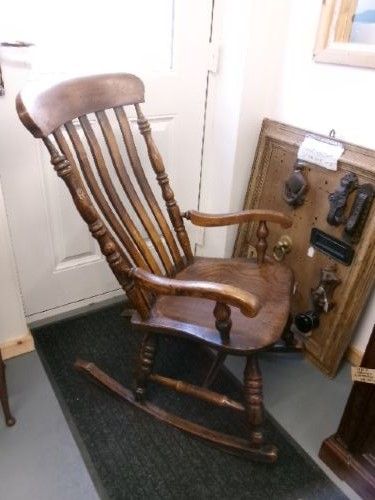
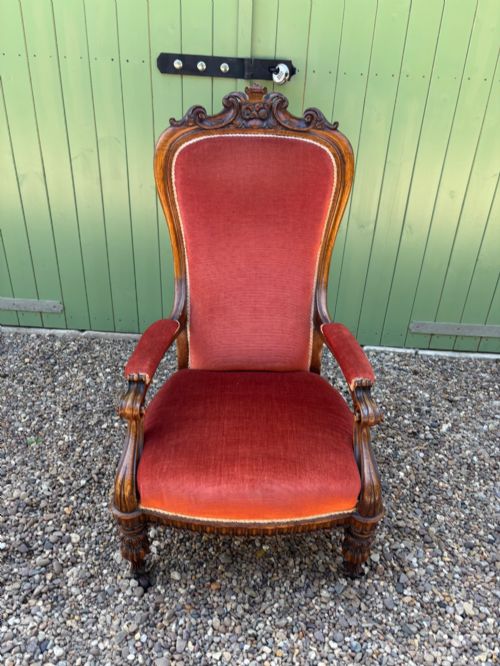
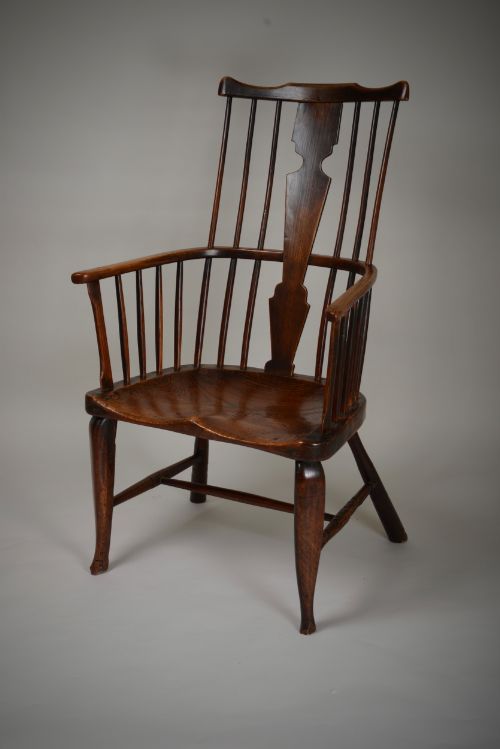
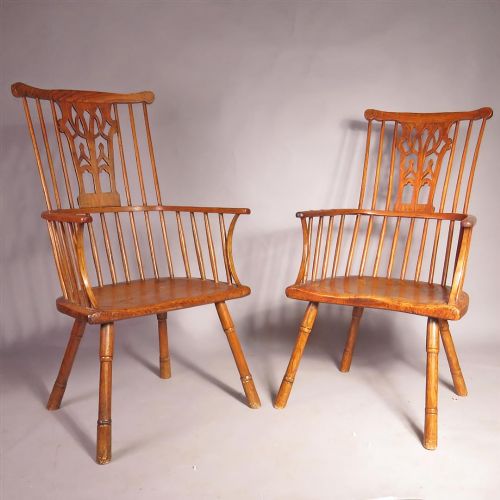
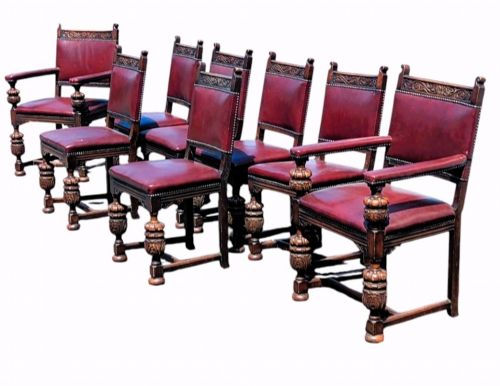
High Back Oak Armchair
A high back oak armchair brings a commanding architectural presence to a room, offering sturdy joinery and deep seating.
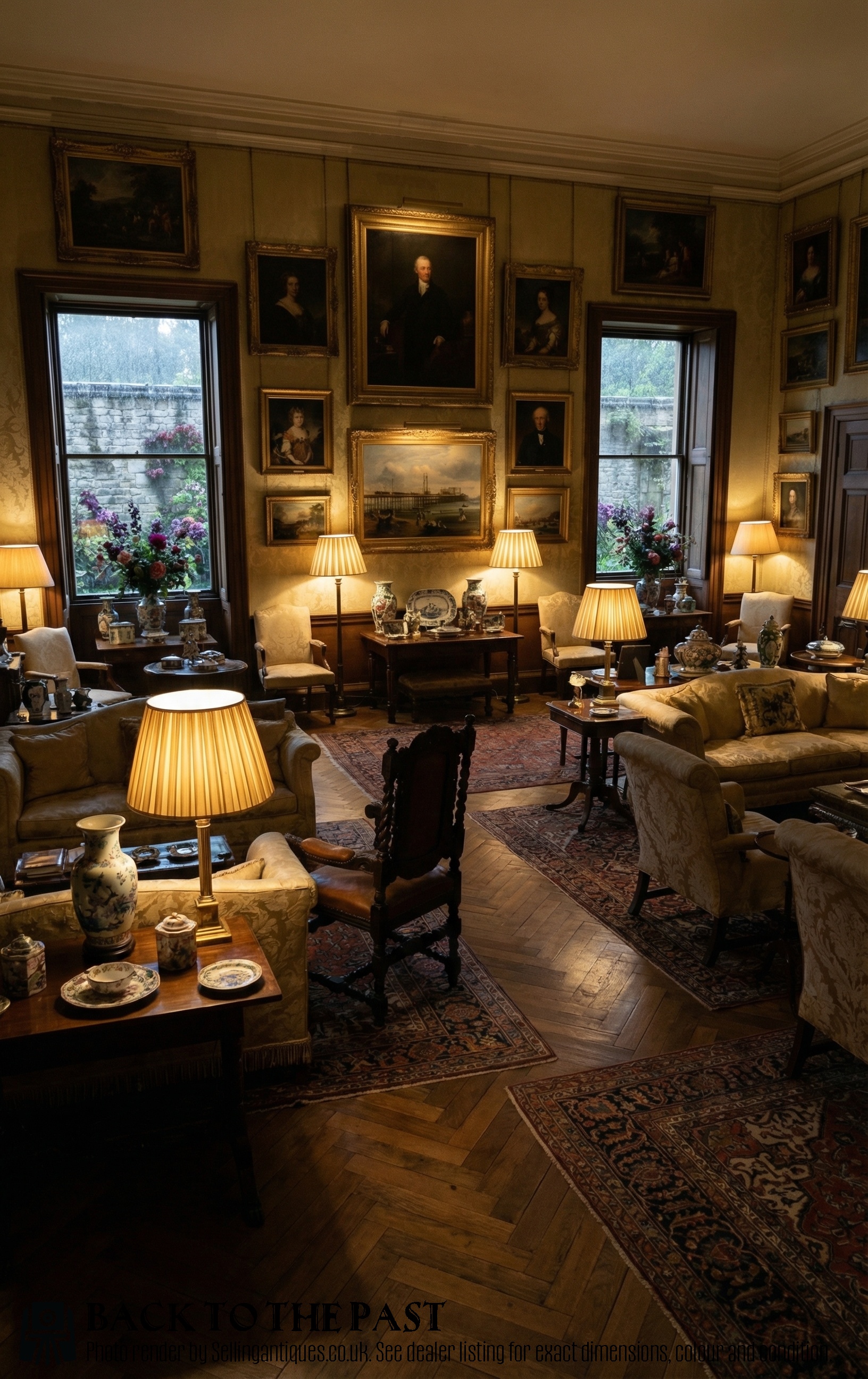
Identifying the High Back Oak Armchair
A high back oak armchair stands as a robust seating form defined by its elevated backrest and heavy timber construction. When examining the pieces collected under this search phrase, buyers encounter examples spanning the eighteenth century, the Victorian era, and twentieth-century revival movements.
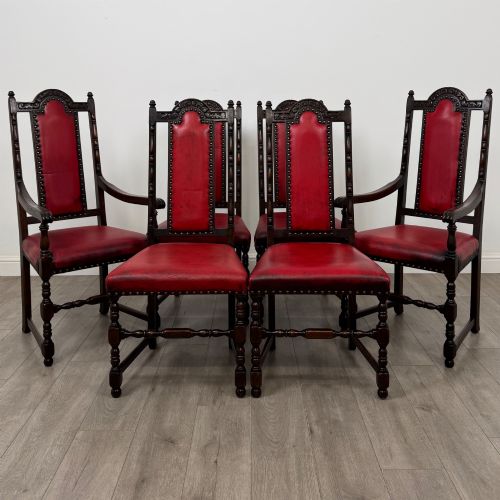
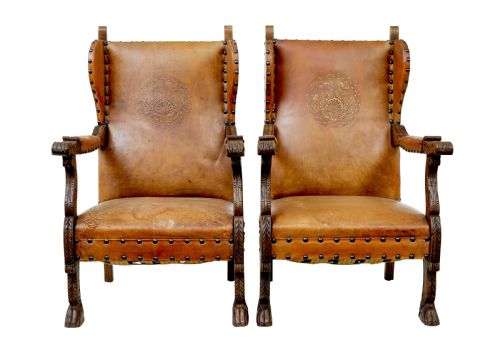
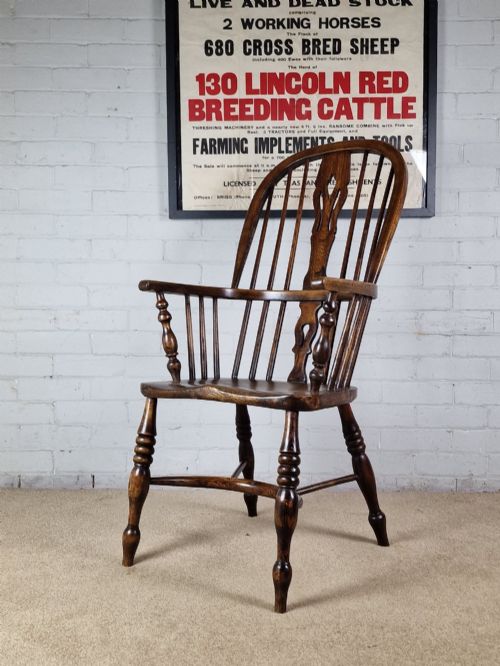
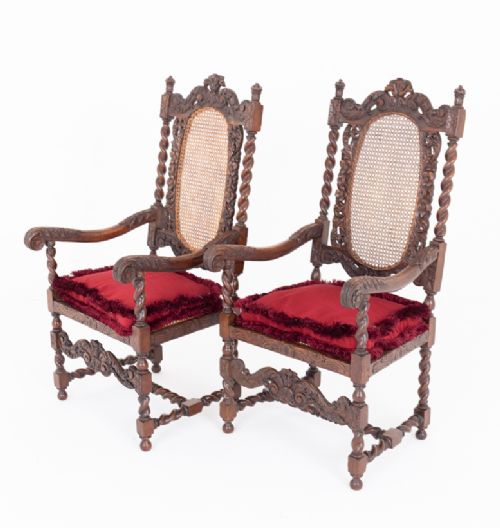
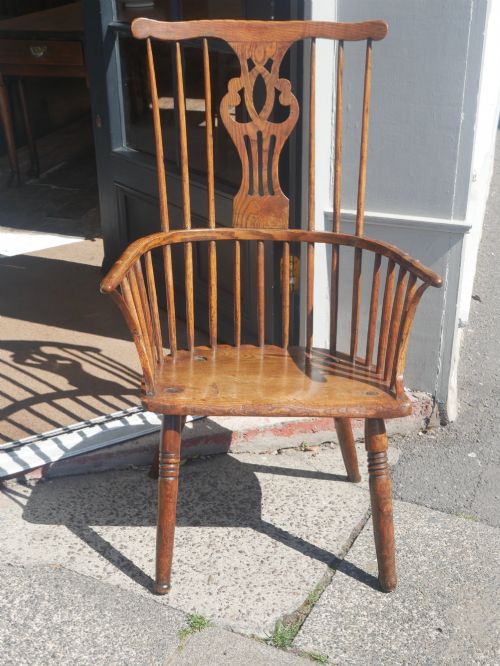
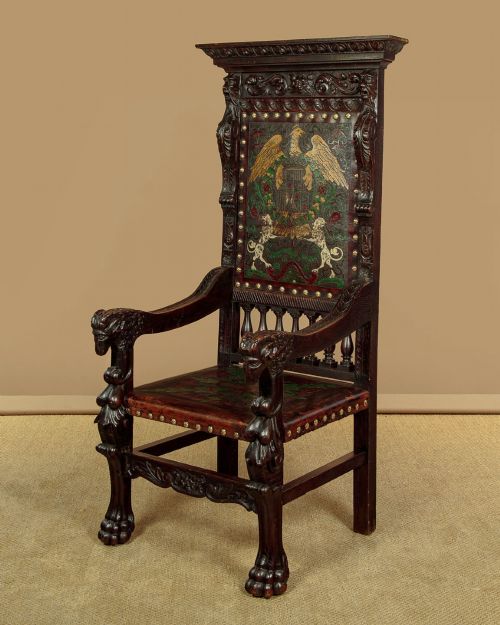
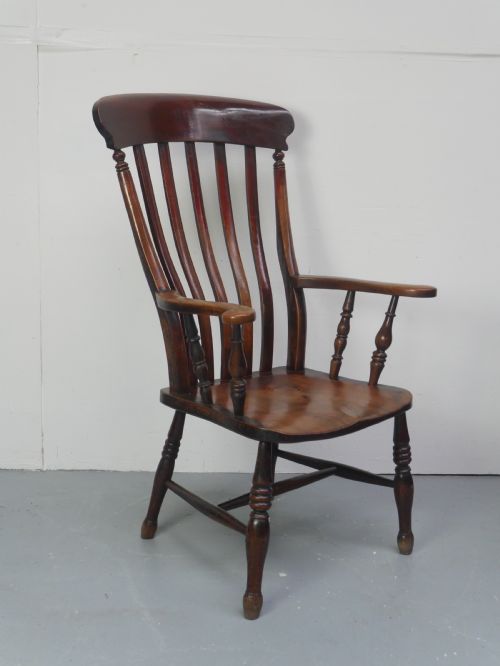
The selections on this page showcase diverse regional interpretations and stylistic influences, ranging from Jacobean Revival and Arts and Crafts to rustic country designs. Forms vary from simple fireside reading chairs to substantial carver armchairs and pairs suited for a study or hall.
Makers and workshops from different decades utilised oak frames to create both panelled formal seats and more open structural frameworks. The enduring appeal lies in the combination of substantial timber framing and upright support.
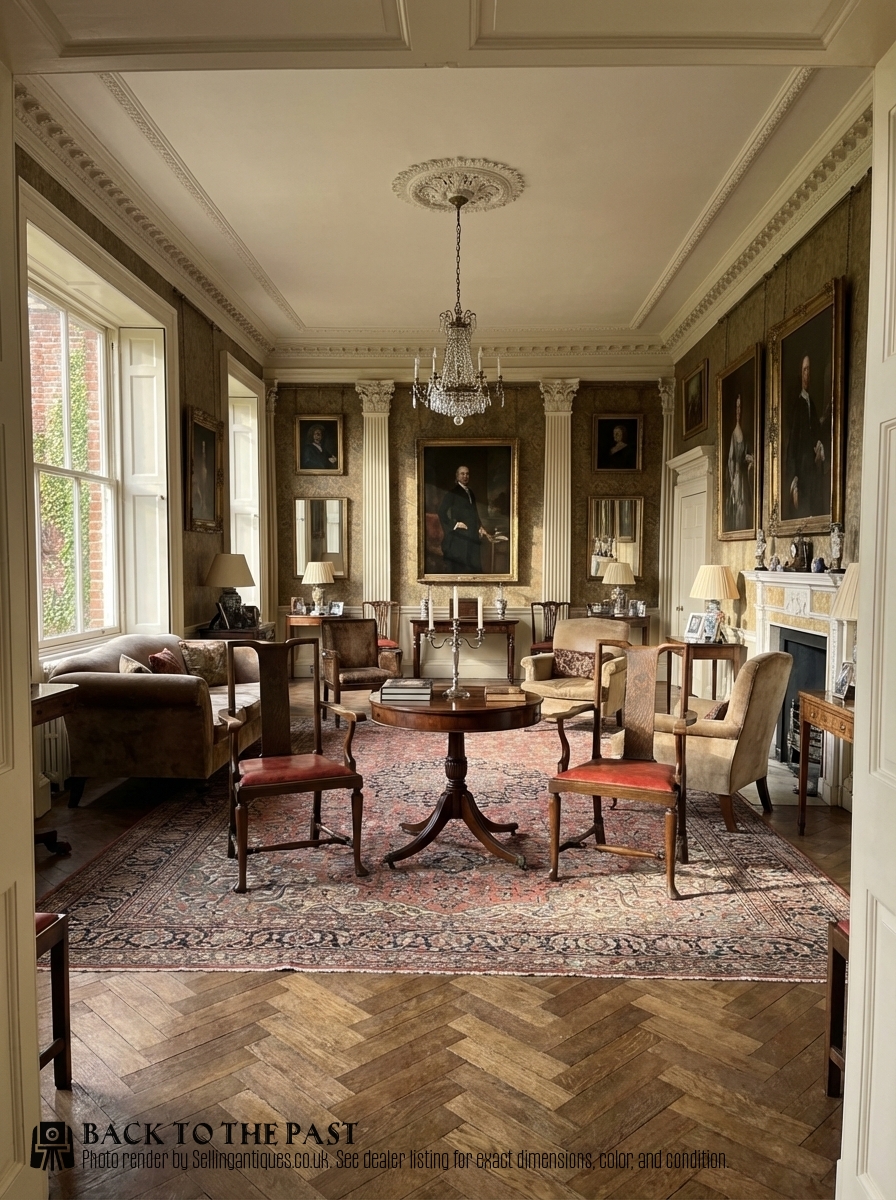
Construction and Materials
Makers built these frames using solid English oak, shaping the dense timber with traditional joinery methods such as mortise and tenon joints secured with wooden pegs. The structural members often display the natural grain and characteristic medullary rays of the wood.
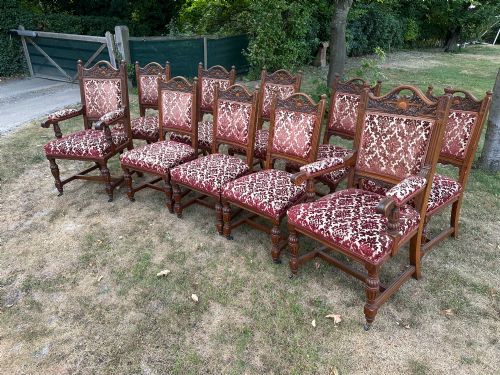
Upholstered versions incorporate supporting elements like leather, rattan cane, velvet, and various woven fabrics. Metal details such as brass tacks occasionally appear along the borders of the leather upholstery to secure the hide to the wooden framework.
Retail Price Guide 2026
Typical UK retail prices for high back oak armchair, calculated from the Sellingantiques database of over a million retail prices indexed since 2003. This retail price guide relies exclusively on Sellingantiques data; no external sources or auction records are used, so the figures do not describe the wider market.
Certain high back designs were built specifically to block chilly draughts from reaching the sitter's neck by the hearth.
Assessing Quality and Execution
The distinction between ordinary and exceptional examples rests in the crispness of the carving, the selection of figured timber, and the integrity of the original joints. Superior pieces demonstrate thoughtful proportion in the height of the backrest and the curve of the arms.
Subtleties in surface finish and the preservation of original materials elevate certain items above standard production. The weight of the timber and the harmony between the wooden structure and the upholstery dictate the overall character of the chair.
Robert Mouseman Thompson·William Birch of High Wycombe
The High Back Oak Armchair Glossary
- Carver armchair
- A sturdy wooden chair with armrests, traditionally placed at the head of a dining table or used as a principal seat in a room.
- Jacobean revival
- A nineteenth and twentieth-century design style that imitates the heavy, dark-toned furniture and geometric carving of the early seventeenth century.
- Arts and Crafts
- A movement prioritising traditional handcraftsmanship, simple structural honesty, and the natural qualities of materials like oak over mass-produced ornamentation.
- Medullary rays
- Natural ribbon-like flecks visible across quartersawn oak timber that indicate the quality and cut of the wood.
Frequently Asked Questions
What is a high back oak armchair?
A high back oak armchair is a sturdy wooden seat featuring an extended vertical backrest designed to provide additional head and shoulder support. These chairs combine solid timber framing with various upholstered elements.
They serve as prominent focal points in studies, libraries, and living spaces, offering both functional seating and a strong architectural presence.
How do I date an oak armchair?
Dating relies on examining the joinery techniques, tool marks, and stylistic characteristics present in the wood. Earlier pieces often display hand-sawn surfaces and pegged joints, while later revival models show the influence of specific twentieth-century movements.
Comparing the turning of the legs and the profile of the backrest against documented historical periods helps narrow down the decade of manufacture.
Where should I place a high back chair?
These substantial chairs suit placement beside a fireplace, in a grand hallway, or paired alongside a large desk. Their towering proportions require adequate surrounding space so the timber frame and backrest remain unobstructed.
In a living room, they work effectively as standalone accent pieces rather than clustered seating.
Are these chairs comfortable for daily use?
Comfort depends heavily on the padding and the angle of the upright backrest. Many historical examples prioritize posture and architectural presence over deep lounging.
Versions upholstered in leather or fitted with supportive cushioning offer a firmer sitting experience suited for reading or working at a desk.