





High Back Kitchen Chairs
High back kitchen chairs bring vernacular character to domestic spaces, combining sturdy timber construction with tall spindle backs for practical daily seating.
High Back Kitchen Chairs
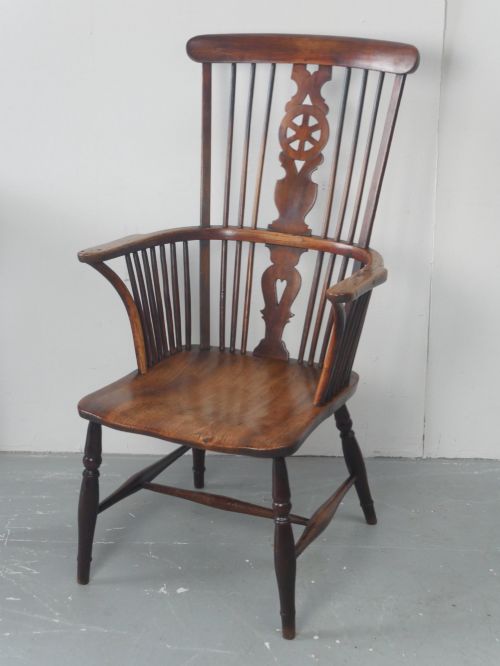
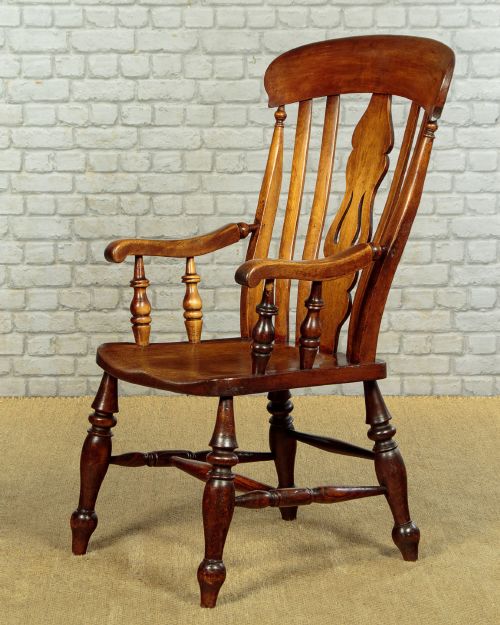
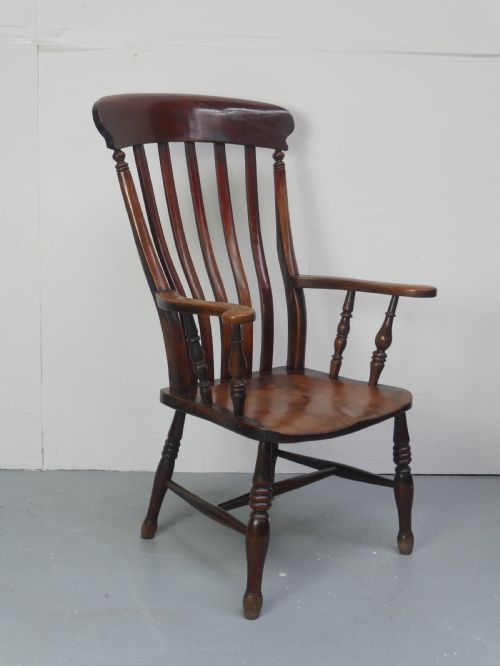
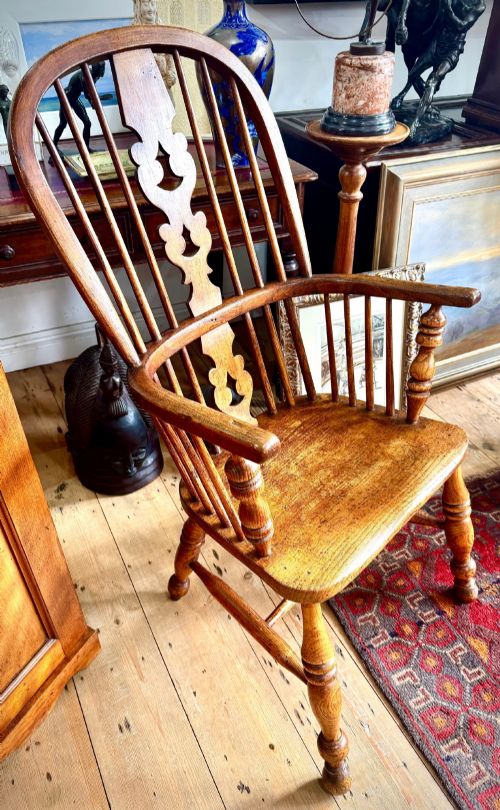
High back kitchen chairs encompass robust vernacular seating forms originating across the nineteenth and early twentieth centuries. These pieces combine utilitarian function with regional woodworking traditions, featuring prominently in Victorian and Edwardian domestic interiors.
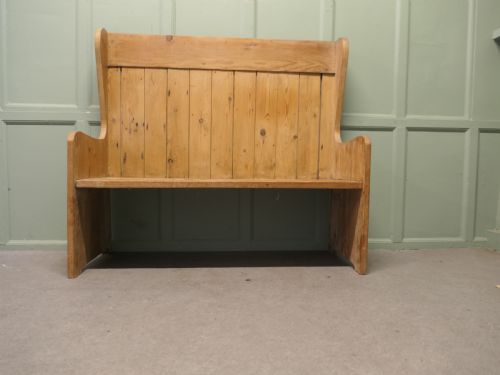
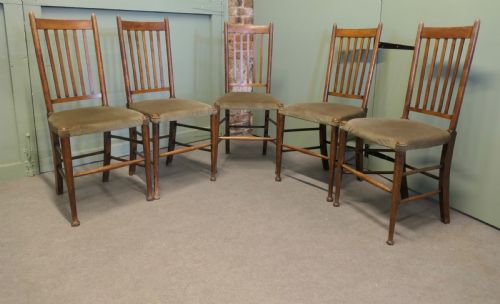
The selection centres on Windsor armchairs, carvers, and stickback forms constructed from indigenous British timbers. Buyers will encounter sets of dining chairs alongside individual farmhouse armchairs, rocking chairs, and benches suited to fireside or kitchen use.
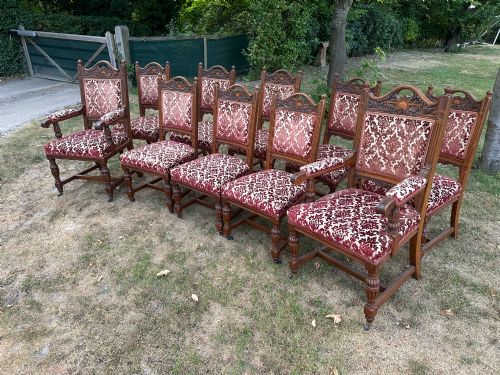
Regional English workshop traditions dominate the inventory, notably featuring High Wycombe makers alongside vernacular country pieces. These seating options range from simple elm and beech carvers to substantial sets of carved oak dining chairs.
What varies in quality
Quality differences emerge in the selection and figuration of the timber, particularly the grain depth within elm seats and the uniformity of turned ash spindles. Finer examples retain crisp detailing at joint junctions and balanced proportions across armbows and crest rails.
Structural integrity depends on the original tightness of wedged joints and the degree of timber shrinkage over time. Pieces retaining matching sets display greater consistency in turning profiles than assembled collections.
High Back Kitchen Chairs Retail Price Guide 2026
Typical asking prices for high back kitchen chairs among the pieces listed under this phrase on Sellingantiques today, from the lower quarter to the upper quarter. They describe what is for sale here now, not the wider market.
Listings span the Victorian and Edwardian eras, featuring elm, beech, ash, and oak across styles from English Country to Arts and Crafts.
The High Back Kitchen Chairs Glossary
- Windsor
- A traditional wooden chair featuring a solid saddle-shaped seat into which the legs and back spindles are directly inserted. This construction method provides exceptional rigidity without complex framing.
- Carver
- An armchair designed with arms, often used at the head of a dining table or as a fireside seat. These pieces match smaller side chairs in a dining set.
- Stickback
- A chair back constructed from plain turned spindles rather than a solid splat or pierced central board. These spindles offer reliable support while keeping the chair lightweight.
- Settle
- A high-backed wooden bench with solid arms and often an enclosed lower base designed to block draughts in country houses and pubs. They provide communal seating for multiple occupants.
- High Wycombe
- A Buckinghamshire town renowned as a historic centre for chair making, particularly Windsor designs. Workshops here produced large volumes of elm and beech seating for national distribution.
High Back Kitchen Chairs: Frequently Asked Questions
What woods were used for these chairs?
Makers selected native British hardwoods based on their specific mechanical properties and availability in local woodlands. Elm served primarily for carved solid seats due to its resistance to splitting.
Ash and beech provided the tensile strength needed for slender spindles and steam-bent components. Oak appeared more frequently in formal dining chairs and Arts and Crafts designs.
How do I date a kitchen chair?
Dating relies on observing tool marks, timber shrinkage patterns, and changes in turning styles across Victorian and Edwardian periods. Earlier nineteenth-century examples often exhibit hand-adzed seats and irregular spindle widths.
Turned components became more standardised by the late nineteenth and early twentieth centuries. Comparing construction details with dated regional examples clarifies the timeline.
Were these chairs used at dining tables?
Many high back kitchen chairs served dual purposes for dining, working, and relaxing near the kitchen hearth. Armchairs and carvers typically sat at the table ends or served as individual fireside seats.
Larger matching sets functioned primarily as formal dining chairs in Victorian and Edwardian households.
How do I care for antique wooden chairs?
Maintain stable indoor humidity levels to prevent timber shrinkage, which can loosen fitted joints over decades of use. Avoid placing chairs near direct heat sources such as radiators or open fires.
Apply occasional applications of traditional wax polish to nourish the exposed hardwood surfaces and preserve the natural patina.