


Hexagonal Wooden Side Table
These hexagonal wooden side table designs bring six-sided geometric form and compact proportions into a room, offering surface space with distinctive character.
Hexagonal Wooden Side Table
When you search for a hexagonal wooden side table, you encounter an array of six-sided occasional pieces spanning the nineteenth century through the 1930s. The selection ranges from compact plant stands and coffee tables to intricate inlaid occasional pieces from various international traditions.
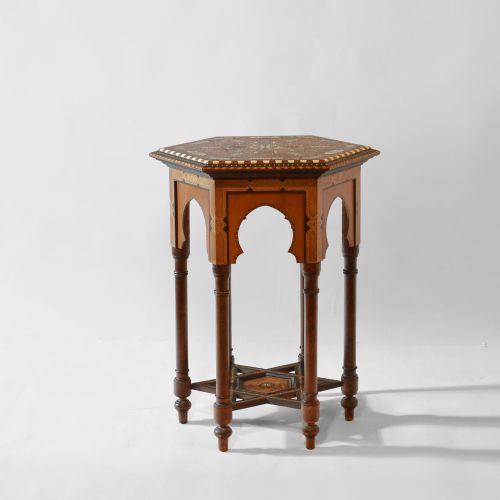
You are most likely to meet oak and walnut examples from the Arts and Crafts and Edwardian periods, alongside elaborate Moorish and Syrian creations featuring intricate bone and mother-of-pearl inlay. These pieces function naturally beside seating as low coffee tables, plant stands, or occasional tables.
How they were made
Makers constructed these hexagonal wooden side tables using solid timbers such as oak, walnut, mahogany, and various hardwoods, frequently incorporating turned legs or sturdy tripod supports. Joinery methods varied from traditional British woodworking to complex geometric lattice construction.
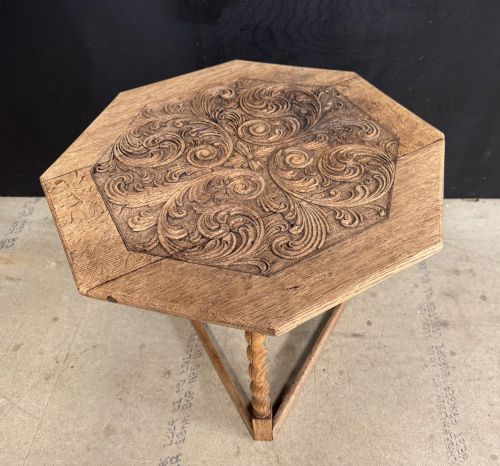
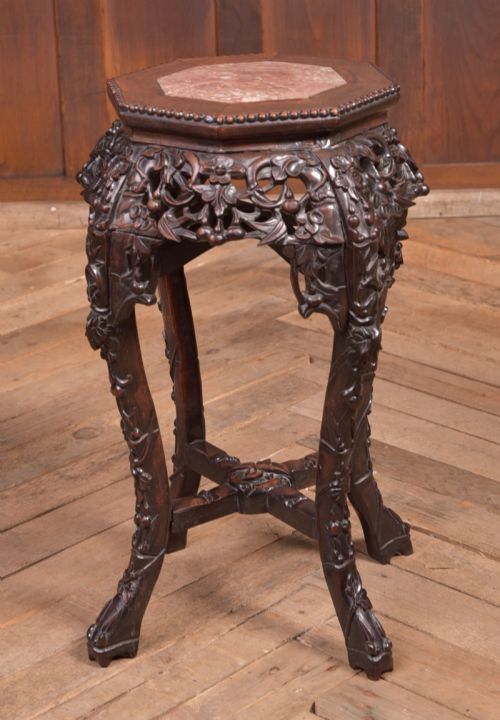
Surface decoration defined the more elaborate examples, utilising careful hand-carving and intricate inlays of bone, mother-of-pearl, and marble. Syrian and Damascus pieces relied on precise geometric mosaic patterns set into the wooden frames.
Peacocks occasionally wander into the nineteenth-century record, appearing as decorative subjects on fine Indian occasional tables.
What varies in quality
The distinction between standard domestic production and exceptional workshop output lies in the execution of the timber and inlay work. Fine examples display tight, precise geometric joinery and complete, secure inlay without missing pieces of bone or mother-of-pearl.
Proportion and structural integrity also separate the grades, where superior pieces maintain balanced weight and solid stance across all six sides. The crispness of the hand-carved detailing on walnut and oak frames indicates the level of craftsmanship invested.
Liberty
The Hexagonal Wooden Side Table Glossary
- Occasional table
- A small, movable table designed for light, specific uses around a room rather than primary dining. These pieces often serve as plant stands or side tables.
- Inlay
- A decorative technique where small pieces of contrasting materials, such as bone or mother-of-pearl, are embedded into the wood surface to create intricate patterns.
- Tripod support
- A base configuration utilising three legs to provide stability for a central pillar or tabletop, commonly seen on wine tables and plant stands.
- Moorish Revival
- An architectural and decorative style popular in the nineteenth century that reinterpreted traditional Islamic design elements with dense geometric ornamentation.
Hexagonal Wooden Side Table: Frequently Asked Questions
Where should I place a hexagonal side table?
These six-sided tables fit naturally beside armchairs or sofas where round or square tables might feel too bulky. Their geometry allows them to tuck neatly into corners or serve as central plant stands.
Because they provide accessible surface space from multiple angles, they work effectively in tighter spaces without obstructing room flow.
How do I identify an Arts and Crafts table?
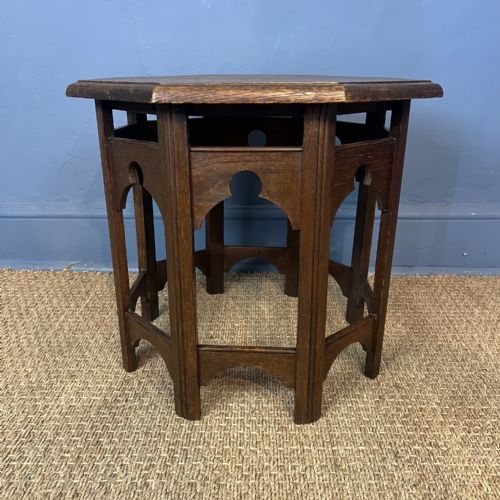
Arts and Crafts pieces typically feature solid oak construction with honest joinery and minimal surface distraction. They prioritize simple geometric form and functional utility over heavy ornamentation.
Look for sturdy turned legs and straightforward wooden construction characteristic of early twentieth-century British workshops.
What is the difference between Syrian and Moorish tables?
Syrian and Damascus tables frequently showcase dense geometric inlay work using mother-of-pearl and bone set into hardwood frames. They emphasise intricate surface patterning across the six-sided top.
Moorish style pieces often incorporate deep hand-carving and Islamic architectural motifs alongside similar inlay techniques, reflecting distinct regional design traditions.
Can these tables support heavy items?
Solid hardwood and oak examples from periods like the Edwardian era or the Arts and Crafts movement are built sturdily for daily domestic use. They easily support lamps, books, and everyday objects.
Inlaid tables with delicate surface decoration require slightly more care to protect the intricate bone or mother-of-pearl work from impact.