


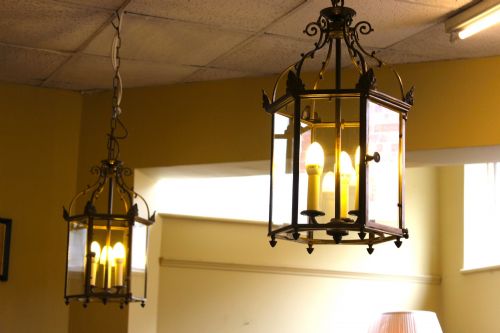


Hexagonal Brass Pendant
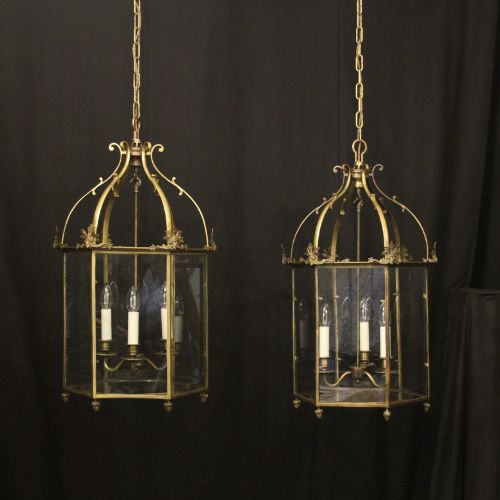
These hexagonal brass pendant lights bring architectural presence to hallways and high ceilings through six-sided glazed frames.
Hexagonal Brass Pendant
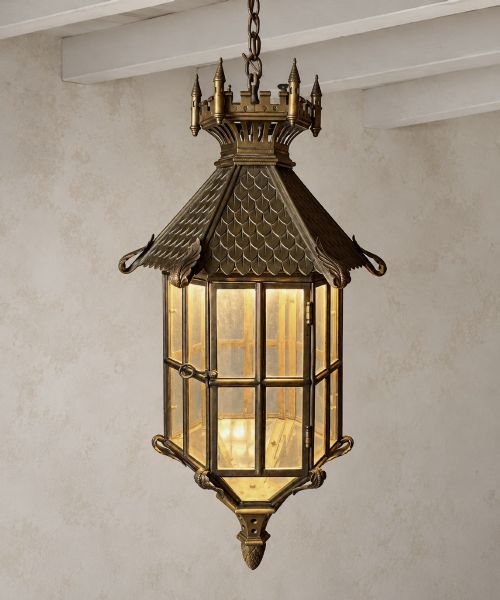
A hexagonal brass pendant provides functional illumination and structural form, typically hung from halls, vestibules, and high-ceilinged landings. These hanging lanterns vary from modest Edwardian examples to grand Victorian pieces with castellated crowns and ornate mounts.
The selection here encompasses six-sided ceiling lighting rooted in periods from the mid-nineteenth century through the early twentieth century. Styles range through Gothic Revival, Neo-Classical, and French Regence designs that adapt historical architectural motifs for domestic interiors.
Most pieces on this page utilise a six-panel glazed construction held within a metal framework, designed to distribute light evenly across an entryway. Buyers encounter formats ranging from simple single lanterns to matched pairs intended for larger spaces.
Materials and construction methods
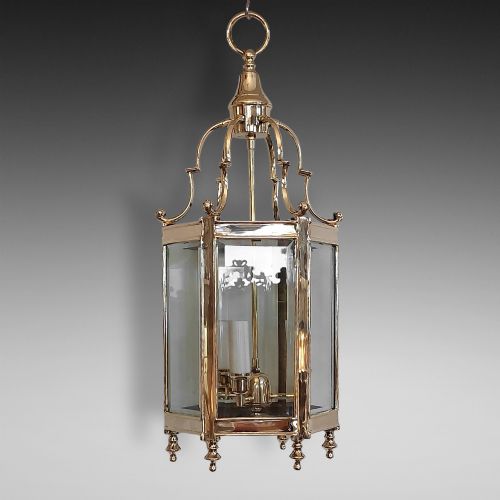
Makers constructed these lanterns using brass, gilded brass, or bronze frameworks joined to house individual panes of glass. Many examples incorporate bevelled glass panels that refract light and add depth to the six-sided frame.
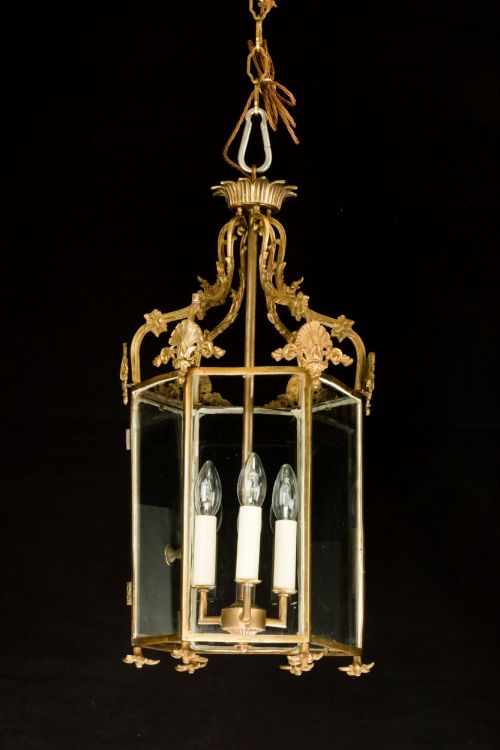
Surface treatments include fire-gilding to create ormolu finishes, alongside patinated bronze and polished brass surfaces. Structural support relies on robust metalwork, sometimes combining steel components within the chassis for added strength.
Hexagonal Brass Pendant Retail Price Guide 2026
Typical asking prices for hexagonal brass pendant among the pieces listed under this phrase on Sellingantiques today, from the lower quarter to the upper quarter. They describe what is for sale here now, not the wider market.
Some lanterns wear crowns fit for a medieval fortress, ensuring your hallway is guarded by miniature battlements.
What separates the finest examples
Quality rests in the crispness of the cast metal ornamentation, the weight of the brass or bronze framework, and the complexity of the crown. Superior lanterns display finely detailed crests, pierced friezes, and robust structural joinery rather than stamped sheet metal.
The integration of the glazing contributes significantly to the integrity of the piece, with heavy bevelled glass panels fitting flush into the metal rebates. Finer pieces demonstrate meticulous attention to decorative proportions, echoing architectural precedents from French chateaux or Gothic foundations.
The Hexagonal Brass Pendant Glossary
- Bevelled glass
- Glass with edges ground and polished at an angle, creating a framed border that catches and refracts light. This treatment adds visual weight and sparkle to the lantern panels.
- Castellated crown
- An upper decorative rim shaped like the battlements of a castle. This architectural feature often crowns Gothic Revival and Victorian hall lanterns.
- Ormolu
- Finely ground high-carat gold-mercury amalgam applied to a bronze or brass object. The finish provides a rich, warm metallic lustre characteristic of French classical revival lighting.
- Hall lantern
- An enclosed ceiling-hung light fixture designed specifically for entranceways and corridors. These fixtures protect the light source while projecting illumination outward through glass panels.
Hexagonal Brass Pendant: Frequently Asked Questions
Where should I hang a hexagonal brass pendant?
These lanterns suit entrance halls, vestibules, and stairwells where their six-sided shape can be viewed from multiple angles. High ceilings provide the necessary clearance for their drop and scale.
Ensure the bottom of the pendant clears foot traffic by a comfortable margin, typically allowing at least seven feet of clearance from the floor.
How do I date a brass lantern?
Dating relies on stylistic clues, construction methods, and the weight of the metalwork. Victorian and Gothic Revival pieces often feature heavier cast components and elaborate crowns, whereas Edwardian and later examples tend toward cleaner lines.
Material choices also offer guidance, as nineteenth-century pieces frequently employ heavy bronze or fire-gilt ormolu before lighter brass fabrication became more common in the twentieth century.
What is the difference between brass and bronze lanterns?
Bronze is an alloy of copper and tin, while brass is an alloy of copper and zinc. Bronze generally offers a heavier, darker foundation that accepts patination deeply.
Brass can be polished to a bright golden sheen or gilded, and it appears frequently across Victorian and Edwardian domestic lighting.
How are these lanterns wired for modern electricity?
Most antique lanterns are adapted for contemporary wiring by running a cord through the suspension loop to an internal lamp holder. Rewiring should be carried out by a qualified electrician to ensure safety and compliance with current standards.
Original canopies and chains are retained wherever possible during the conversion process to preserve the historical appearance of the fixture.