

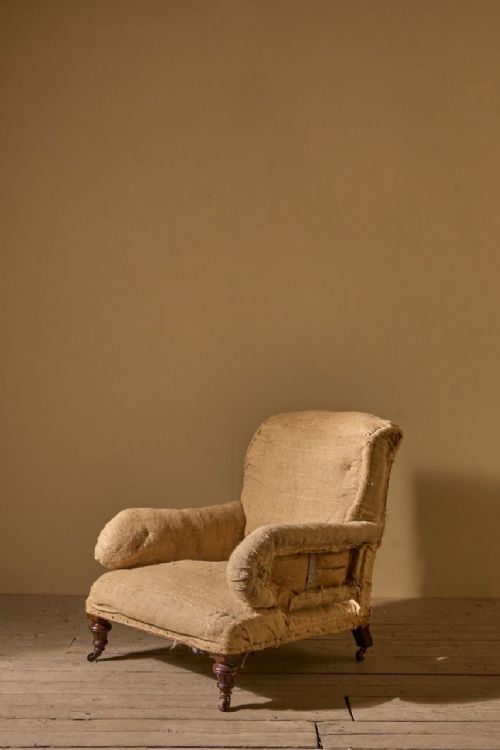
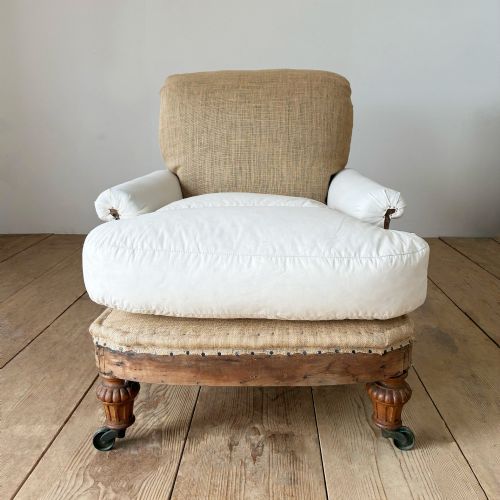
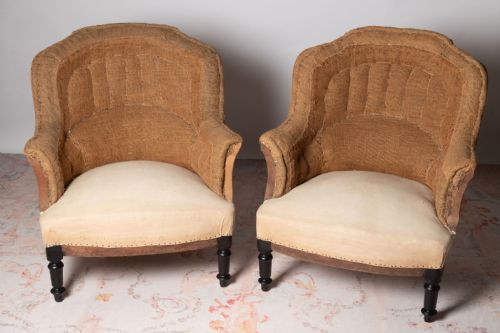
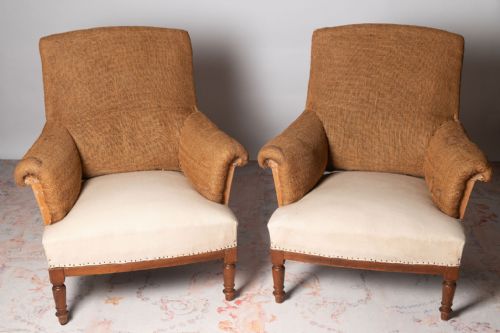

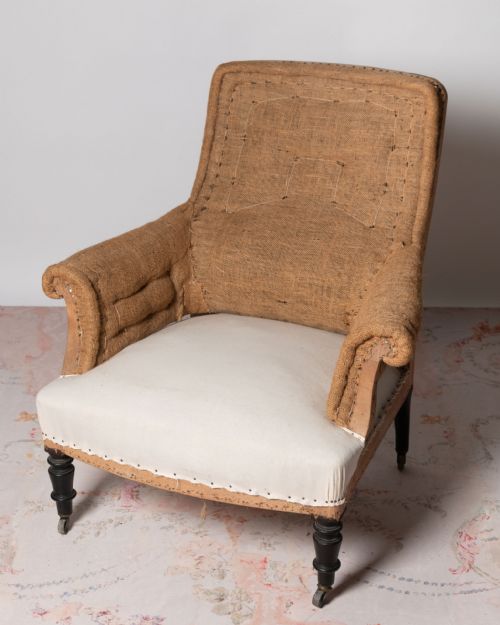


Hessian Upholstery Chair
A hessian upholstery chair brings raw, foundational texture and generous comfort to a room, offering deep seats shaped by traditional craftsmanship.
Hessian Upholstery Chair
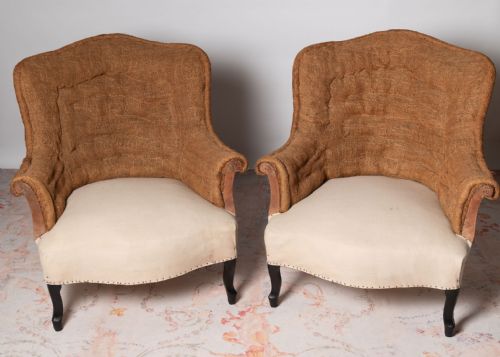
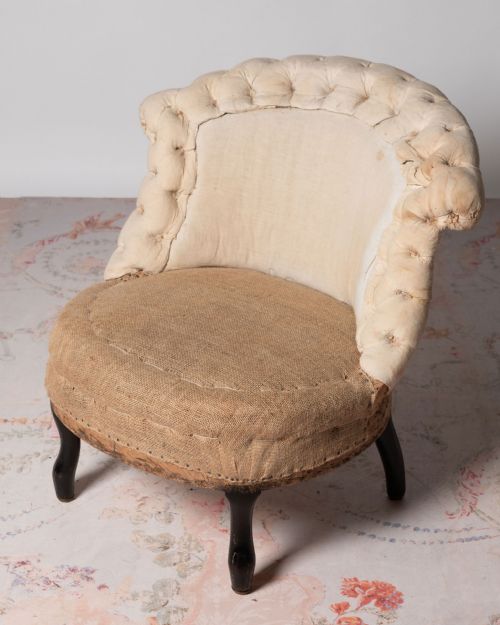
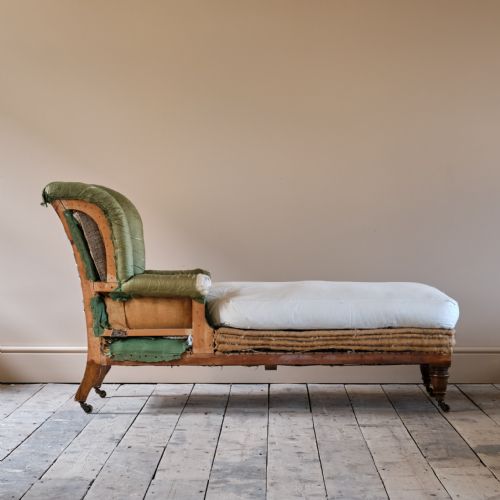
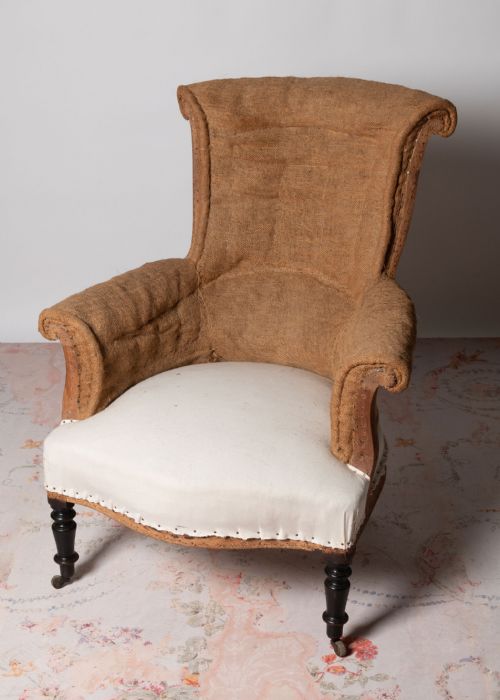
A hessian upholstery chair represents a broad selection of antique seating, ranging from Victorian armchairs and Edwardian club styles to French Napoleon III daybeds and English wingbacks. Buyers searching for a hessian upholstery chair encounter diverse regional forms, including deep-seated armchairs, slipper chairs, and five-legged bedroom chairs.
The pieces appearing most frequently span the nineteenth century, drawing heavily on English maker traditions such as Gillows and Howard and Sons alongside continental French provincial designs. These seating forms demonstrate robust wooden frames initially clothed in sturdy coarse jute fabric before receiving final decorative covers.
Early examples include eighteenth-century walnut Queen Anne wing armchairs alongside substantial nineteenth-century Grafton style and Howard style open armchairs. Each variant relies on exposed or hidden hessian cloth as the primary foundational webbing and stuffing containment.
Materials and construction methods
Construction relies on solid hardwood frames fashioned from mahogany, walnut, beech, and general timber, providing a rigid structural skeleton for the seat. Frame joints utilise traditional carpentry techniques to ensure durability under heavy daily use.
Hessian fabric, a coarse woven jute material, acts as the core upholstery substrate, paired with internal cotton and calico layers to secure stuffing materials. Brass tacks and fastenings frequently secure the edges of these heavy textiles to the wooden framework.
Hessian Upholstery Chair Retail Price Guide 2026
Typical asking prices for hessian upholstery chair among the pieces listed under this phrase on Sellingantiques today, from the lower quarter to the upper quarter. They describe what is for sale here now, not the wider market.
Listings feature eighteenth-century, Victorian, and Edwardian periods utilising mahogany, walnut, beech, brass, calico, cotton, and hessian.
Quality factors in traditional seating
The distinction between standard and superior pieces rests upon the integrity of the underlying wooden frame and the precision of the joinery. Heavier, well-proportioned frames from noted cabinetmakers demonstrate superior structural balance compared to provincial workshop output.
The grade of the internal webbing and the density of the traditional stuffing dictate how well the seat retains its profile over decades of use. Superior execution involves meticulous hand-tacking and durable natural fibres that support the heavy hessian outer layers.
Gillows·Howard And Sons·Robert Strahan Dublin
The Hessian Upholstery Chair Glossary
- Hessian
- A woven fabric made from jute fibres, used traditionally as the foundational scrim and stuffing cover in antique upholstery. This coarse material provides high tensile strength to hold internal padding firmly in place.
- Wingback
- An armchair featuring protective side panels attached to the arms and back to deflect drafts. This classic form dates back centuries and remains a staple of formal seating.
- Slipper chair
- A low-to-the-ground bedroom chair originally designed to assist ladies with putting on footwear. These compact seats often lack arms to allow voluminous skirts to drape freely.
- Daybed
- A long seating form combining the characteristics of a chair and a bed for daytime reclining. French interpretations frequently exhibit ornate wooden framing and generous upholstery proportions.
- Calico
- A plain-woven cotton textile frequently employed as an inner lining layer beneath decorative top fabrics. It provides a smooth, stable surface over the rough hessian stuffing base.
Hessian Upholstery Chair: Frequently Asked Questions
What is a hessian upholstery chair?
A hessian upholstery chair is an antique seating piece built with traditional stuffing techniques where coarse jute fabric forms the core structural layer. These pieces include nineteenth-century armchairs, daybeds, and bedroom chairs designed for comfort and durability.
Many examples feature exposed or underlying hessian scrim that holds internal padding in place before decorative top fabrics are applied. They reflect centuries of upholstery tradition across English and French workshops.
How do I date a vintage armchair?
Dating relies on examining the timber species, frame silhouette, and structural joinery techniques visible beneath the upholstery layers. Styles such as Queen Anne, Victorian, and Edwardian each exhibit distinct proportions and leg shapes.
Cabinetmaker signatures, stamp marks on the wood, and the specific weave of internal hessian and calico also help pinpoint the era of manufacture.
How were these chairs originally used?
These seating pieces served primarily as comfortable lounge chairs, bedroom seating, or reading chairs in formal drawing rooms and parlours. Deep-seated variants provided relaxed posture for long periods of reading or conversation.
Daybeds and slipper chairs fulfilled specific domestic functions for resting during the day or assisting with dressing in private chambers.
How should I care for antique upholstery?
Maintenance involves gentle vacuuming with a soft brush attachment to remove dust from the woven fabric surfaces without snagging the fibres. Keeping antique chairs away from direct sunlight prevents the wooden frames and natural textiles from fading or drying out.
Professional cleaning is recommended for the outer covers to preserve the integrity of the underlying vintage stuffing and hessian foundations.