






Heriz Room Size Rug
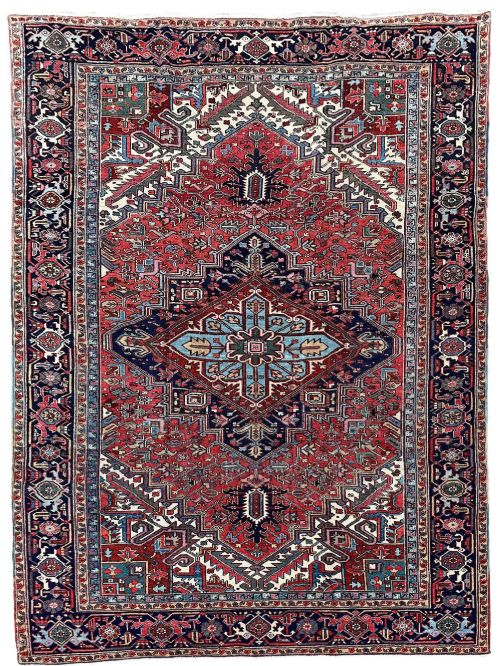
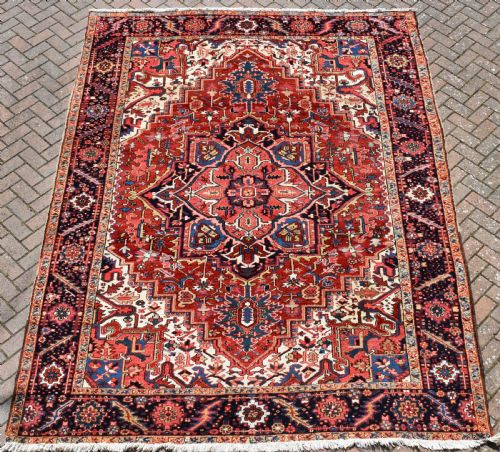
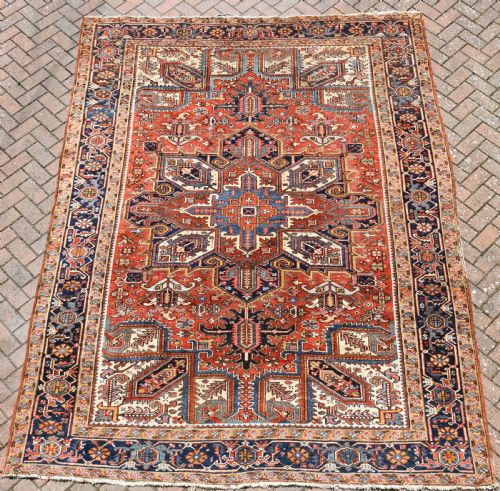
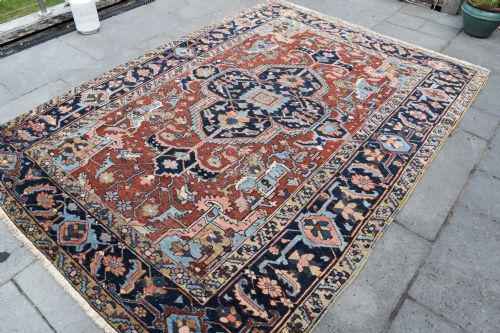
A heriz room size rug brings anchor and structure to a floor, offering geometric medallions and robust village weaving.
Heriz Room Size Rug
When you search for a heriz room size rug, you encounter hand-knotted Persian carpets originating from the northwestern region of Iran. These pieces typically feature substantial dimensions suited to principal living spaces and country houses.
The version you are most likely to meet on this page dates from the early twentieth century, spanning the decades between 1900 and 1930. They appear under stylistic descriptions including Persian Heriz and traditional Persian.
Makers in these mountain villages constructed floor coverings with prominent central medallion designs and durable foundations. Their large scale makes them practical choices for grounding heavy furniture groupings.
How they were made
Weavers constructed these carpets using wool pile knotted tightly onto cotton warp and weft foundations. This combination provided the resilience needed for heavy domestic traffic in large rooms.
Dyers utilised natural vegetable dyes to achieve the deep reds, blues and contrasting ivory tones characteristic of the region. The resulting palette mellows gracefully over decades of light and use.
Heriz Room Size Rug Retail Price Guide 2026
Typical asking prices for heriz room size rug among the pieces listed under this phrase on Sellingantiques today, from the lower quarter to the upper quarter. They describe what is for sale here now, not the wider market.
Current listings span the decades from 1900 to 1930, utilising wool and cotton exclusively.
What varies in quality
Quality in these carpets rests upon the precision of the geometric cartoon execution and the density of the knotting. Finer examples display crisper lines within the large angular medallions and botanical motifs.
The handling of the wool also distinguishes regional output, with heavier, denser piles offering greater longevity underfoot. Colour saturation and the preservation of original outer borders further separate standard village pieces from superior country house examples.
The Heriz Room Size Rug Glossary
- Medallion
- A large central ornamental motif dominating the field of the carpet. In this tradition, it usually takes a bold, geometric polygon shape.
- Warp
- The vertical threads stretched lengthwise on the loom that carry the fringe. Cotton forms the strong base for these village rugs.
- Weft
- The horizontal threads passed across the warp strands to hold the rows of knots in place. They contribute to the structural firmness of the weave.
- Pile
- The cut surface of yarn that forms the soft upper layer of the carpet. Wool provides this resilient wearing surface.
Heriz Room Size Rug: Frequently Asked Questions
What defines a heriz room size rug?
These carpets are large hand-knotted Persian floor coverings characterised by bold geometric designs and sturdy village construction. They originate from the Heriz region in northwest Iran.
Most examples found here date from the early twentieth century, offering substantial dimensions intended for principal rooms and country houses.
How do I place one in a room?
A large format carpet works best as the visual anchor for a main seating area or dining space. Ensure enough floorboards remain visible around the edges to frame the piece properly.
Keep heavy furniture arranged so that the central geometric medallion remains partially visible rather than entirely obscured.
What materials make up these carpets?
The foundations rely on sturdy cotton threads for both warp and weft stability. This internal structure supports a thick wool pile designed to withstand heavy domestic use.
Weavers dyed the wool using traditional methods that produce rich, enduring tones across the field and borders.
How can I tell the age of a piece?
Dating relies on stylistic markers, construction methods and the natural softening of the wool palette over time. Pieces from the early twentieth century show specific village knotting traits.
Examining the wear patterns and the composition of the cotton foundation helps place a carpet within the 1900 to 1930 period.