
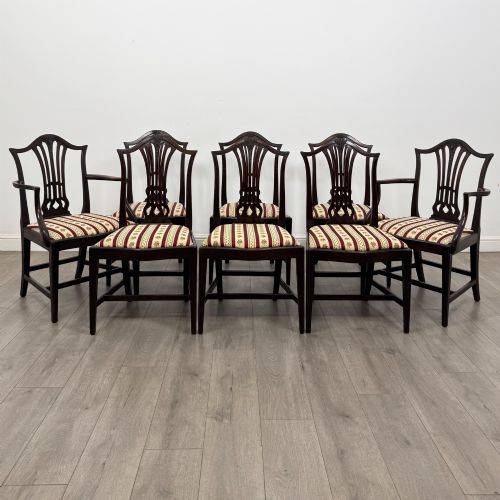
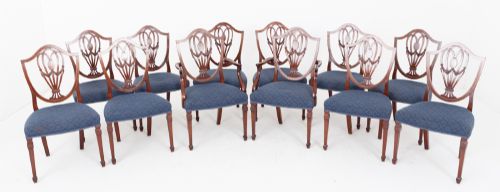
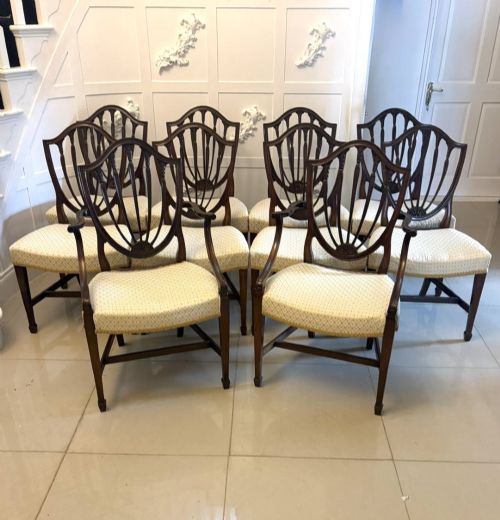
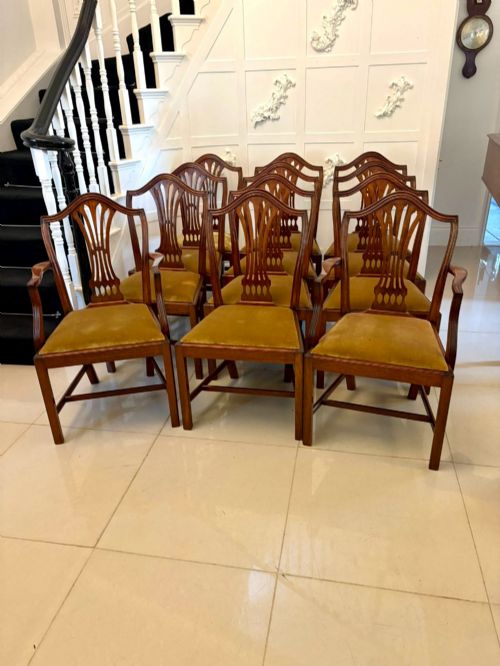
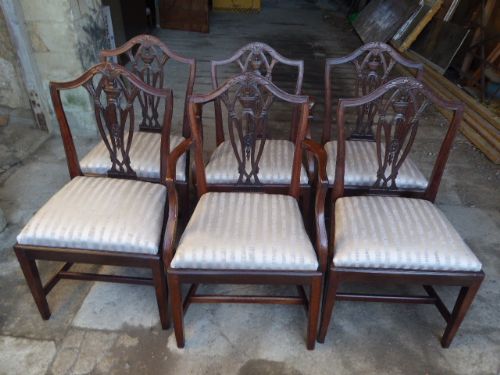
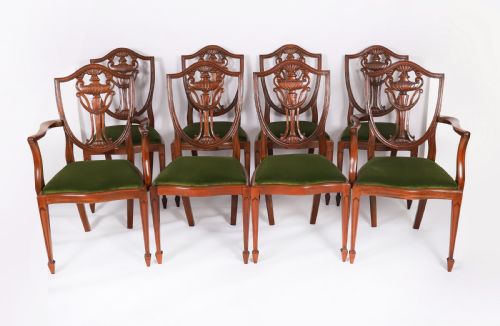
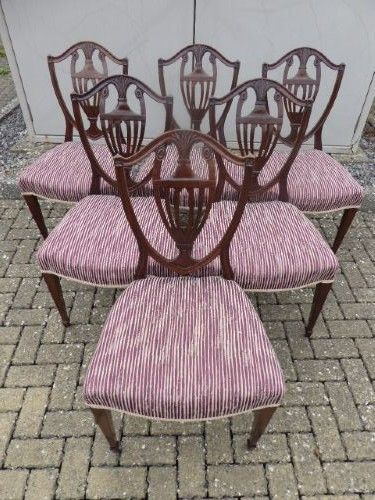
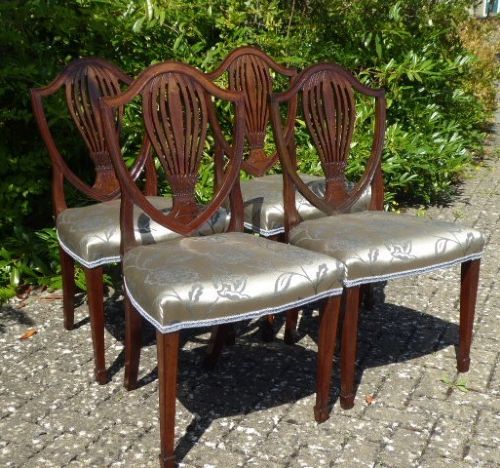
Hepplewhite Shield Back Set
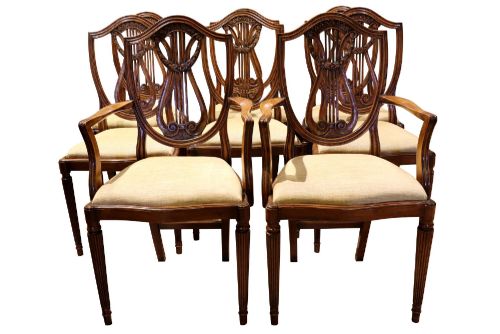
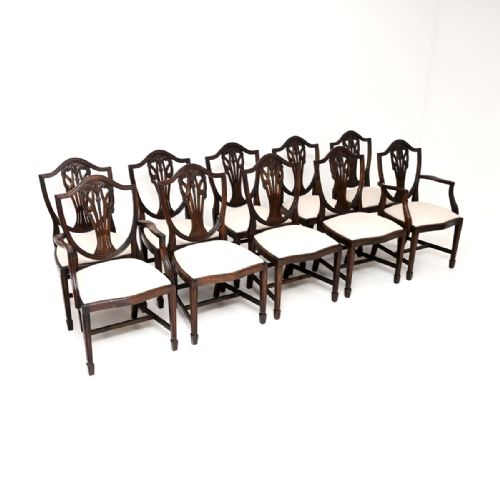
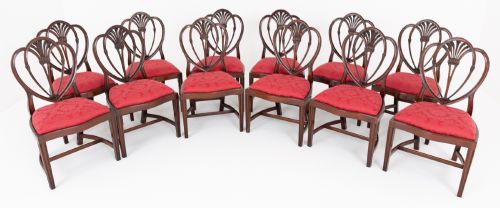
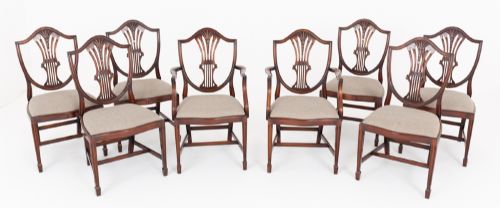
A hepplewhite shield back set brings refined dining chairs into a room, joining mahogany and distinctive curved timber backs for daily use.
Hepplewhite Shield Back Set
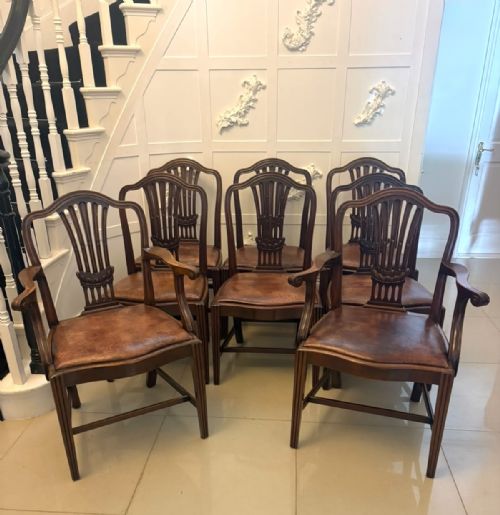
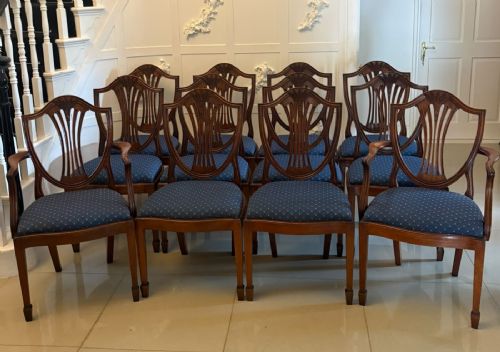
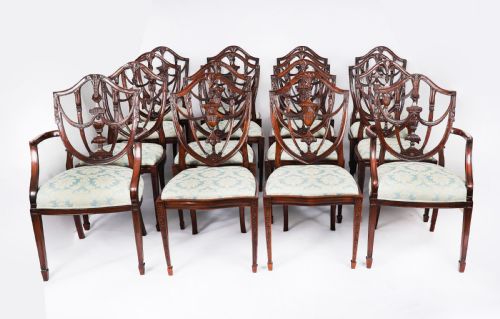
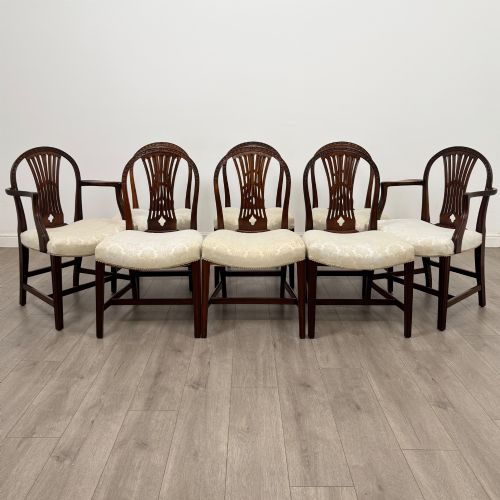
A hepplewhite shield back set comprises matching groups of dining or side chairs built around a prominent curved backrest resembling the shape of a shield. These groups range from intimate sets of four up to grand gatherings of sixteen, often pairing arm-holding carvers with standard side chairs.
Most examples encountered on this page stem from revival periods spanning the late nineteenth and early twentieth centuries, alongside smaller numbers originating in the eighteenth century. These later interpretations capture the lighter proportions and carved splats of earlier Georgian design while offering robust seating for contemporary dining rooms.
Makers shaped these dining chairs primarily for formal entertaining around large tables, utilising mahogany as the foundational timber. The forms bridge historical Georgian aesthetics and the revival movements of the Victorian and Edwardian eras.
Materials and construction methods
Cabinetmakers relied heavily on mahogany for its strength and rich grain, allowing intricate piercing and carving along the slender framework of the shield-shaped back. Timber sections were joined using traditional mortise and tenon joints to withstand the regular strain placed on dining furniture.
Seats within a hepplewhite shield back set received drop-in or upholstered pads covered in fabric, leather, velvet, or specialised textile materials. Brass details occasionally reinforced structural stress points or decorated the framework, completing the synthesis of timber and textile.
Some larger sets secretly mix dining chairs and carvers, ensuring the host sits in grander comfort than the guests.
Distinguishing quality across the range
Quality rests upon the depth and crispness of the carving within the shield splat, where superior sets exhibit sharp, well-defined piercing rather than flat or purely machine-moulded contours. The choice of mahogany also dictates merit, with tightly figured grain and stable timber construction marking out finer examples.
Proportion and matching cohesion define the upper tier, ensuring that larger sets of ten or twelve maintain uniform timber colour and consistent chair proportions across every single piece. The integration of supporting arm carvers with the standard side chairs further elevates the harmony of the whole group.
Maple & Co·Gillows
The Hepplewhite Shield Back Set Glossary
- Carver
- An armchair designed to match a set of dining chairs, typically placed at the head of a table. These pieces feature integrated armrests matching the shield back design.
- Shield back
- A chair backrest shaped like a heraldic shield, characteristic of late eighteenth-century furniture design. This silhouette often incorporates pierced central splats with drapery or feather motifs.
- Hepplewhite style
- A neoclassical furniture design idiom named after cabinetmaker George Hepplewhite, characterised by lighter frames and tapered legs. Revival interpretations recreate these balanced proportions in later eras.
- Splat
- The vertical central strip of wood within a chair back connecting the top rail to the seat. In shield back designs, this element is frequently pierced and carved.
- Georgian revival
- A design movement spanning the nineteenth and twentieth centuries that reinterprets eighteenth-century furniture forms. Pieces from this period borrow heavily from Hepplewhite and Sheraton aesthetics.
Hepplewhite Shield Back Set: Frequently Asked Questions
What is a hepplewhite shield back set?
A hepplewhite shield back set is a matching group of dining chairs featuring characteristic curved, shield-shaped backrests. These seating collections range from small groups of four to extensive dining sets of twelve or more.
Originating in the eighteenth century and revisited during Victorian and Edwardian revival periods, these chairs combine mahogany frames with upholstered drop-in seats. They remain functional dining furniture designed for formal tables.
How do I care for mahogany dining chairs?
Mahogany dining chairs require stable indoor humidity and protection from direct sunlight to prevent timber drying and fading. Regular dusting with a soft cloth maintains the natural finish of the wood.
Upholstered seat pads benefit from gentle fabric cleaning appropriate to textile, leather, or velvet surfaces. Avoiding excessive moisture protects both the wooden frame and the internal upholstery materials.
Are these chairs suitable for daily dining?
These dining chairs were built for regular use around the dining table, constructed with sturdy mortise and tenon joints in mahogany. Their robust timber frames accommodate everyday seating requirements.
Larger sets often include carver armchairs intended for the heads of the table, while side chairs provide comfortable seating along the sides. Their enduring construction supports practical modern living alongside historic character.
How do I tell eighteenth century from revival pieces?
Eighteenth-century examples display period-specific hand tool marks, timber ageing, and construction nuances consistent with the Georgian era. These early pieces reflect the original period of design.
Revival sets from the Victorian, Edwardian, and 1920s eras exhibit twentieth-century or nineteenth-century manufacturing methods while adhering to Hepplewhite styling. Examining timber patination and joinery helps clarify the specific period of origin.