
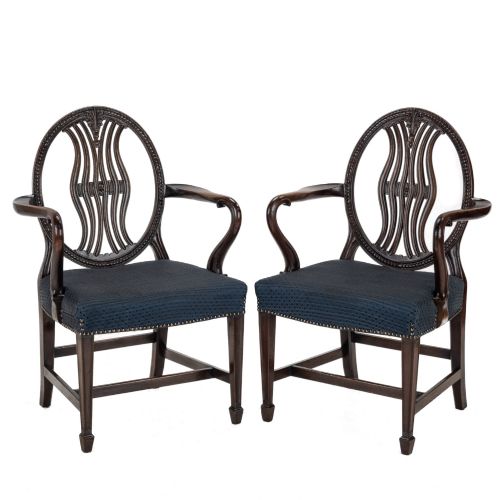
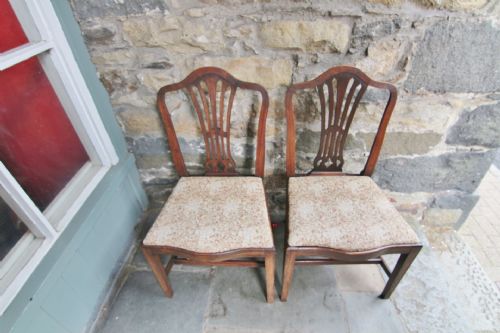


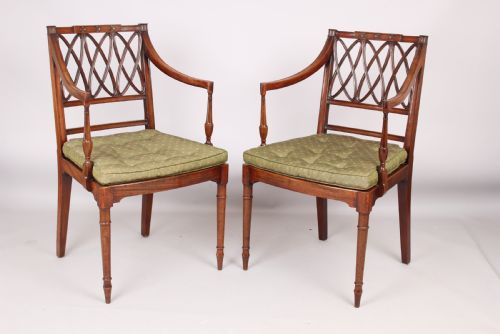


Hepplewhite Mahogany Chair Pair
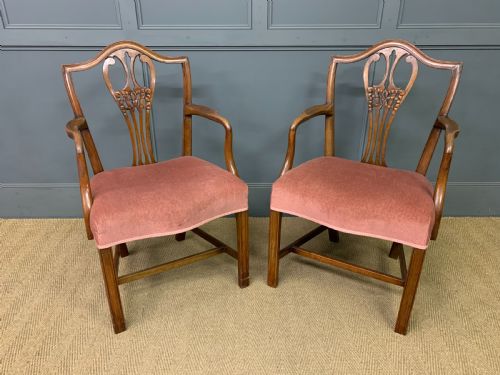
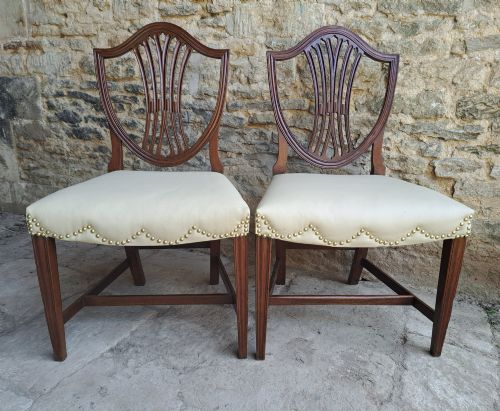
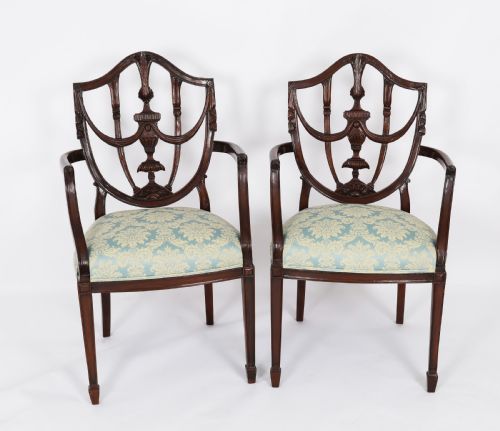
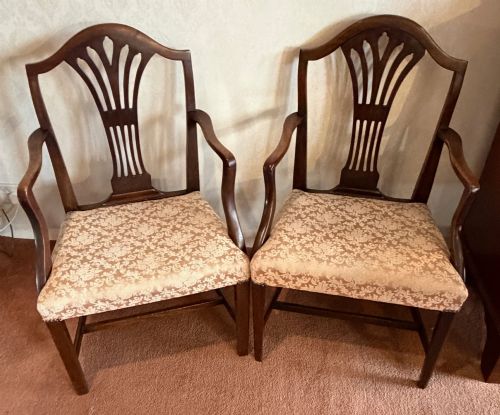
These hepplewhite mahogany chair pair examples offer elegant shield backs and mahogany frames, perfect for pairing around a traditional dining table.
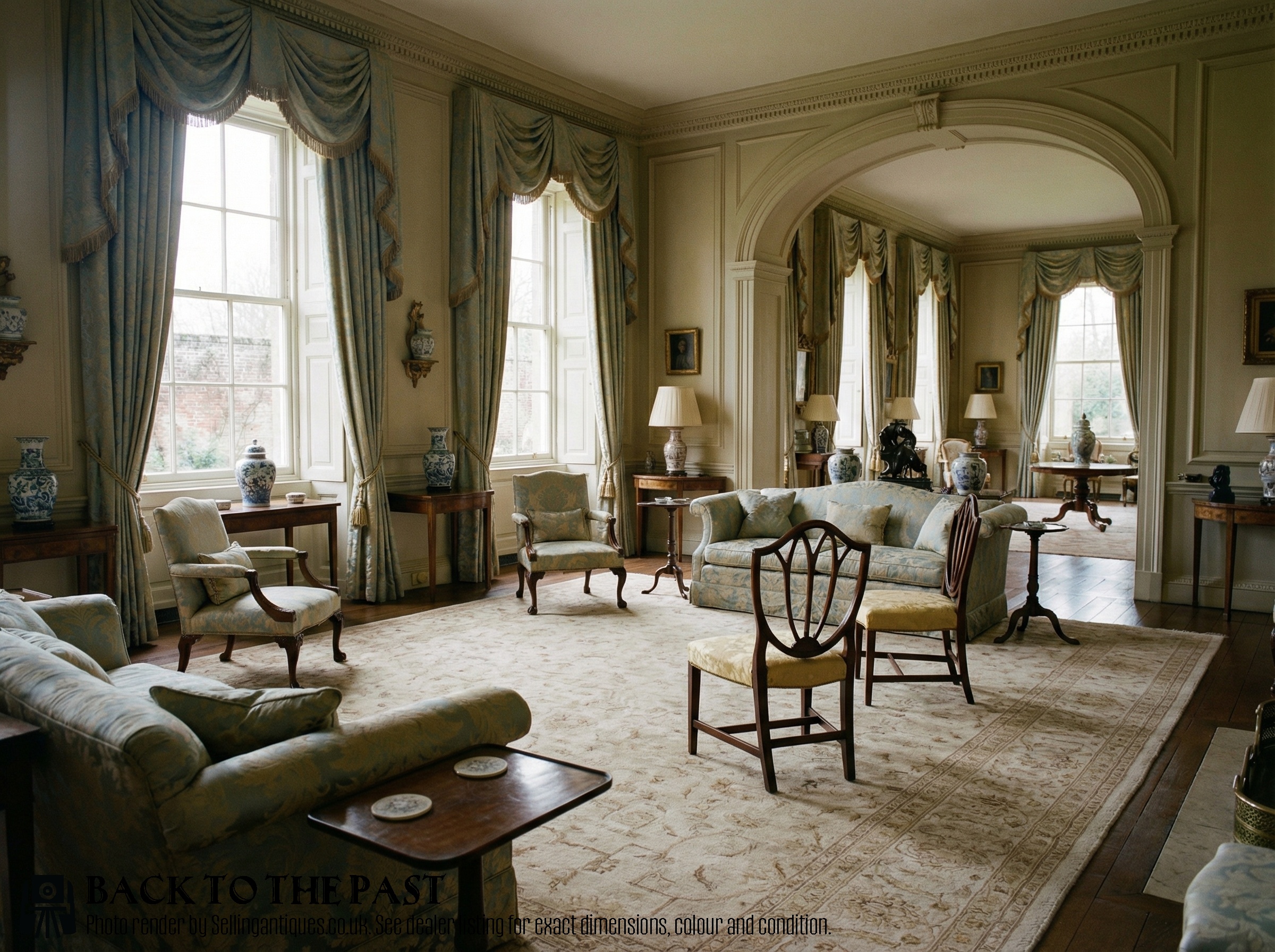
Hepplewhite Mahogany Chair Pair
A hepplewhite mahogany chair pair brings symmetrical seating in matching sets of two, heavily rooted in Georgian design traditions. Buyers searching for a hepplewhite mahogany chair pair encounter pieces originating from the eighteenth century through various revival periods spanning the nineteenth and twentieth centuries.
The form encompasses side chairs, armchairs, and carvers, frequently featuring distinct shield backs or oval backs. Many examples survive as dining chairs or hall chairs, utilising classic timber frames designed for formal domestic spaces.
Construction and Materials
Carpenters constructed these frames primarily using solid mahogany, occasionally incorporating satinwood stringing, brass accents, or inlaid details. The timber provided the structural strength required for slender carved uprights and curved arm supports.
Seats utilised drop-in frames or fixed upholstery covered in materials such as leather, fabric, velvet, damask, or wool work. Carved decorative motifs like Prince of Wales feathers, anthemion details, and petal patterns were applied directly to the wood.
Listings feature mahogany frames combined with velvet, leather, damask, and wool work upholstery across Georgian and revival periods.
Assessing Quality
Quality differentiates through the crispness of the wood carving and the proportional balance of the shield back. Master craftsmen achieved refined curves and tight joinery that remain sturdy across centuries.
Later revival pieces display varying degrees of hand-carving depth compared to eighteenth-century originals. The selection of figured mahogany timber and the retention of period upholstery materials influence the overall character.
J. Yorke
The Hepplewhite Mahogany Chair Pair Glossary
- Shield back
- A chair back shaped like a rounded shield, characteristic of the Hepplewhite style. This design creates an open framework often filled with carved splats.
- Carver
- An armchair, typically designed with open arms to sit at the head of a dining table. These frames match a set of companion side chairs.
- Elbow chair
- An alternative term for an open armchair providing elbow rests. The terminology appears frequently across Georgian and Victorian listings.
- Anthemion
- A floral ornament resembling a honeysuckle flower. Carvers applied this decorative motif to the splats and crest rails of formal seating.
- Damask
- A reversible figured fabric used for upholstery. This textile adds texture and pattern to the seat pads of period chairs.
Hepplewhite Mahogany Chair Pair: Frequently Asked Questions
Are these chairs comfortable for daily dining?
The open armchairs and side chairs provide upright support typical of formal eighteenth and nineteenth-century seating. Upholstered drop-in seats offer a firm foundation for meal times.
Buyers often pair them with modern dining tables or retain them in traditional settings. Cushions can adjust the seat height and comfort level.
How do I date a pair?
Dating relies on timber patination, construction methods, and stylistic revival markers from the nineteenth or twentieth century. Eighteenth-century pieces show hand-tool marks and dense mahogany grain.
Revival pieces from later centuries adopt historical designs while utilising period-specific hardware or secondary woods. Examining the joinery underneath reveals the manufacturing era.
Can I mix carvers and side chairs?
Matching carvers with side chairs follows historical dining room arrangements where armchairs sat at the table ends. Sets typically combine two armchairs with multiple single chairs.
Proportions remain harmonious when the wood tone and shield back design align across the group. Mixing periods requires careful attention to the specific mahogany finish.