

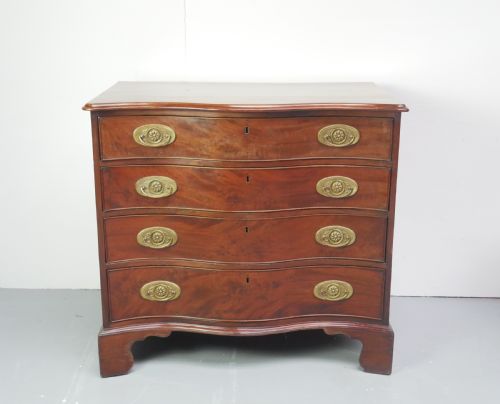


Hepplewhite Commode Cabinet
A hepplewhite commode cabinet brings serpentine lines and rich mahogany grain into a room, offering refined storage rooted in eighteenth-century design.
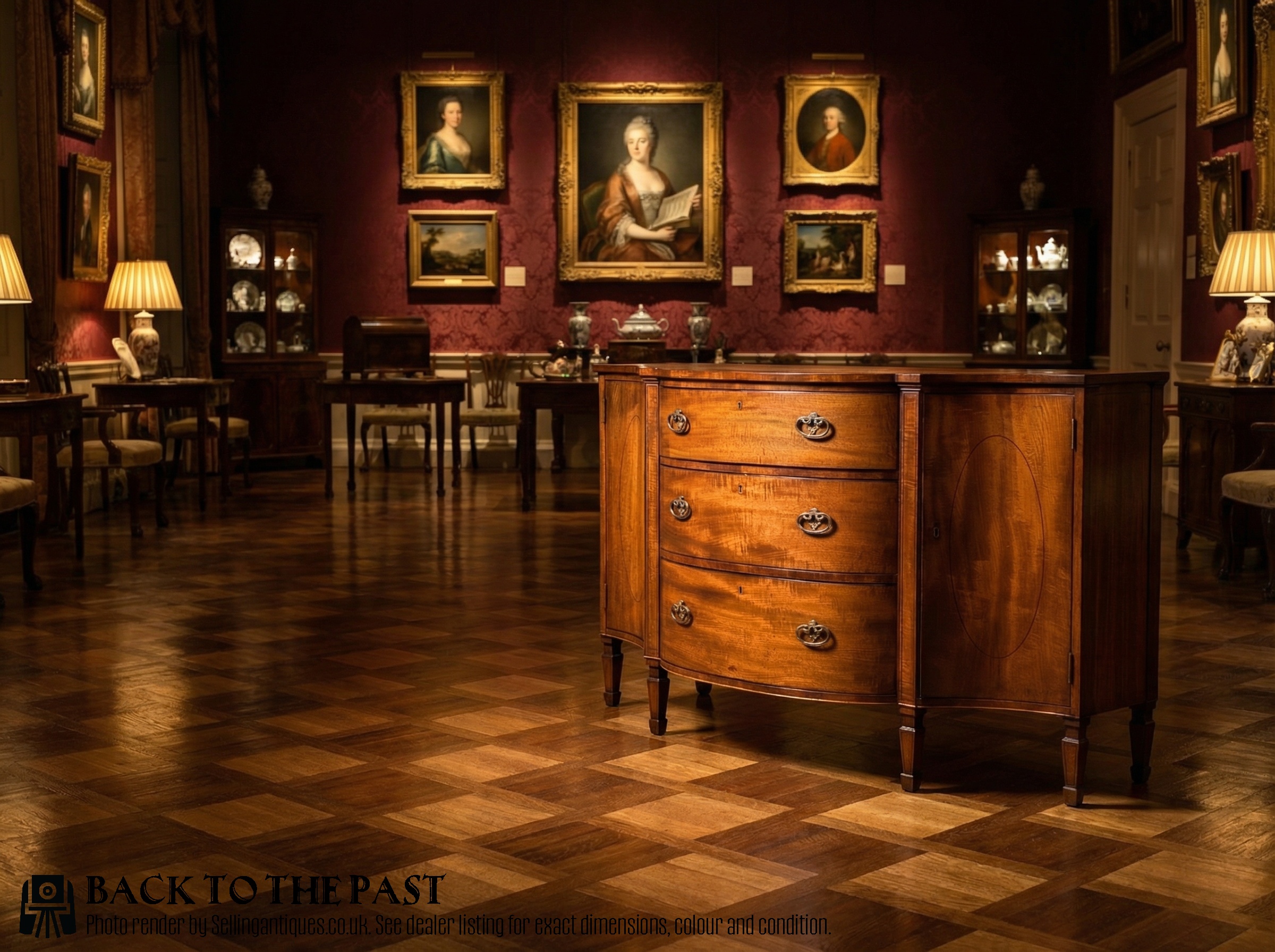
Hepplewhite Commode Cabinet
When you search for hepplewhite commode cabinet, you find case furniture defined by curved fronts and classical proportions. These pieces range from George III originals to Edwardian revivals, spanning bedside tables, side cabinets, and chests of drawers.
The version you meet most often on this page is the Georgian mahogany serpentine commode or cabinet. Makers shaped these forms with undulating fronts and fitted interiors, using timber selected for warmth and figure.
How they were made
Cabinetmakers built these pieces using solid and veneered mahogany over robust secondary timbers. Construction relied on precise joinery to support the sweeping curves of serpentine fronts without warping the structure.
Satinwood and boxwood inlay defined the decorative vocabulary, creating sharp contrasts against the dark mahogany background. Brass hardware, from drop handles to key escutcheons, completed the construction of each drawer and door.
Hepplewhite Commode Cabinet Retail Price Guide 2026
Typical asking prices for hepplewhite commode cabinet among the pieces listed under this phrase on Sellingantiques today, from the lower quarter to the upper quarter. They describe what is for sale here now, not the wider market.
Some night tables hide chamber pots behind deceptively grand serpentine doors.
What varies in quality
Quality separates the pieces through the ambition of the timber selection and the fluency of the curve. A superior hepplewhite commode cabinet displays carefully matched grain patterns that follow the serpentine sweep without interruption.
The crispness of the boxwood inlay and the integration of fitted interior compartments further distinguish the finer examples. Secondary woods and the handling of internal drawer linings show the level of care invested by the maker.
The Hepplewhite Commode Cabinet Glossary
- Serpentine
- A front or edge shaped with a central convex curve flanked by two concave curves. This profile requires high skill in woodworking to execute cleanly.
- Mahogany
- A durable tropical hardwood prized for its reddish-brown colour and stability. It served as the primary material for high-status eighteenth-century case furniture.
- Satinwood
- A pale, lustrous timber utilised for contrasting stringing and decorative panels. It provides a bright visual accent against darker woods.
- Demi lune
- A half-moon shape characteristic of commodes designed to sit flush against a wall. This form softens the geometry of a room.
- Inlay
- A technique where pieces of contrasting wood are set into the surface to form decorative patterns. Boxwood was frequently employed for this purpose.
Hepplewhite Commode Cabinet: Frequently Asked Questions
What is a hepplewhite commode cabinet?
It is a piece of case furniture featuring curved lines and classical detailing influenced by eighteenth-century design. The form encompasses bedside tables, side cabinets, and chests of drawers.
Such pieces combine display with concealed storage, using mahogany and delicate inlay work to achieve a polished silhouette suited to formal rooms.
How do I date a Georgian piece?
Dating relies on examining construction methods, timber choice, and hardware styles. Eighteenth-century examples display hand-cut dovetails and native secondary woods.
Later Edwardian revivals often utilise machine-sawn elements and standardised fixings while mimicking the earlier serpentine and inlaid aesthetic.
Where should I place a commode cabinet?
These cabinets suit hallways, drawing rooms, or bedrooms where surface space and enclosed storage are both valued. Their finished backs and curved profiles allow them to anchor wall spaces effectively.
Pairing them with a mirror or lighting highlights the grain of the mahogany and the precision of the boxwood inlay.
How do I maintain mahogany furniture?
Maintain the timber by keeping it away from direct sunlight and sudden temperature shifts that dry out the wood. Regular dusting with a dry cloth preserves the finish.
Applying traditional wax sparingly helps nourish the mahogany and maintains the natural lustre of the surface over time.