


Heavy Wooden Dining Table
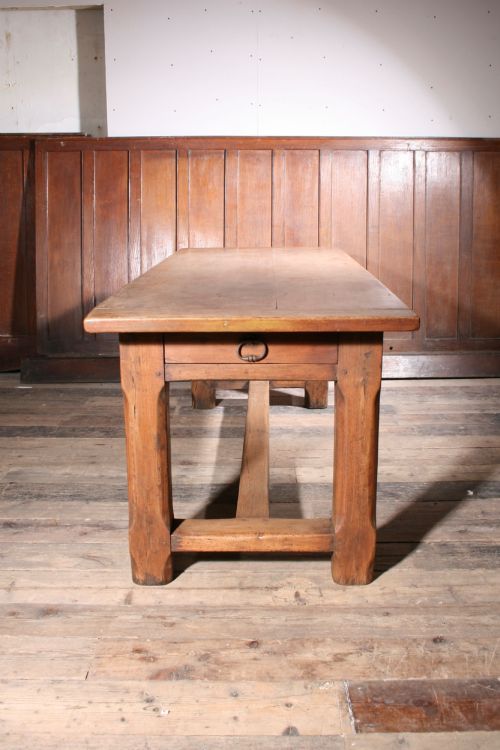
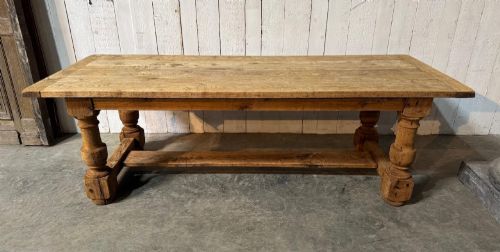
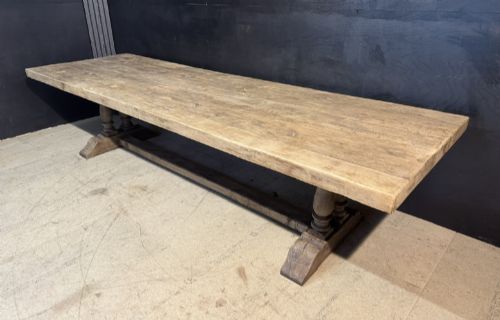
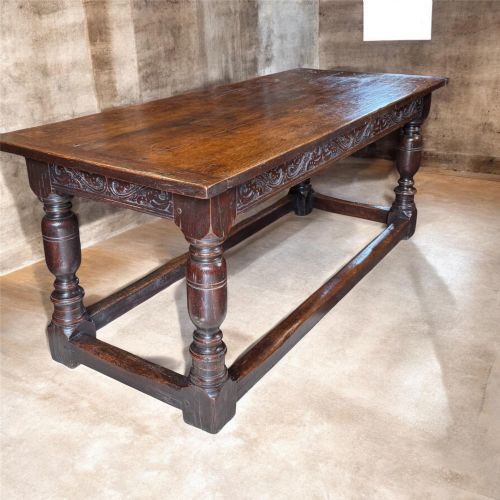
A heavy wooden dining table anchors a room with solid presence, built from sturdy oak, elm or walnut to serve generations.
Heavy Wooden Dining Table
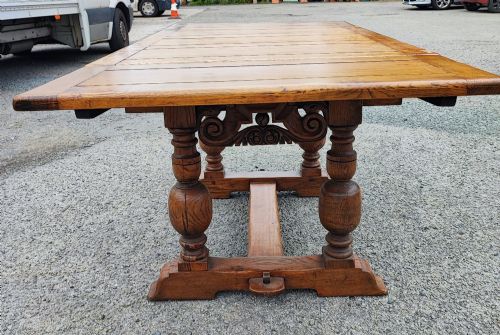
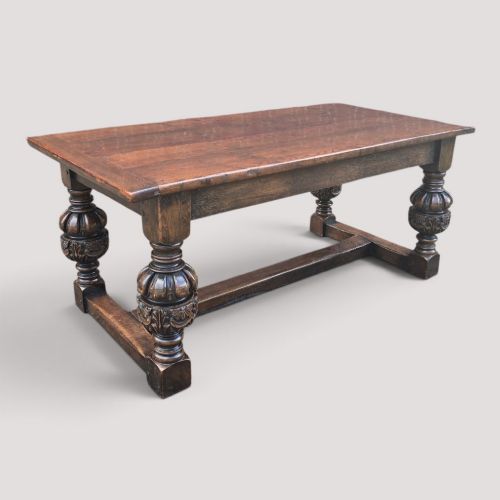
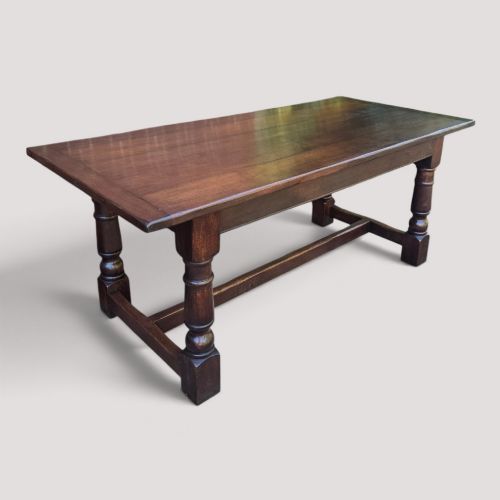
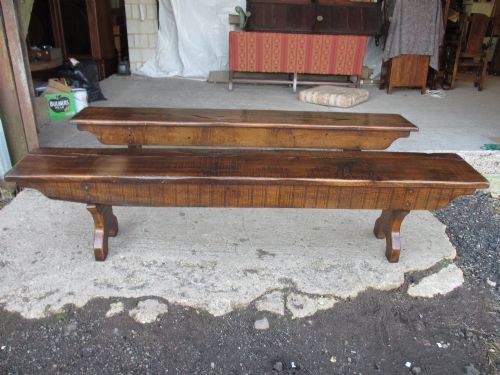
A heavy wooden dining table encompasses robust refectory, farmhouse and tavern forms designed for communal dining and daily use. These substantial pieces emerge predominantly from the seventeenth century through to the Edwardian period and the nineteen-twenties, constructed to withstand decades of service.
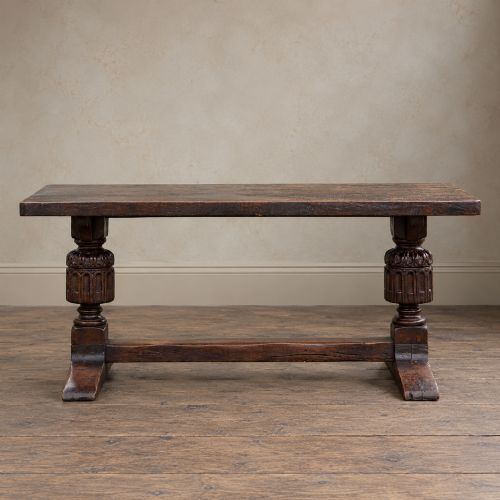
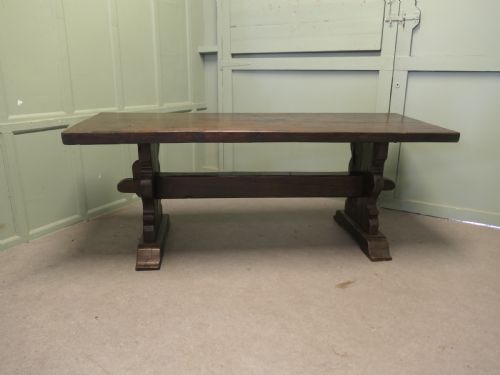
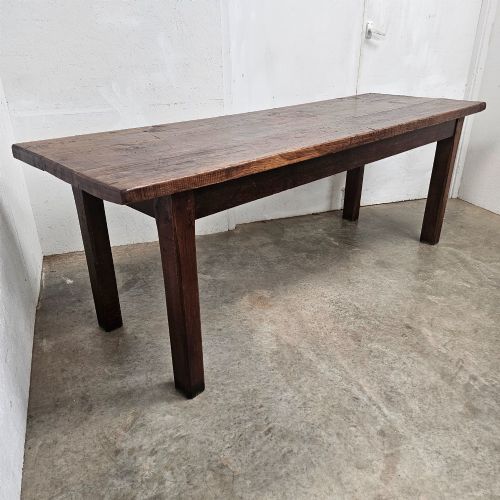
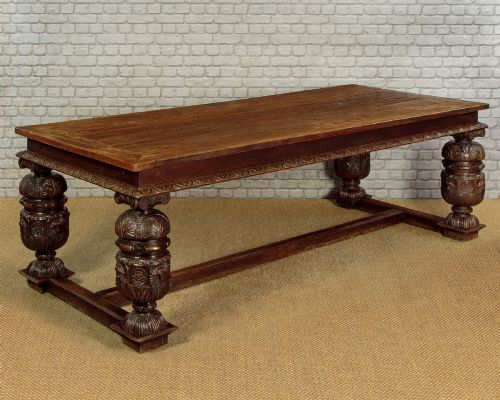
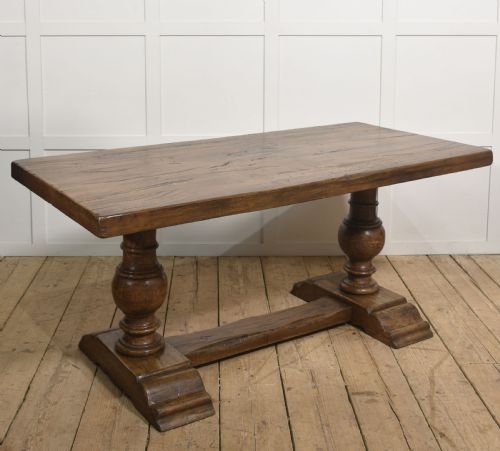
The most common form encountered on this page is the oak refectory table, often featuring thick plank tops and trestle or stretcher bases. Alongside these stand French country farm tables and substantial library or tavern tables built from solid timber.
Origins span English, French and provincial workshops, uniting utilitarian strength with period character. Buyers select these tables for their enduring structural integrity and the rich patina accumulated across centuries of use.
Materials and construction methods
Makers relied primarily on native hardwoods such as oak and elm, occasionally turning to walnut, pine or painted wood for specific regional traditions. Single or multi-plank timber tops provide the necessary surface expanse, often resting on pegged mortise and tenon frames.
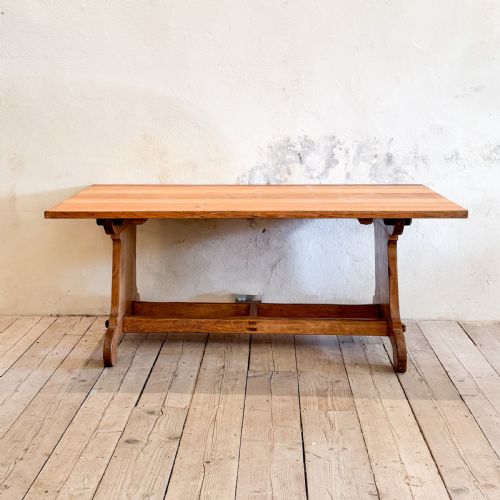
Underframes utilise heavy stretcher bases, shaped trestle ends or carved legs to support the considerable weight of the topboards. Iron hardware or traditional wooden pegs secure the joints, allowing the dense timber to move naturally with changes in atmosphere.
Heavy Wooden Dining Table Retail Price Guide 2026
Typical asking prices for heavy wooden dining table among the pieces listed under this phrase on Sellingantiques today, from the lower quarter to the upper quarter. They describe what is for sale here now, not the wider market.
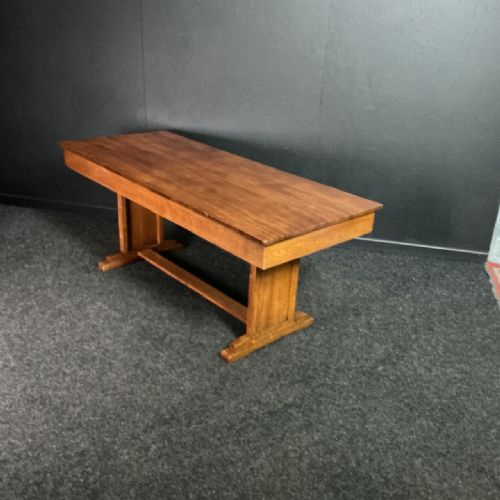
The available inventory highlights regional forms including French country farm tables, English tavern tables and Edwardian refectories with shaped trestle ends.
Factors influencing quality
Quality rests upon the selection and integrity of the timber, particularly the thickness and grain of the top planks. Tables fashioned from single planks of elm or quarter-sawn oak demonstrate superior material choice compared to multi-jointed surfaces.
Construction details differentiate standard utility pieces from finer commissions, visible in the tightness of pegged joints and the crispness of any hand-carved stretcher bases or trestle ends. The proportion and balance between the heavy top and its supporting frame determine the visual harmony of the piece.
The Heavy Wooden Dining Table Glossary
- Refectory table
- A long, narrow dining table originally built for monastic dining halls. These tables typically feature long stretcher rails connecting the legs for added stability.
- Trestle ends
- Supporting uprights positioned at each end of a table rather than corner legs. They distribute heavy loads effectively and allow maximum legroom along the sides.
- Plank top
- A table surface constructed from individual boards joined edge to edge. Early examples often utilise remarkably wide single timber planks.
- Stretcher base
- Horizontal wooden bracing bars connecting the lower sections of table legs. This construction prevents wobble in heavy dining furniture.
- Draw leaf table
- A dining table equipped with sliding extension leaves stored beneath the main top. Pulling them out extends the surface area easily.
Heavy Wooden Dining Table: Frequently Asked Questions
How do I care for a heavy wooden dining table?
Maintain the timber by cleaning with a damp cloth and applying beeswax periodically to nourish the surface grain. Avoid placing solid wood tables directly against intense heat sources to prevent timber splitting.
Use mats beneath hot dishes and moisture to protect the historic polish or waxed finish. Regular gentle buffing preserves the natural sheen acquired over decades of use.
Will a refectory table fit in a modern room?
Refectory tables provide generous length and narrow proportions that suit contemporary open-plan spaces or traditional dining rooms alike. Trestle designs offer flexibility for seating arrangement because corner legs do not restrict chair placement.
Measure the available floor space carefully to ensure adequate clearance around the table edges for seating and movement. The visual weight of solid timber adds grounding presence to minimalist interiors.
How can I tell an older table from a later revival piece?
Examine the underside and joints for tool marks, hand-cut peg construction and timber shrinkage patterns consistent with age. Nineteenth-century revival pieces often mimic seventeenth-century Elizabethan or Jacobean styles through machine shaping and different fastener types.
Surface wear, patination and timber movement offer reliable clues regarding the true age of the construction materials. Compare the construction logic against known period workshop practices.
What is the difference between oak and elm table tops?
Oak provides a hard, dense surface with prominent grain patterns that accepts traditional carving and darkening finishes well. Elm offers a tougher, interlocking grain structure that resists splitting, making it ideal for single plank tops.
Both timbers deliver exceptional durability suited to heavy daily dining use. Over time, each wood develops a distinct tactile character under daily contact.