



Heavy Wood Table
A heavy wood table anchors a room through sheer mass and honest joinery.
Heavy Wood Table
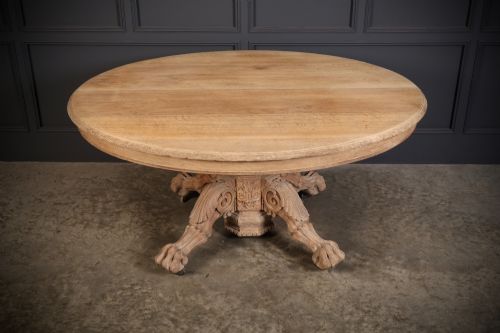
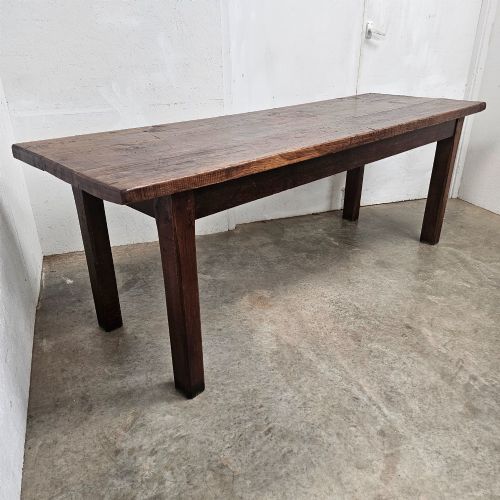
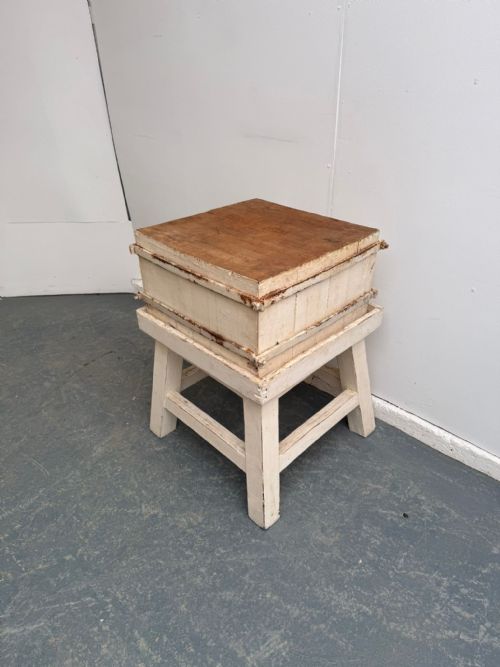
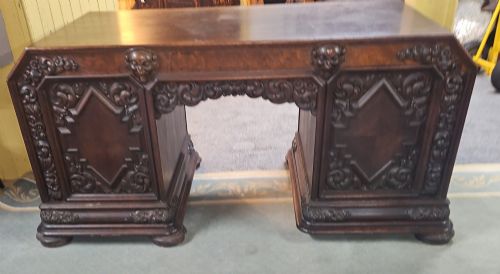
When you search for a heavy wood table, you encounter robust forms spanning the seventeenth century through to the twentieth century. These pieces encompass dining tables, refectory tables, workbenches, and tavern tables designed for hard domestic or utilitarian use.
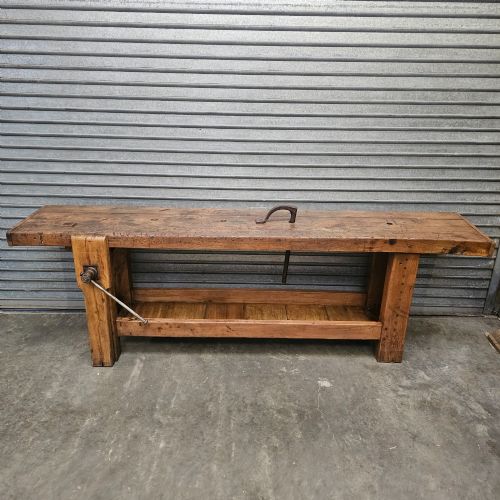
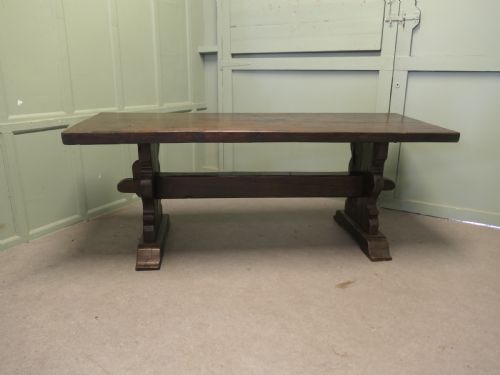
Buyers most frequently meet nineteenth-century refectory tables and utilitarian workbenches on this page. These sturdy examples showcase thick timber tops and substantial bases built to endure centuries of service.
Construction and materials
Makers utilised dense hardwoods such as oak, teak, walnut, and mahogany, often pairing them with iron, brass, or cast iron hardware. Thick timber slabs form the heavy tops, supported by solid legs and stretcher frames.
Traditional joinery methods dictate the construction, relying on pegged joints, mortise and tenon connections, and heavy vices on workbench variants. Metal mounts, bronze accents, and painted finishes appear on specific pieces from the nineteenth and twentieth centuries.
Heavy Wood Table Retail Price Guide 2026
Typical asking prices for heavy wood table among the pieces listed under this phrase on Sellingantiques today, from the lower quarter to the upper quarter. They describe what is for sale here now, not the wider market.
Listings feature oak predominantly among materials, alongside teak, walnut, mahogany, and iron, spanning the seventeenth to the twentieth century.
Assessing quality and character
Quality rests in the integrity of the timber and the honesty of the construction rather than pristine surfaces. Tables with thick, uncompromised original tops and tight, traditional joinery sit at the top of the range.
The distinction between utilitarian workshop pieces and formal domestic furniture influences value. Superior examples retain their original structural hardware, patinated surfaces, and period-correct fixings without excessive modern intervention.
The Heavy Wood Table Glossary
- Refectory table
- A long, narrow dining table traditionally used in monasteries and large halls. These pieces typically feature thick wooden tops supported by substantial legs and robust central stretchers.
- Workbench
- A heavy utilitarian table fitted with a working vice and robust wooden top. Artisans utilised these sturdy platforms for manual trades before they entered domestic interiors.
- Joint stool
- A low, four-legged wooden seat constructed with mortise and tenon joinery. These sturdy early items functioned as seating or portable platforms in historical households.
- Tavern table
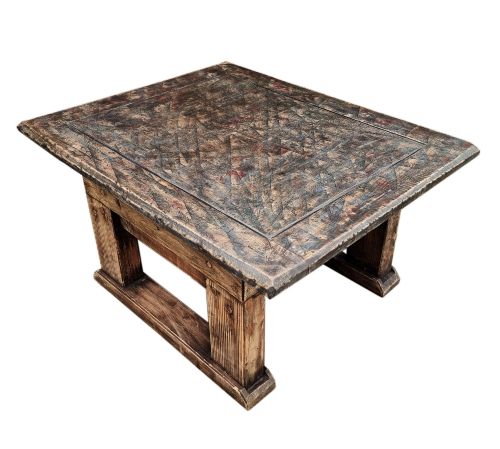
- A compact, heavy-topped wooden table designed for public houses. They usually feature thick oak tops and simple, sturdy framing built to withstand heavy daily use.
Heavy Wood Table: Frequently Asked Questions
How do I care for a heavy wood table?
Maintain timber surfaces by applying natural beeswax periodically to nourish the grain and protect against moisture. Avoid placing heavy wood items near direct heat sources to prevent timber splitting.
Clean spills promptly using a dry or slightly damp cloth without harsh chemical detergents. Respect the historic patina by allowing the natural wear of the wood to remain visible.
Can I use an antique workbench as a dining table?
Workbenches provide exceptionally sturdy surfaces and generous proportions suitable for daily dining use. Their integrated vices and tool wells add distinct historical character to a modern dining space.
Consider the seating clearance beneath the heavy wooden aprons and thick tops before pairing chairs with industrial workbench bases. Some examples may require custom seating heights for comfortable dining.
How do I distinguish seventeenth-century oak from later revivals?
Seventeenth-century oak displays characteristic hand-Hewn tool marks, pegged joinery, and deep natural oxidation accumulated over centuries of use. The timber grain reveals distinct medullary rays resulting from quarter-sawn conversion methods.
Revival pieces from the Victorian era often utilise machine-sawn timber elements and standardised fixings hidden beneath applied period-style carvings. Compare the underside construction and hardware to verify the manufacturing period.